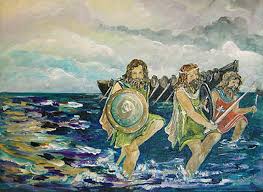
Tara – the ancient seat of the High Kings of Ireland

Tara

Tara, in County Meath, should be on your Ireland bucket list. It is on mine. Sadly, I haven’t been to Tara – yet.

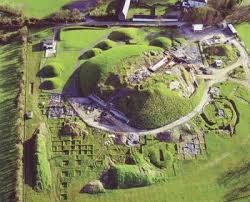
Tara, known in gaeilge as Temair, was the ancient center of power in Ireland. More than 140 kings were crowned there. The Lia Fail, the Stone of Destiny, sits atop the hill of Tara. It was brought to Ireland by the famous Tuatha De Danann. Legend has it that the Lia Fail will roar when touched by the rightful ruler. (This is somewhat reminiscent of the King Arthur legend; only the rightful heir can pull the sword from the stone.)

Before that it was a dwelling place of the gods, as well as a portal to the underworld. The oldest passage tomb on Tara, Mound of Hostages, dates to 2,500 BC.

St. Patrick supposedly confronted the pagans here, bringing Christianity to Ireland.

Here’s an interesting fact: at the turn of the last century, amidst much controversy, a group of British Israelis believed the Arc of the Covenant was buried there. (It wasn’t.) Many Irish nationalist didn’t want anyone digging up/around Tara. This was the first time a national monument came under scrutiny as a national monument and not just as British owning Ireland.

Recently an incredibly large temple was found under the hill of Tara. It hasn’t been excavated because the government doesn’t want Tara closed down and dug up. But it does show the importance of the area in ancient times.  It also helps to confirm questions about the many other standing stones and ancient sites surrounding Tara. Because of new technology, archaeologist have found close to 100 other monuments in the area.

It would have been quite a spectacular place to behold in those ancient times! 100 acres of standing stones, monuments and passage tombs. Imagine a king being crowned, with thousands of people gathered to witness the event. Or the death of a king, taken to the passage tomb. There is so much history there, one could dream up all sorts of scenarios about what may or may not have happened. Definitely a place for those who love ancient history, Ireland and imagining what once was. How have I missed this place before?

There are mixed reviews. Once, when visiting England, a woman with our tour group kept complaining about all the castles. If I see one more stupid castle… Really? You truly can not please everyone. If you’ve been to Tara, I’d love to hear what you have to say!

Depending on the site I’ve researched, entrance varies from free to 5 Euro. Better have the Euros handy. The average time visitors take varies also, from 1-2 hours. I’d probably be there all day.

Interested in more reading? Try these sites:

https://mythicalireland.com/ancient-sites/the-hill-of-tara-teamhair

hilloftara.org

http://www.newgrange.com/tara-ark-of-the-covenant.htm


Carrowmore Megalithic Cemetery

A Megalithic Cemetery. Seriously. This is an incredible place to visit. Not just one or two passage tombs or Dolmens, but thirty remaining circles, tombs and Dolmens. There may have been over a hundred in ancient times. Carrowmore dates back to 3700 BC. And you get to walk around the area, touch the stones, and soak in the ancientness of it all.

Carrowmore is located in County Sligo (where many of my ancestors hail). It’s one of four major megalithic sites in Ireland. Though it is in a remote area, it’s easy to find; well marked. The bonus for me is that it’s all easily accessible. There is a place to park, a small building with some information, a bathroom, and where you buy tickets. Tickets are only five Euro/adult. They do have a guided tour or you can get a pamphlet and walk around yourself. The person at the counter was very knowledgeable and willing to talk, explain, and answer my questions. Expect to spend about 1-2 hours, especially if you enjoy this sort of thing. But then, why would you end up here if you didn’t like it?

One if the questions I had were about what we can’t see – are there more tombs? The gentleman at the desk told me this entire area probably had hundreds more tombs and there is much more work to be done.

It was raining, off and on, the day we went. (No surprise here.) Umbrellas aren’t very useful with the wind either, so you may want to have a light rain coat with a hood when you visit, just in case.

The best website to read more about Carrowmore is:

http://www.carrowkeel.com/sites/carrowmore/index.html

It is full of interesting information and photos.

Queen Maeve’s Cairn:

Carrowmore6 Mave's tomb

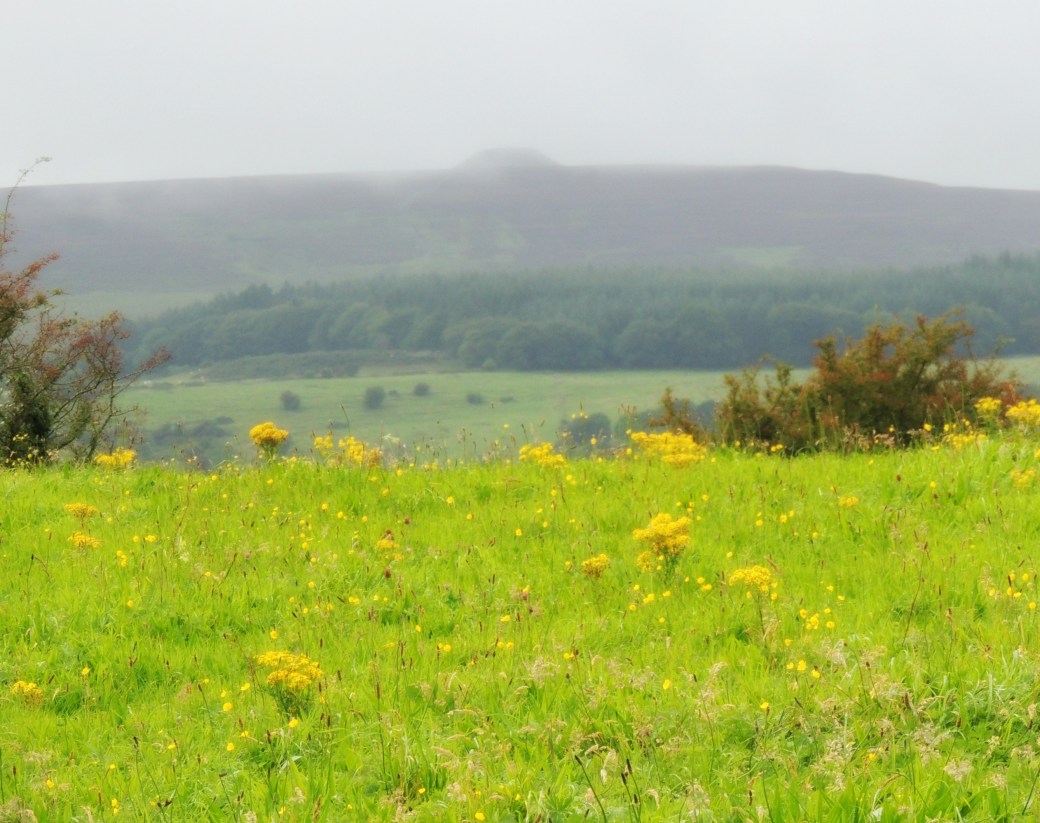
This picture is taken from Carrowmore. It’s Queen Maeve’s Cairn. You can see the mist almost obscuring the cairn. We waited, taking many pictures, for the mist to swirl out of the way and the sun to shine enough to see it.

The cairn is located on the top of Knocknarea and thought to have been built about 3200 BC. We didn’t hike up the mountain to it, but you can tell it’s incredible from Carrowmore; to be so visible from so far away! It’s a well preserved tomb, one of the best in Ireland.

Maeve was a fierce warrior queen of Connaught.  Quoting the site mentioned above: “That she chose to be interred in the Great Cairn of Knocknarea says something about its prestige as the most important and ancient sacred site in Connaught.”

Carrowmore and Knocknarea must have been a hallowed area in ancient times.

Sligo and the megalithic cemetery at Carrowmore are well worth the effort to visit.  Often when travelers visit Ireland, they head to Dublin and/or Belfast, or the Ring of Kerry. All fantastic places – indeed, I doubt there isn’t a great place to visit – however, Ireland holds many unique and wonderful sites. If you’re planning a visit, consider some of the less traveled places.

Let me know what treasures you find.

St. Patrick’s Day in Ireland

I grew up in New Jersey. There are a lot of Irish in New Jersey. St. Patrick’s Day was always a pretty big deal, even if you weren’t Irish. Parades, wearing of the green, pubs, and a bit of fisticuffs were what made the day memorable.

Then I moved out west. For the first time I learned that if you weren’t wearing green you got pinched. (But who wouldn’t wear green? Well, now I was surrounded by people who were not as Irish as back east.)

Meanwhile, back in Ireland, St. Patrick’s Day was a holy day. Pubs closed, good Catholics went to church. However, that has changed, probably due to tourism. Did you know that over 34 million Americans claim Irish ancestors? Add the Canadians, Australians, New Zealander’s and others, and that’s a lot of tourists wanting to visit the old country. Now, St. Patrick’s Day is more festive. They have parades, pubs are open, and Irish culture is honored.

Interesting facts:

The first St. Paddy’s Day parade was held in NYC in the 1760s by Irishmen in the English army. The parade later became a show of strength for Catholics who felt outnumbered by Protestants.

The pinching is supposed to represent Leprechauns, sneaky little creatures that they are, who pinch you for not wearing green and being proud of the Irish.

Why wear green anyway? Since Leprechauns are green and/or wear green, you can become invisible when you wear it. Those of you choosing not to wear green are seen by said wee folk and so…you get pinched.

On a darker note, green was the color worn by the Irish in rebellion against the English. The first color of Ireland was blue. Later, one of the rebel groups wore green. It was a way that they could identify members. The English, after catching on, would imprison or hang anyone wearing green, so it became a great symbol of Irish resistance. (Speaking Irish could also get you sent to prison or hung. I guess a lot of things did; being Catholic, adding windows to your house, wanting to have your own country…)

Orange is the color for Protestants, due to William of Orange. I recall a few St. Patrick’s Day parades where those wearing green and those wearing orange would converge and literally battle it out.

St. Patrick was actually, scholars believe, English. He was kidnapped by Irish pirates and brought to Ireland as a slave. He escaped and returned, bringing Christianity to Ireland. 17 March 461 is the day many believe he died.

Though credited for ridding Ireland of snakes, he did not, as there were never any snakes in Ireland to begin with.

Being Irish in America is the second largest immigrant group. I thought Italian was first, but then, I did grow up in New Jersey. But no, German is number one.

So, if you’re Irish, part Irish, wish you were Irish, support Ireland, have a great St. Patrick’s Day!

(Corned Beef and Cabbage with Irish Soda bread – yum!)

Irish brown bread & Irish soda bread

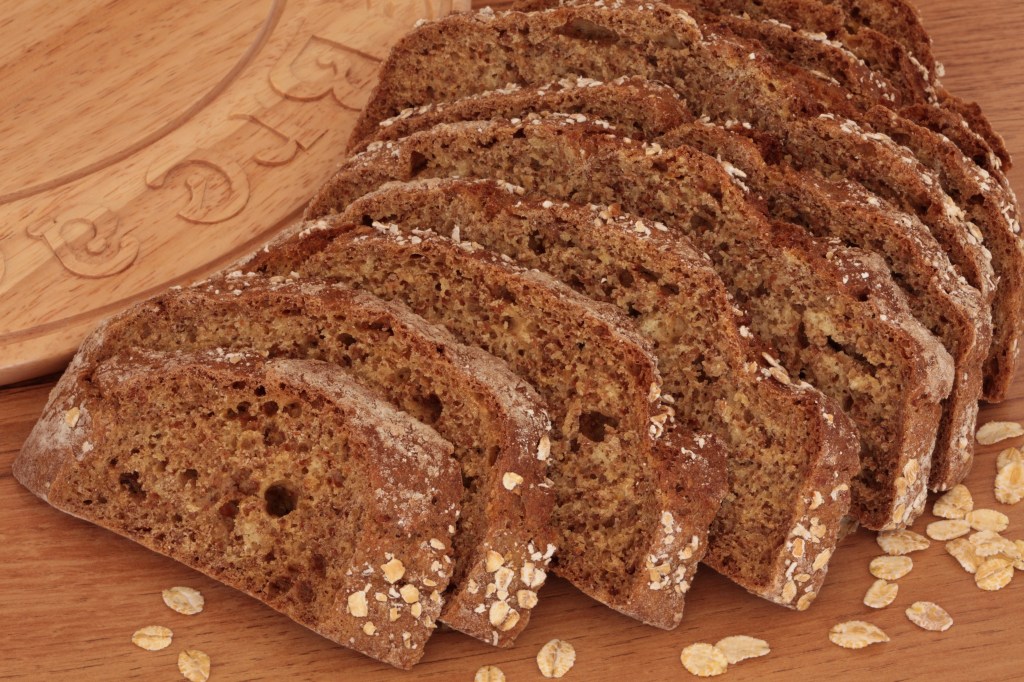
If you’ve been to Ireland, one thing you would have discovered is the brown bread. It is served in every restaurant, grocery store, and convenience stop. And each loaf is different. We had it for breakfast, made sandwiches with it for lunch, and had it as an accompaniment to dinners. At one place we stayed in Oughterard, County Galway, a loaf was left for us by a local pub, Powers. Yum. We fell in love with the Irish brown bread. I regret not asking for recipes while there, though I’m not sure it would have been given. Every place had their own special recipe. After some trial and error I’ve recreated one of my favorites from a pub in Dingle, County Kerry. 

Irish Brown Bread

1 1/2 tsp baking soda – 1/2 C bran or wheat germ – 2 C bread flour – 1/4 C sugar – 1 1/2 C whole wheat flour – 2 C buttermilk – 1/4 C oil – 1/4 C unsalted sunflower seeds – 1/4 C pumpkin seeds – 1/4 C raisins or craisins

Mix flours, bran, sugar, and soda in a large bowl. Make a well in the center. Pour in buttermilk (you may need more if you live in a dry area) and oil. Stir until moistened. (Over stirring will make for a tough dough.) Gently add seeds and raisins or craisins. Pour into a greased loaf pan. (Batter will look like waffle batter, not like bread dough.) Bake 1 hour at 350. If you really want to Irish it up, serve with Kerrygold butter. (We did a blind taste test at our house and Kerrygold won, hands down.) Honey or jam is also good on it. We like it with cream cheese, but we didn’t see it served that way in Ireland.

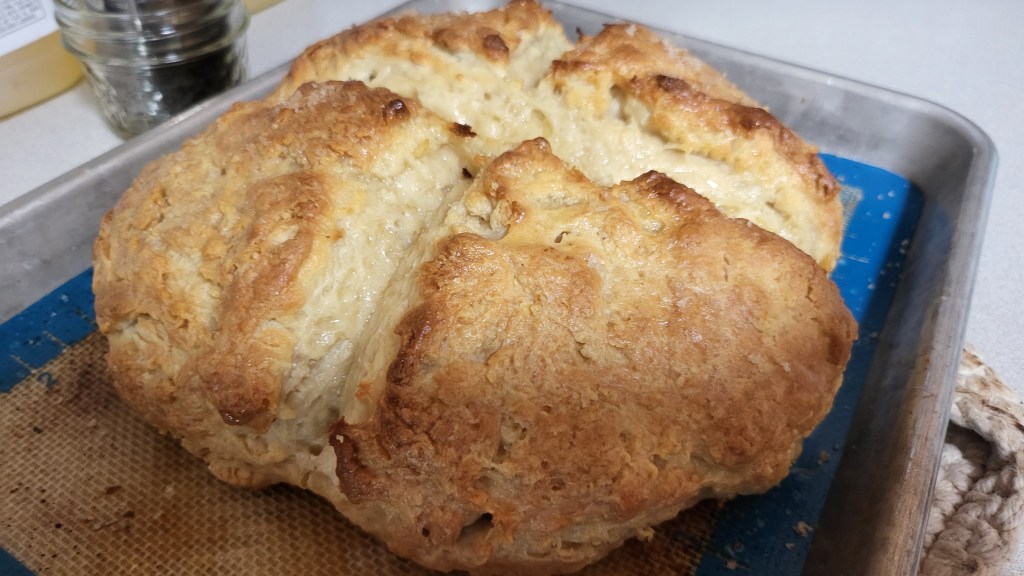
Irish Soda Bread

not to be confused with Irish brown bread. When looking online for recipes I found a lot of confusion. This is a recipe I’ve had for many years and it always turns out–except that one time…. It is very easy, quick and delicious. Great with soups and stews–or anytime you’d normally use a yeast bread. I generally have to make two loaves if everyone is here. The outside is crusty and the inside firm, but soft. Give this a try on St. Patrick’s Day (or any day).

4 C flour – 1 T butter – 1 t salt – 1 t baking soda (don’t over do this or your entire loaf will taste like baking soda; trust me on this one.) – 1 1/2 C buttermilk.

In a large mixing bowl, rub butter into flour. This is best using your fingers to get the butter mixed really well into the flour. It should end up looking like corn meal. Add salt and soda; mix well. Add buttermilk and stir. I start with a wooden spoon, but always end up using my hands. It’s quicker and mixes better. Form into a ball. I like to use parchment paper, but it’s not required. Place ball on a lightly greased baking sheet and flatten to about 1/2″ thickness. If it’s not flat enough it will be doughy in the middle. Make a very deep cross in the center with a floured knife. Don’t worry, it will puff up nicely, but will be doughy if you don’t do this. Bake about 30 minutes at 425. Depending on your oven, you may need to reduce the heat. Bread should be a deep golden brown. Brush with melted butter. I love salt, so I often sprinkle some course salt on top. You can also use poppy or sesame seeds, or leave it plain (most Irish). Pile on the butter, jam and/or drizzle with honey.

A nice rustic type loaf with half the work. 

Let me know if you try either or both of these and how it turned out for you! Have you been to Ireland (or are Irish) and have a recipe you’d like to share? 

Finding Castle Menlo

It took us two trips to Galway to find Castle Menlo. I don’t know if we’re the only ones who found this a difficult castle to find, but hopefully this can be a guide to others who may have trouble.

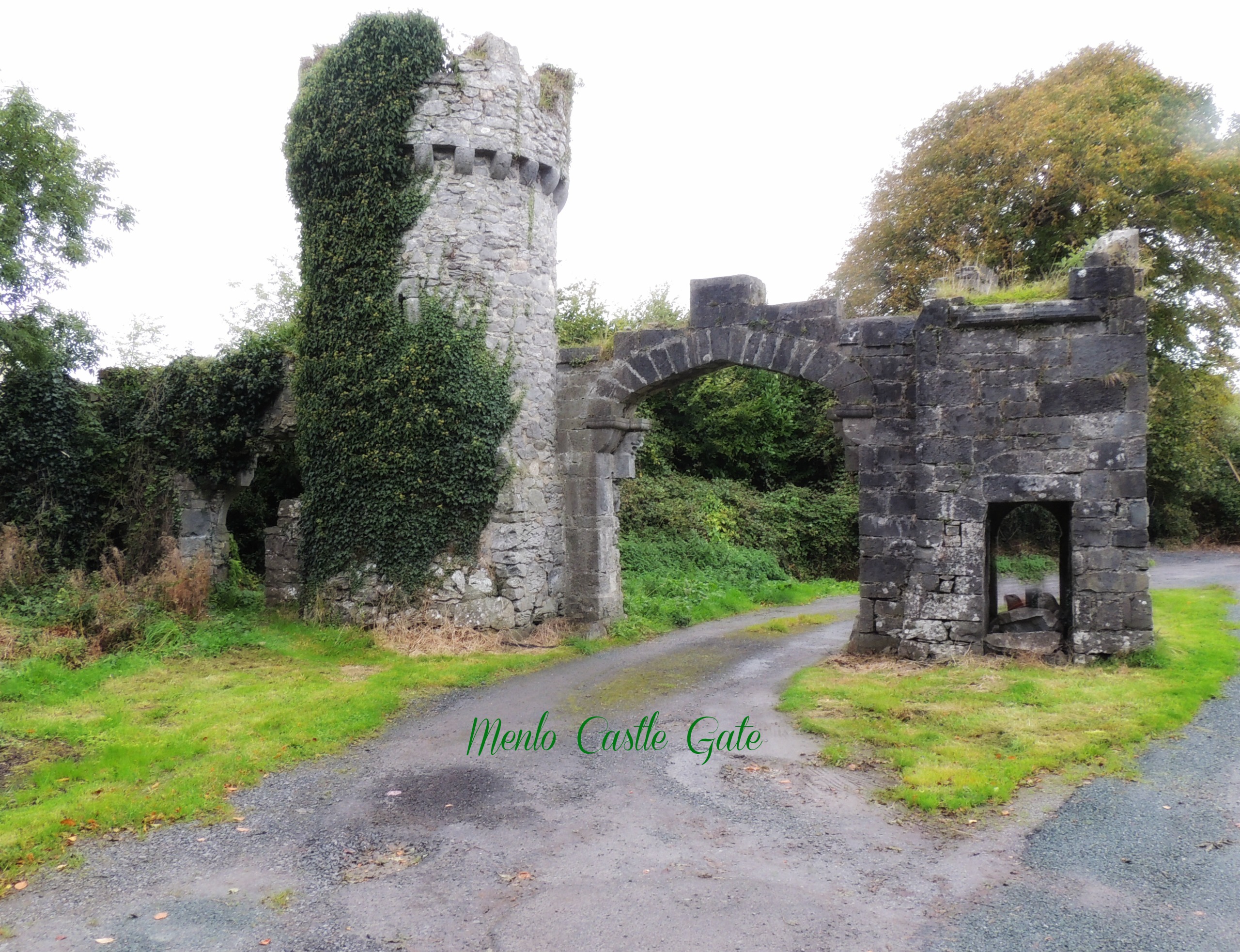
The first trip we asked our host where to locate the castle and were assured that it was pretty much downtown and easy to find. We followed our GPS and his instructions – and no castle. We drove around the same area many times. We did find the guard house, so we knew we were close. The guardhouse is just on the side of the road, across the street from a few homes. (Wouldn’t that be a fun place to play in as a child? You wouldn’t need to pretend there was a castle, you’d be in (part) of one!)

243

We finally stopped to ask a man walking his dog where the actual castle was. He pointed us back to the gate. Maybe that was all that was left of the castle? Another man told us the best way to see the castle was to hike through the local cemetery to the top of a hill. We drove to said cemetery. It was a beautiful cemetery, as such things go. We hiked to the top of the hill, and sure enough we saw the double towers looming above fields and trees. My husband thought he could walk there, so he climbed a fence and took off. It wasn’t long before he returned, soaked, to report that the ground may look level, however, it was not. Rocks and bog, typical of the area. Not totally daunted we tried again. Following the GPS carefully and slowly…we ended up back at the gate house. We walked around, took pictures and went down all the little paths. The road ended at a big metal gate. To the left, was a road that was blocked off. To the right were huge boulders, rubble from the castle itself. But no looming towers or picturesque castle.

We gave up.

On our next trip we told our daughter and son-in-law that we were going to find the castle, no matter what! Again we asked our host. Oh, yes, that’s easy. Right by the university, on the river.

Ok. We followed our GPS again – right to the gatehouse. Same dead end road. We got out and hiked around, looking for some path, a sign of some sort, anything to show us the way. Nothing.

Then a hiker climbed over the metal fence at the end of the road. She assured us that all you have to do is climb the fence, hike a bit and there was the castle. How embarrassing. It was right there all along. No wonder everyone was puzzled because we couldn’t find it.

So, that is what we did. Now, the gate is about 5′ tall, but even for me it was doable. Ok, I had help. But I made it. And there was the castle, nestled near the river Corrib. Rowers were gliding by, swans were floating near the shore, the rain had stopped – and we had found our missing castle.

As to its history: it belonged to the Blake family from 1600-1910. Of course it underwent some changes over the centuries. The castle caught fire in 1910 and was destroyed. Later it was gutted and left abandoned. It is now an ivy covered place you can wander around and take pictures. There were actually some campers staying the night in the field next to the castle.

So, climb those gates and fences, walk through the fields, hike the ridge; you never know what awaits you when you do.

Caherballykinvarga

Caherballykinvarga1

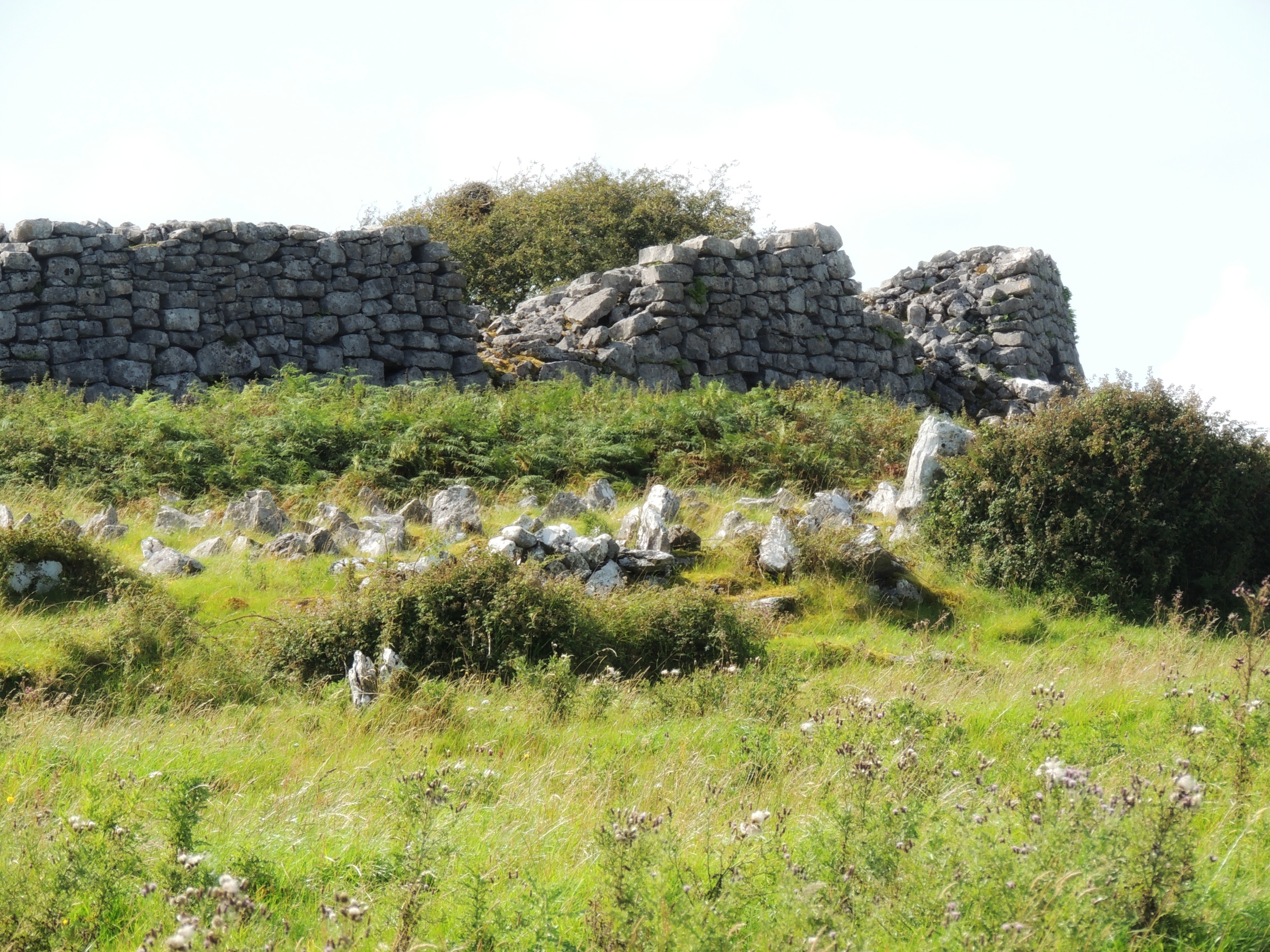
Caherballykinvarga is a stonefort that was built around 500-1000 AD.  It’s in pretty good condition for a stonefort. It’s been left alone, so no reconstruction or nice little paths leading up to it. But then, this is the real thing.

It’s what is left of an oval shaped fort, about 165 feet by 145 feet round. The tallest standing point is about 16 feet high and almost 5 feet thick. Remains of large lintels still exist with an obvious entrance. Many of the larger forts we visited had three rings, but this seems to have only one. However, it does have a chevaux-de-frise, like Dun Aonghasa. There are only three or four forts in Ireland with a chevaux-de-frise, so this is pretty special. This a defense system where rocks were placed in a vertical position all around the fort, making it extremely difficult for invaders to make their way to the actual fort. You can see the remains of this in the foreground of my picture.

It was difficult going for us to maneuver around those rocks also. In fact, I didn’t make it all the way, but those with me did. Like most of the forts we found, you can wander around and climb on the walls.

This one isn’t on as high a cliff as most we’ve been to, but it is still a hike through rock strewn fields.


This fort is located in The Burren. I highly recommend visiting this stonefort if you are in that area. You probably won’t see any other tourist here. I don’t think it’s on a bus tour route either. And like a lot of things in The Burren, it’s somewhat difficult to find. We used two guides, one was the map found on http://www.megalithicireland.com and the other was a map we downloaded on our phone, maps.me (It’s awesome, we would have missed a lot of sites without that map letting us know where things were located.)

Still, we almost missed Caherballykinvarga. You begin at Kilfenora and go east on R476. You take “the first left up a narrow road”. Yeah…more like farmer’s road between fields. And for the Irish to say ‘narrow’, well, you know you’re trouble right there. The instructions state there is a gate on the right and that you can see the fort from the gate. We must have driven past that little gate three or four times before we realized IT was THE gate. We thought we saw the fort, but weren’t sure. We pulled over and got out anyway. Seriously, it’s in a farmer’s field; we kept wondering if we would get in trouble for trespassing, but no signs were posted. (Nor were there welcome plaques.)

We had to step over human waste (hikers, please bury your stuff!) and climb another fence. Then the hike uphill, over hidden rocks buried in the grass to get the view we had been looking for. There was another fence to climb over and another field of rocks to hike before we got to the fort. Sadly, that is where I had to quit. (Artificial knee was not happy with all of this.)

The others, however, made it to the fort and were able to take in the view from the walls and see the remains of ruins (huts?) inside.

You will want to plan around weather, as much as possible in Ireland; those fields would be even more treacherous in rain. It was chilly and windy as it was – this in August.

As ever, when hiking in the Irish back country, wear good hiking shoes, bring a jacket with a hood, water and snacks.


Cahercommaun Cliff Fort

Cahercommaun was the most difficult ring fort for us to find, but well worth the effort. It is located in The Burren, a place of many ancient forts and tombs, in County Clair. (It’s a great place to get lost, but that’s a subject for another post!)

Cahercommaun, a triple walled stonefort, was built around 800AD on the edge of a cliff. It is most like Dun Aonghasa in style, though Cahercommaun is not in the great condition Dun Aonghasa is.

According to the plaque, 16,500 stones were used for the middle wall alone. It is about 5 feet thick and no mortar was used. It was excavated in 1934. The remains of houses and workshops were found, a few having underground passages, one believed to be an escape route.

This is a massive stonefort. We got lost trying to find it. It was almost sunset when we got to the entrance. We followed the directions on http://www.megalithicireland.com/Cahercommaun

That seemed easy enough – until you drive down narrow, winding, isolated Burren roads. We finally found the house where the entrance is located, north of Kilnaboy. The entrance was a little gate leading to a narrow path beside a farmer’s field. At first the path had a gentle upward slope and it looked like it might be fairly easy going. I have since learned that stoneforts were built in high, remote places for a reason, and are rarely easy to get to. This seeming gentle slope soon turned into a steep path that had us climbing over huge rocks (there was a hand rail) and into a rock strewn field full of cows (and manure).

If I had not been around cows, I might have been a bit frightened. These cows were curious, but not bothersome and easy to shoo out of the way. The path basically ended and you had to find your way through the field. This would have been easier if the sun wasn’t setting. And the field wasn’t full of large rocks, making walking difficult. It says it’s about 1/2 mile, but I personally think it was longer than that. Maybe it was all the uphill climbing.

The picture on the top right is the ‘gate’ to enter the fort. It is a steep step up and narrow, but then you can really see the fort and amazing view. We hiked all around and sat on the stone wall to watch the sun dipping to the west. I let my mind wander to the ancient past – the kings who had this built, the wars, and those people who spent their lives building the fort. It was beautiful and peaceful.

As breathtaking as watching the sun set on the wall of a stonefort was, we realized hiking back down would be difficult in the dark, so we made our way back through the rocks and cows and boulders. We had to use our phone’s flashlight to finish, and it was full dark by the time we got to the car.

If you’re wanting a taste of real ancient Ireland, I would suggest you try Cahercommaun and other treasures of The Burren. Many forts are remodeled, are small, or too far gone to see the grander that they held, but Cahercommaun is a great example of what a stonefort was.

Just make sure you where hiking shoes and allow yourself some time!


Inis Mor

One of the highlights in Ireland is Inis Mor, meaning big island. It is the biggest of the Aran Islands. It has cliffs that equal the Cliffs of Mohr as well as epic ancient sites, such as Dun Aonghasa. Because of Dun Aonghasa, Inis Mor is one of the most popular sight seeing places in Ireland. It does take extra planning to visit Inis Mor, it’s definitely not a last minute trip. You will want to plan for an entire day. Inis Mor is also one place where the population’s first language is Irish. It was fun to hear our Pony and Trap driver speaking to others in the native tongue.

Getting to Inis Mor: you have to take a ferry, which costs about 25 Euro. There are only two places of departure, Doolin (near the cliffs of Mohr) and Ros a Mhil. Both take some travel, so you will need to plan that trip as part of the day. You do not want to be late for the ferry! They only sail to Inis Mor at 10:30am, 1:00pm and 6:00pm. Ferrys depart the island several times during the day though they are quite a few hours apart. Times vary according to the date too. The ferry takes 40 minutes. Luckily you can go online to check out times and prices for the dates you want to travel.  (http://www.aranislandferries.com/times_mor.php)

Inis Mor has hotels and Bed & Breakfast places on the island, but again, not a last minute thing; you need to make reservations in advance. We didn’t stay the night there, but we spoke with someone who did. They said it was very quiet once the last ferry left, but fun to have the island to themselves.

There are several ways to get around the island. I wish we had understood this before we arrived! As soon as you get off the ferry, as in that very second, several people approach you – how do you want to travel? Bike rentals this way, mini tour buses that way – do you want to buy a ticket? How about a pony and trap? It’s the way people got around in Ireland and the best way to experience the real Inis Mor. See how comfortable it is? Meet my horse…there were so many people clamoring around, we weren’t sure what to do. Most of the younger and/or more fit tourist chose to rent bikes. It’s only about 10 Euro for the day. That gives you the freedom to go where you want when you want. A map of the island is included.

The bus tour seemed alluring because it was warm and out of the wind. The cost is around 10 Euro per person. (Plus a tip.) The bus stops at all the sites and a knowledgeable driver will fill you in on the area and its history. You can also check out different bus tours online as most owners have a site with pictures and other useful information. No need to book before you go, but you can.

We decided to try the pony and trap. Meet Mike and Molly, his horse. Mike’s father drove the trap before Mike and his son sometimes takes it out these days. Most pony and trap business are multi generational. The cost is about 10-15 Euro per person. Ours only held the two of us, others were larger. You do want to tip also. An advantage of the pony and trap is that it is a unique way to travel, one you probably won’t do much in your lifetime. Your driver will fill you in on all the history and sites. You can ask all the questions you want and have a personal experience. They will stop for you every time you want to take a picture. A disadvantage is that they don’t cover all of the sites available; maybe it’s due to the time? You don’t need to book online, but if you do, your driver will be looking for you and you can avoid all the momentary chaos at the dock. You can go online and take a look at several pony and trap business and if you want, you can book from there.

In an interesting side note – we saw the ruins of a church and asked Mike what it was. He harrumphed and said it was an old protestant church and after ‘we’ ran them off the island the church just sat there. “Not worth looking at.”

The island itself is barren, windswept and a bit chilly. There are locals who sell homemade knitted items, as well as a huge shop selling Aran knits of all sorts (The Aran Sweater Market). There are other little shops, a grocery store and pubs available as well. I bought some lovely gloves from a Faherty (clan name) while she was knitting a scarf. Everything in her shop was made by her. Ron found an informative book on Dun Aonghasa in a book store. There were several tempting items in the Aran knit store as well as information on Aran sweaters.

I would suggest you take the day to go to Inis Mor. The sites are breathtaking, the people friendly, and the experience is one you won’t have any place else.

Dun Aonghasa

Dun Aonghasa, pronounced Done Angus-sa, is a spectacular stone fort located on Inis Mor, the largest of the Aran Islands. It was built 1100-1000 BC on the edge of a cliff (which rival The Cliffs of Mohr). That is several hundred years before the wall of China! Dun Aonghasa is made of three stone rings before you enter the inner court and buildings. You have to hike up a very steep hill to get to the entrance, but if I can do it, you certainly can! (My husband, Ron, says it’s not that steep, so I guess it’s a matter of perspective.)

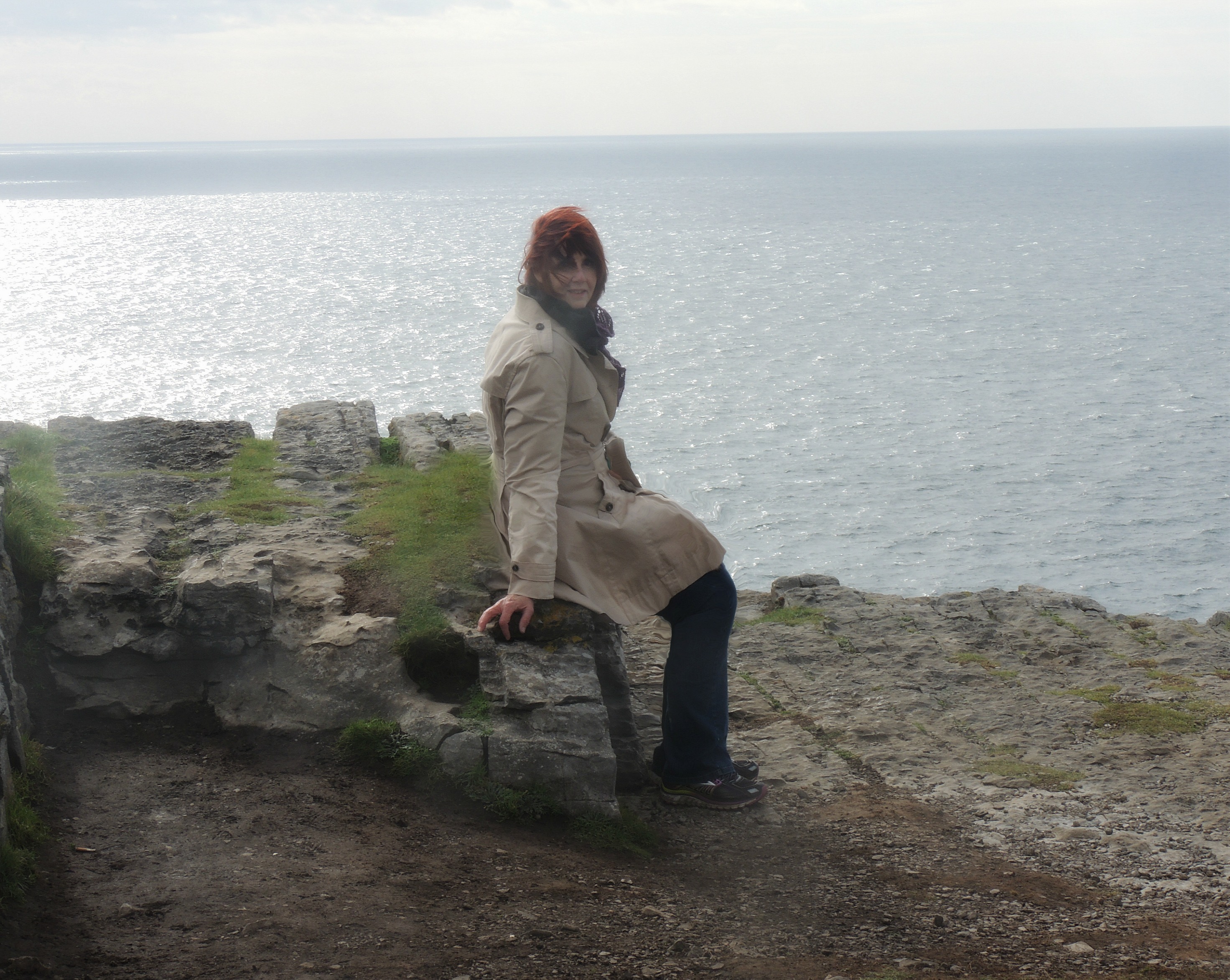
In the first picture I’m sitting as close as I dare to the edge. The wind was fierce, though that didn’t stop braver (or more foolish) people going to the very edge of the cliff. I discovered I have a fear of falling off of cliffs into water. Notice the terror on my face as I force a smile?

The second picture shows grooves in the limestone that surround the rings. Imagine trying to attack the fort and having to maneuver around those deep crevasses.

This next picture is an aerial view. (I didn’t take this one.) Notice how the fort hugs the edge of the cliff? And look at those rocks in the next picture! This is an excellent example of a chevaux de frise. (Not that the ancient Irish called them that.) Huge pillars are a jagged  protection between the rings. If you made it over the limestone, these pillars and sharp broken rocks would be the next barrier. Many weigh over half a ton.

This fort was used well into medieval time. Whoever the rulers were, they had a lot of influence and power to build such a massive edifice. If you travel Ireland you will see many stone forts, but none as spectacular as Dun Aonghasa.

Luckily, all you have to do is follow the steep path; it’s a rather long hike, about a mile, not too bad, but make sure you’re wearing good walking shoes. The wind picks up the higher you go too.

The fort is about fourteen acres and you are free to wander everywhere.

By the way, one of the big clan names on the island is Flaherty. That is one of my family names, but I don’t know if they were from Inis Mor or not. It is nice to imagine that some of my ancestors may have walked the same paths I did here though.

You never know.

If you’ve been there, let me know what you think.

DunAcliffDunAoutsideDun A airDunA standing stones

Poulnabrone Dolmen

DSCN3145

What is a Dolmen? It is a portal tomb where many people are laid to rest, along with some belongings. In ancient times it would have been covered with dirt, the entrance was below the capstone.

This Dolmen is in Co. Clare, in an area known as The Burren. There is a tangible sense of ancientness in The Burren, and with good reason – there are about 90 tombs and over 500 stoneforts or buildings. Interestingly, many of these are in farmer’s fields and you will need to climb fences and hike through rocks and cows to find them.

Poulnabrone, however, is right on the side of the road with a parking lot for convenience. (There is a stonefort down the road too, but it is one that has an entrance fee and an opening and closing time.)

The first time we visited, there was a local making and selling jewelry. He was a treasure trove of knowledge and more than willing to share his knowledge. It was October; he said in the summer he dressed up as a druid and told tales. I was looking forward to seeing him when we revisited in August, but, alas, he was not there.

There is not an entrance fee and you are welcome to wander around, though there is a rope around the Dolmen to protect it. The wandering is somewhat treacherous because of the huge, uneven limestone covering the ground.

According to the plaques located at the site, Poulnabrone Dolmen dates to about 3,000 BC. In doing repairs they discovered the remains of thirty three people; adults and children. It looks like (and this is for all of Dolmens in Ireland) that people died in other places and their remains were later to the portal.

Arrow heads, polished axes, stone beads, quartz crystal, and pottery were found with the remains.

Since a portal is a gateway, I imagine that the belief would be to bring your dead so that they can enter the next life. Maybe they had a sacred ceremony at certain times of the year, bringing their loved one’s remains to be buried on sacred ground. Perhaps a druid oversaw the ceremony. I can envision family members going to the portal to commune with those who passed on also, seeking advise or blessings. Though I’m not sure I’d like to carry a family members bones with me…did they bury them, then dig them up? Or have a special place where they bodies decomposed, then gather them? Was it an event where tribes from all over came or was it a single tribe or even family?

What are your thoughts? I’d love some more speculation!