

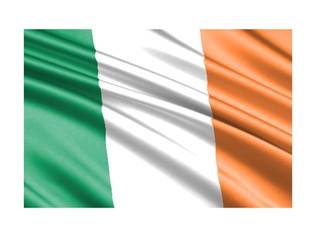
Top o’ the morning to you! Begorrah, it’s a fine day to be wearing the green. Erin go Bragh— and that’s no blarney on the Emerald Isle. Surely, luck of the Irish is on your side, especially if you happen to find a shamrock! Then it’s “Kiss me, I’m Irish”— so what could possibly go wrong? Unless, of course, it’s Murphy’s Law. Perhaps it’s best to head to a pub for some corned beef and cabbage while listening to Danny Boy. Sounds like a typical day in Ireland, right? Well, not quite.
Let’s take a look at some of these common terms and see what they really mean.
Top of the morning: if an Irish person says this to you, they are likely joking or mocking. This has never been an authentic Irish greeting. The common greeting is Dia dhuit is the common greeting and has been used for centuries. Here’s a link if you’re interested in pronouncing it: https://www.youtube.com/shorts/unYxETgUqqA
Top of the Morning probably came from the Ango-Irish English. That is a dialect of English spoken in Ireland under British rule in the 18th and 19th centuries. It was never used in Gaelic Ireland. So, what made it so famous and associated with every cheerful Irishman ever? Hollywood and British stage comedies are to blame. Especially during the 20th century. If you wanted the audience to know that the character is Irish you exaggerate his lilt and have him say, ‘Top o’ the morning’.
Luck of the Irish: This is actually an insult. It is not a traditional saying in Ireland. Much more used in the United States. On one hand, you have the idea that it’s lucky that any Irish survived British rule. But the phrase itself comes from the gold rush, of all places. A good number of Irish and Irish Americans were famous and successful miners. Luck of the Irish came about as if to say, they couldn’t really be smart enough, so it must be their luck. Of course, many of the Irish folklores do involve luck as well as cunning.
Erin go Bragh: which means, Ireland forever. It is associated with Irish nationalism rather than everyday speech. It expresses pride in Irish heritage and is often used on St. Patrick’s Day and other festivals that celebrate Irish-ness. It probably came about during the 17 and 18 centuries during times of political upheaval. It’s best used with respect and understanding, rather than using it as a typical greeting.
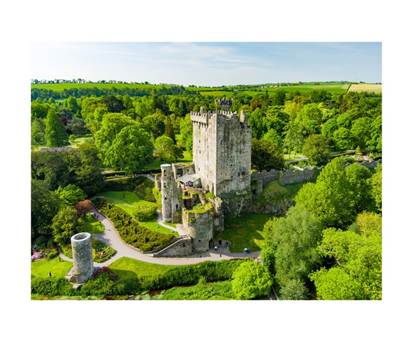
Blarney: Ah, the gift of gab, or speaking nonsense. Are the Irish born with this gift? Can others receive this gift? Supposedly, if you kiss the Blarney stone at castle Blarney, you can! For that is where the story begins-a part of Irish legend and not everyday speech. Blarney Castle is located in Blarney, Cork City. It’s a popular tourist site; millions have visited and kissed the Blarney Stone. (I am one of those millions. It is very quick, practiced, and easy.) The current castle (of three) was built in 1446 by Cormac Laidir MacCarthy. Apparently, Queen Elizabeth 1 wanted to take the castle from MacCarthy to assert English rule. He kept delaying handing it over to her by flattery and sweet talking. Finally, the queen commented that he was full of Blarney. Rumor had it MacCarthy had kissed the stone of gab and there by keep his castle. Where did this magical stone come from? It’s so far back in antiquity that legends mix with history. Some say MacCarthy saved an old woman from drowning. She in turn, told him that there was a stone in his castle that magically possessed the gift of gab. Then there is the queen of the faeries who imbued the stone with magic, telling MacCarthy to kiss it if he needed answers. It is also told that it is a piece of the Scottish coronation stone, which came from the Crusades and was the stone Moses struck to bring water to the Israelites. MacCarthy sent 5,000 soldiers to support Robert Bruce in 1314. In gratitude, MacCarthy supposedly received a fragment of the stone as a gift for his support. Today, it’s fun and tourist enjoy it.
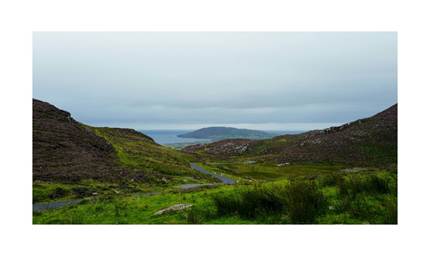
The Emerald Isle: this is more poetic than a phrase used in everyday speech. Much like Land of the Free is a poetic reference to the United States, but it’s not a common phrase that is often spoken, though it appears in songs and on T-Shirts, etc. The first time it appeared in print was in a poem by William Drennan in 1795, who was born in Belfast. The poem is really a call to fight the British rule, but not with violence. He was a member of the Society of United Irishman which was a brotherhood for a free Ireland. He left it when it became more violent. Here is the full poem: https://www.poemhunter.com/poem/when-erin-first-rose/
Thomas Moore born 1779, also from Dublin, was a famous poet who also used the imagery of Ireland as an emerald, further cementing the image into Irish culture.
By the way, emeralds do not come from Ireland, though they are used in much of iconic jewelry.
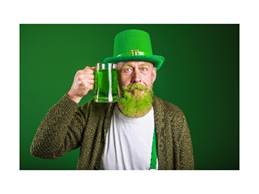
The wearing of the Green. This is riff with political implications and not just getting pinched on St. Patrick’s Day. Before green, there was blue. Blue goes way back into Irish mythology. Ireland’s sovereignty was represented as a woman, Queen Gormfhlaith from the 10th century, who wore a blue dress. St. Patick used to be associated with the color blue also. Early images of him, from manuscripts to stained glass, shows him wearing a blue robe. King Henry V111, Lord of Ireland at the time, and who turned Ireland into a kingdom in 1542, formalized the color blue for Ireland. Even today, Ireland’s coat of arms is a golden harp on a blue background. The Irish constitution is printed with a blue cover and the carpets in the Irish Houses of Parliament are blue, as well as the presidential flag.
Green enters the picture along with Irish nationalism. Ireland has long been divided by Catholics and Protestants. In the 18th century British Penal Laws outlawed Irish Catholics from owning land, voting, or owning firearms. In the 1790s Theobald Wolfe Tone, a Presbyterian, formed a group to unite with Catholic Ireland to fight for freedom and gain independence. After all, the United States and France both had revolutions and won. The society was called The United Irishmen Society. They used the color green as a symbol of loyalty to Ireland. They wore a green clover on their lapels. This was punishable by being arrested or even executed by the English. So, it is a color of defiance against the British and a call for Irish Nationalism. No one gets pinched by leprechauns.
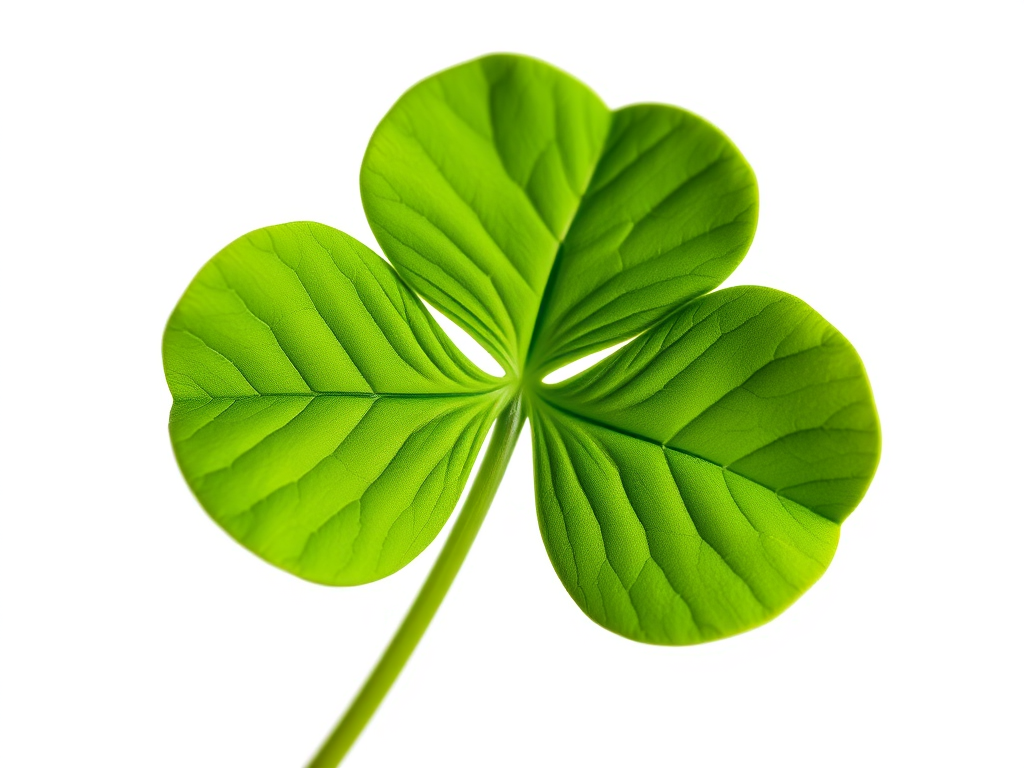
Shamrock: Just a clarification here. St. Patrick supposedly used a shamrock to teach the trinity to the Irish. The Irish word for the little clover is ‘seamrog’. A four-leaf clover is lucky because it is rarer than the three leaf clover.
Murphy’s Law: “If anything can go wrong, it will.” The only thing Irish about this is the name Murphy. It originated at Edward’s Air Force base after WW2. Captain Edward Murphy, who was an engineer, referred to a clumsy technician by the now famous quote. Others picked it up and called it ‘Murphy’s Law’. It stuck!
Begorrah: or any form, such as Begosh, are outdated and stereotypical exclamations used in a mocking or patronizing way to show a person is Irish in the entertainment field.
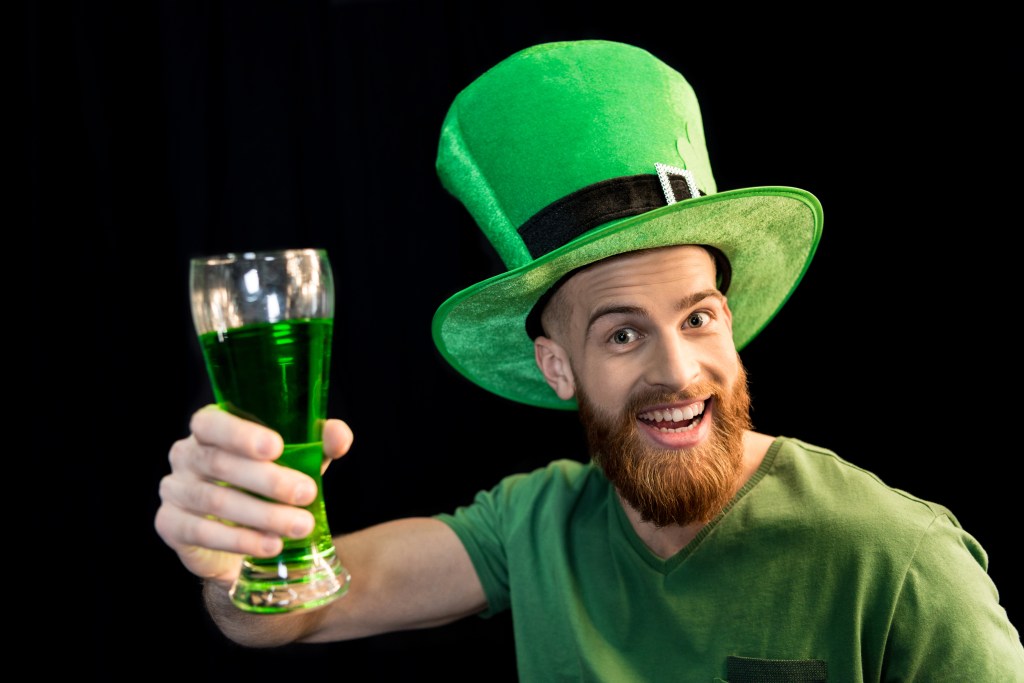
Kiss me, I’m Irish: This is related to kissing the Blarney stone. It’s used as a gimmick on St. Patrick’s Day, especially in the USA.
Saint Patrick’s Day: Yes—this is Irish! However, too many people outside of Ireland will say, ‘St. Patty’s Day’. Big no to this. The Irish for Patrick is Padraig. The abbreviation is Paddy.
Danny Boy: Though sung in the style of a traditional Irish ballad, it is not. Sadly. The lyrics were written by an English lawyer, Frederic Weatherly, in 1910. The words were originally set to a different tune, now lost to time. It wasn’t doing well.
The music is believed to have been written by Rory Dall O’Cahan, an Irish harpist living in Scotland in the late 17th century. I once had a woman of Scottish descent vehemently point out to me that glens and bagpipes were Scottish, not Irish. This can become a hotly debated subject! In 1851 Jane Ross, living in Ireland, heard a fiddler playing and was intrigued by the music. She wrote it down and sent it George Petrie in Dublin who is collecting songs. The music is believed to be associated with the terrible siege of Derry in Northern Ireland in 1690. Margaret Weatherly, Frederic’s sister, hears the music from Petrie and sends it to her brother. He changed to tune to this Londonderry Air. Whew.
It became popular in WW1 as soldiers went off to war.
But still, Danny Boy has become associated with the Irish. And they love/hate it.
Listen to it here: https://www.youtube.com/watch?v=Dn1IFddzAJA
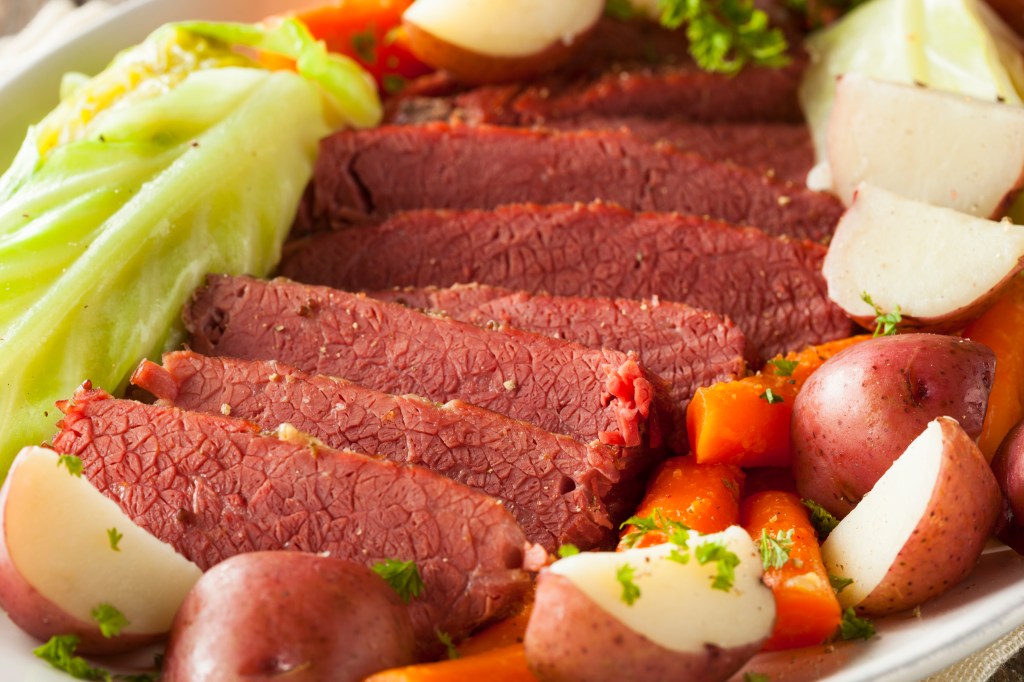
As for Corned Beef, see my blog here (it’s not Irish): https://allthingsancientirish.com/2024/03/15/waitcorned-beef-isnt-eaten-in-ireland-on-st-patricks-day/
.

 All Things *Ancient* Irish