Black Irish: Fact or Folklore?

I want to clarify upfront: the term Black Irish is not a racial slur or slur of any kind. But what does it actually mean?

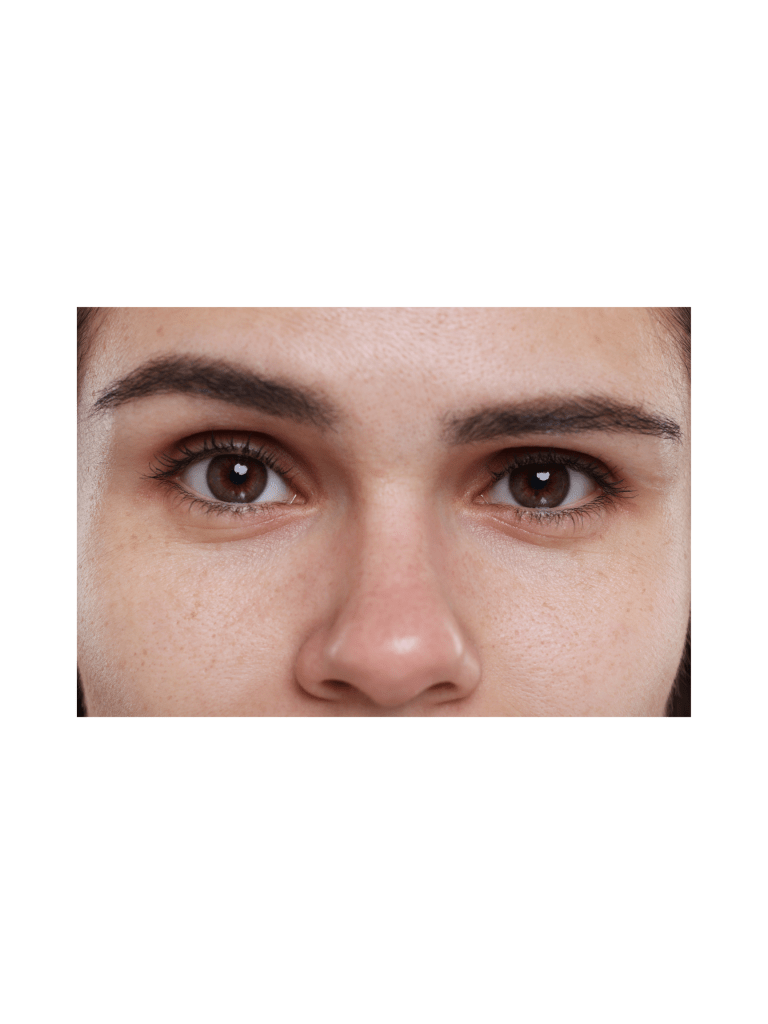
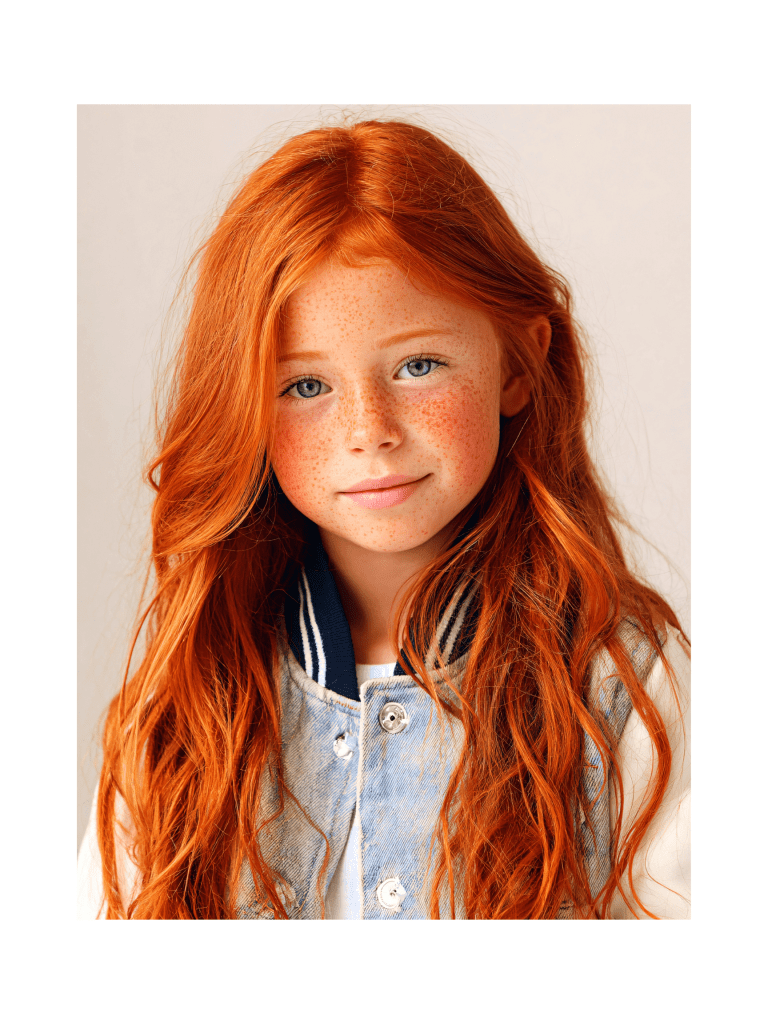
The title Black Irish refers to Irish people who don’t fit the stereotypical image of red hair, blue eyes, and freckles. Instead, they tend to have black or brown hair, darker eyes, and either fair skin or an olive complexion. Is this for real?

Well, yes and no.

I was taught that the Black Irish are the ancient Irish bloodlines that haven’t been mixed with Vikings, English, or other invaders. There might be some truth to that.

Interestingly, the term Black Irish isn’t commonly used in Ireland itself. Instead, it originated among Irish-Americans (and in Canada) in the late 19th century. During the mass Irish immigration to the United States from the 1840s to the early 1900s—and amid the widespread “No Irish Need Apply” discrimination—some felt the term was a way to distinguish between Irish with red hair and those with darker complexions. Perhaps the darker-featured Irish didn’t “look” Irish to some and were thus more accepted?

Since Black Irish isn’t a racial term or an official identity, what is it? It falls more into the realm of mythology and romantic notions of Irish identity—more folklore than fact. Some stories about its origins trace back to survivors of the Spanish Armada in 1588. After the battle of Gravelines, about 28 ships and 9,000 men landed in Ireland. While this was a real event, most of the survivors were either captured or killed. There wouldn’t have been enough men left to significantly impact Irish ancestry, and modern DNA confirms this.

Dark hair and eyes are quite common in Ireland. These features are considered to be from pre-Celtic or Welsh ancestors and are due to natural genetic diversity. Ireland’s history is complex, involving migrations and invasions by Celts, Gaels, Vikings, Normans, Anglo-Saxons, Scots, Welsh, and even people from Northern Spain (Basque).

Regarding red hair, about 10-15% of Irish people have red hair, compared to only 1-2% globally. It’s a distinct Irish trait.

In America, the term Black Irish is often used as a symbol of the diversity, identity, and resilience of the Irish people. You might not hear it much in the West, but I grew up hearing it back East. Have you heard the term before? What did you think it meant?

Delve deeper here: https://www.theirishjewelrycompany.com/blog/post/black-irish-meaning-history-origins

Irish Version of Things That Go Bump in the Night

All cultures have scary creatures. Listed here are a few of the more famous Irish creatures, just in time to haunt you for Halloween.

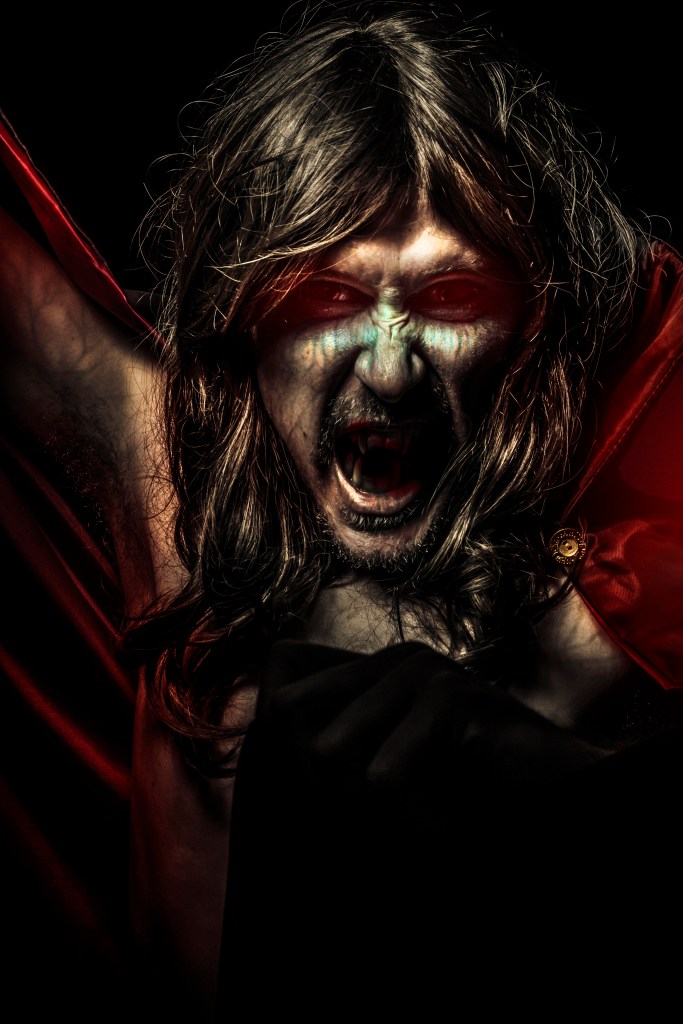
Abhartach (something like; ow-a-ba) – There is some interesting research that points to the Abhartach as the real inspiration for Bram Stoker’s novel, Dracula. Stoker is an Irishman, so he would have been familiar with this creature. The Abhartach was a magical dwarf, and a cruel chieftain. Due to his evil rule, a neighbor chieftain, either Cumhail or Cathain (depending on the story) slew him and buried him, standing up. Abhartach escaped the grave as a walking dead and wreaked havoc, drinking the blood of anyone he came across. He was so powerful he could drain blood from his victim just by standing near them. Cumhail/Cathain again slays him and buries him, once more in a standing position. Abhartach returns again, out for revenge. Cumhail/Cathain finally consults with a druid. Combining two versions; Cumhail/Cathain slays Abhartach with wood from a yew, buries him upside down, puts thorns on the grave, and a large stone (laght) on top. This laght still exists in Slaghtaverty, Derry, Ireland. In case you wanted to visit.

Balor of the evil eye was a giant king of the Formorians. They were malevolent supernatural beings who are eternal enemies to the Tuath De Danann. He had a large eye, somewhat like a cyclops. When he opened his evil eye, he caused mass destruction to everything he looks upon. He learned of a prophecy that his grandson would kill him someday, so he locked his daughter, Ethniu, in a tower. But Cian Mac Cainte, a Tuatha, attacked and recued her. They were married. She had three sons, triplets. Balor orders them all killed. They are cast into the sea. Birog, a woman fairy or druidess, saves one son, Lugh. He later slays Balor.

Bananachs are demons of the air. They often appear as ghoulish goats. Mostly they haunt battlefields, waiting for that last breath so they can collect the souls of the dying and bring them to the devil. They are not wanted in heaven or hell. Bananachs encourage and exult in bloodshed.

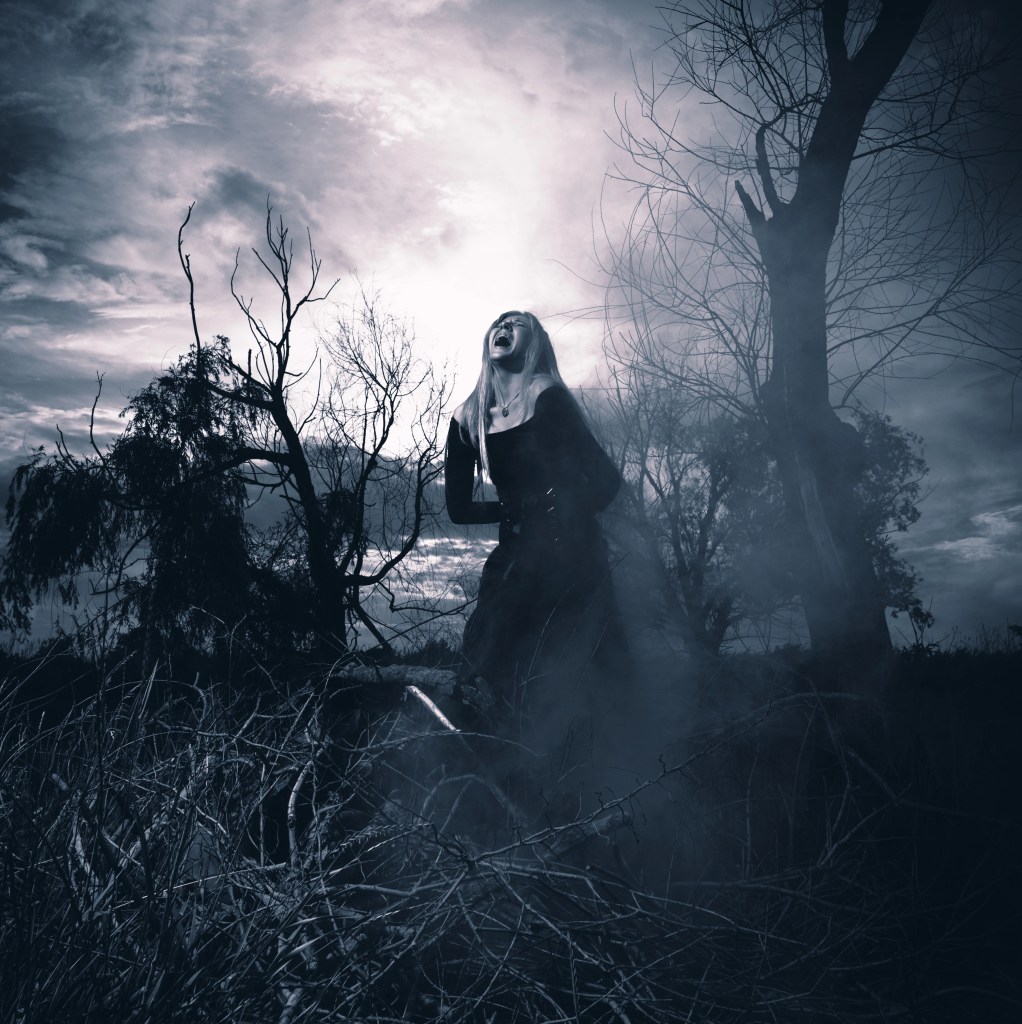
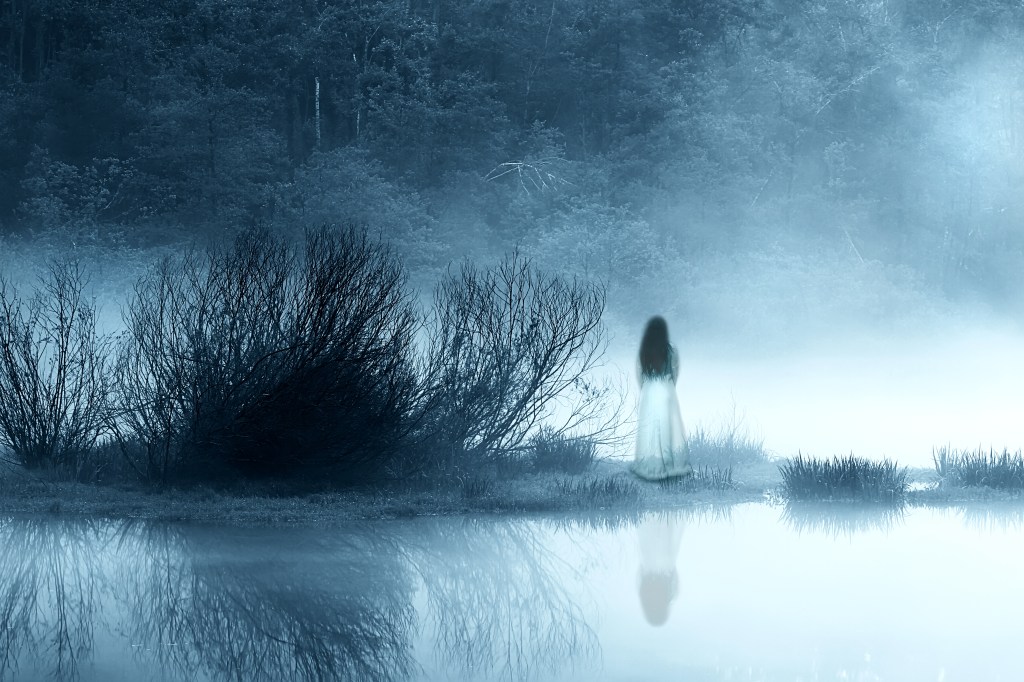
The Banshee is probably the most well-known Irish creature. The word derives from Bean, (bon) meaning woman and si or sidhe meaning fairy. Her job is to herald death by keening, weeping, wailing, and shrieking. Sometimes they may take an unexpecting victim on their way to the dying person. Also, they might shriek and wail to drive a person insane. Here’s a fun clip from the movie Darby O’Gill and the Little People that shows both a Banshee and a Dullahan.

Dearg Due is the tragic tale of a beautiful woman forced to marry a cruel man instead of her lover. Her father only wanted profit from marrying her off to a rich man and refused to listen to her pleas or that of her lover. The chieftain she married was exceptionally cruel and often locked her away for weeks at a time. She wasted away and died. The only one to mourn her death was her lost love. Now the story turns from tragic to horrifying. Her rage brings her from the grave, seeking revenge from those who wronged her. She goes to her father and kills him. Next, she visits her husband and sinks her teeth into his neck, drinking his blood. This creates and unsatiable bloodlust. Using her beauty, she lures men to her and feasts on their blood, killing many. Until one day…she simply disappears. She is, supposedly, buried under Strongbow’s tree in Waterford. Not that that would be high on the tourist list.

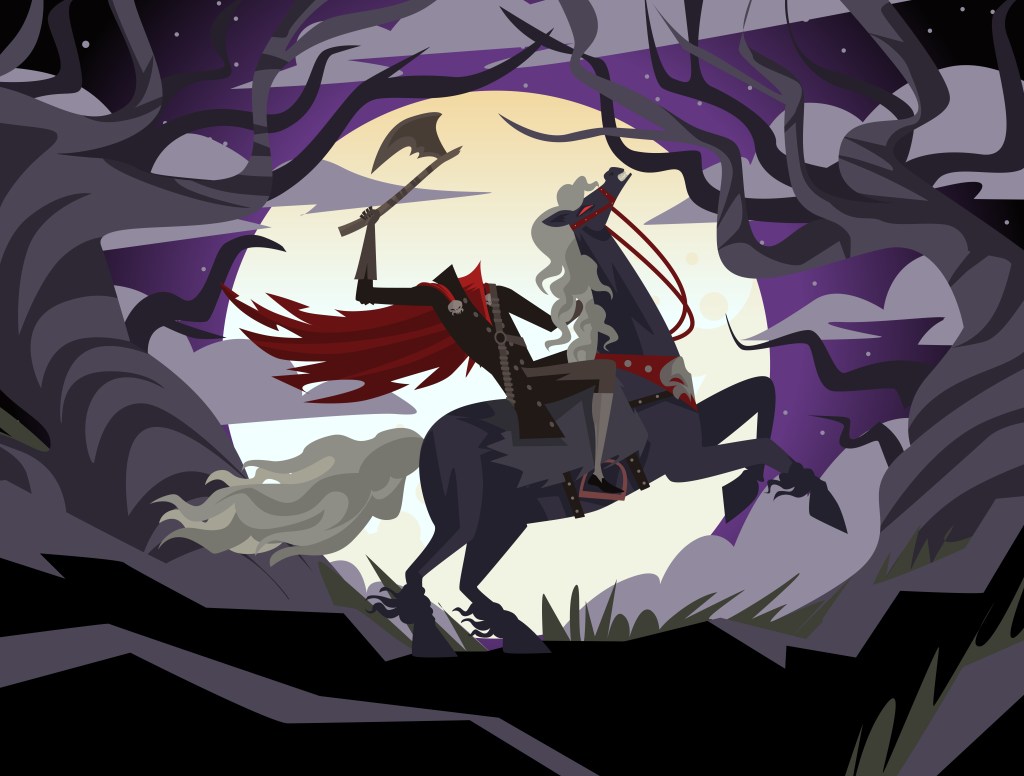
Dullahan is a headless horseman and possibly the inspiration for Sleepy Hallow. He rides a horse or drives the death coach to collect souls of the dead. His whip is made from a human spine and he carries his decomposing head in his arm. If you stumble upon him while collecting souls, he will run you down and take your soul too. Once he speaks your name, you are marked and there is nothing you can do.

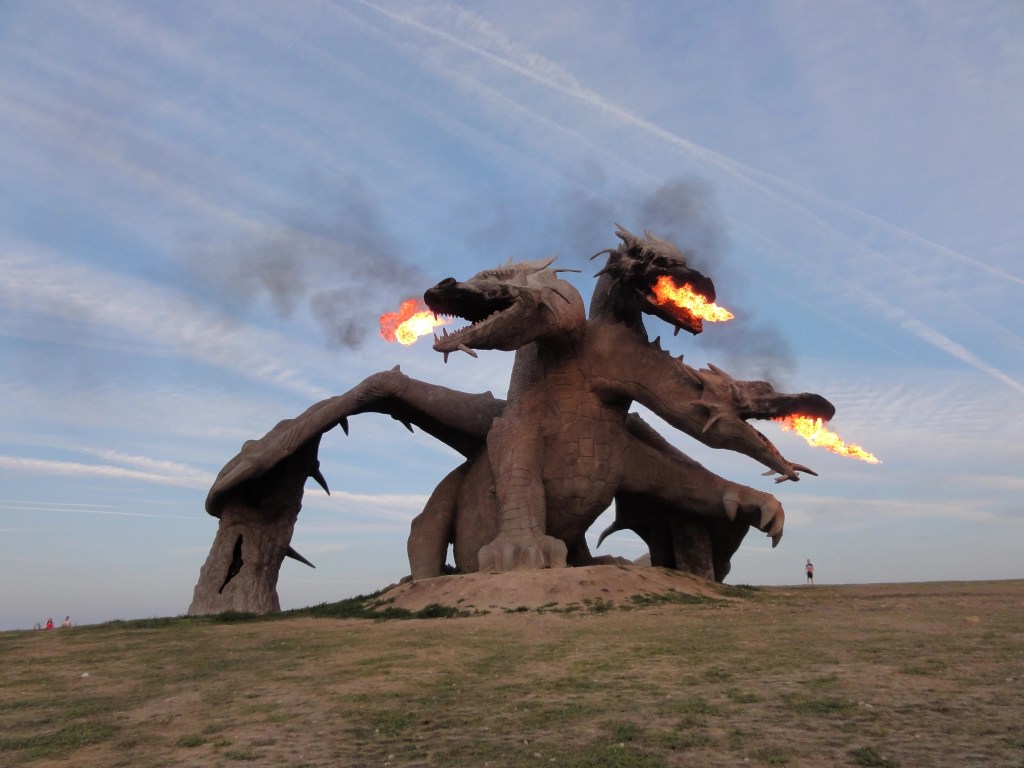
Ellen Trechend was a massive fire-breathing vulture or dragon with three heads. It lived in cave Cruachan in County Roscommon. When it came out of the cave it went on rampage of death and destruction burning everything and everyone in sight. Eventually it was killed by the poet/warrior and hero, Amergin mac Eccit. The cave of Ellen Trechend is located in Roscommon, and interestedly, there are over 200 archaeological sites there. Monuments range from 4000 BC to 400 AD. Truly a place to visit…as long as Ellen Trechend is really dead…

Fomorians – eternal enemies to Tuatha De Danann. Balor (above) was their king. The Fomorians were first in Ireland. Supposedly they built the megalithic monuments (aligned to moon rather than sun.) and fought with Tuatha and Fir Bolg for control of Ireland. Most legends say they are hideous but there are others that claim they were beautiful. There are several intermarriages, so maybe they weren’t so horrible looking. After many wars the Tuatha defeated them in the second battle of Moy Tura. Balor is the grandfather to the greatest Irish hero, CuChulainn.

https://emeraldisle.ie/the-fomorians

Oillipheist (ol a fisht) is a huge water serpent that lurks in rivers and lakes; particularly River Shannon in county Cavan. It has control of water, causing floods as well as storms. It is so big it can swallow ships whole. Its gaze will paralyze victims while it drags them to their watery death. It may have hidden treasure in the depths of the murky waters, but no one has ever survived the Oillipheist to tell the tale. Maybe a dip in the river isn’t such a wise idea.

Sluagh (sloo ah) are the unforgiven dead. They are not welcome in heaven or hell, so they wander earth, hunting souls for the devil. They can be invisible, change their appearance, and fly at night. They might sound like a whirlwind of ravens, flapping their wings, cawing, ready to attack. They are skilled trackers and once they have your scent, there is no hope. They attack with the west winds, and even today, cautious people close their west windows when the winds pick up.

https://emeraldisle.ie/sluagh

Irish creatures are a mix of mythology and just plain scary creatures. Which ones do you find the most frightening?

Imbolc

St. Brigid’s Day

1 February

Woodcut style image of the Celtic heroine Brigid riding a chariot.

The wheel of time continues to turn. We are now halfway between the winter solstice and the spring equinox—which translates into Imbolc (pronounced Im-molk), a day to celebrate the changing of seasons—this time the coming of spring.

Imbolc, roughly translated to ‘in the belly of the mother’ (as in seeds/life in mother earth), has traditionally been celebrated the eve of February first. After long dark days and cold nights, the hope spring brings is at the core of Imbolc. It’s a time of renewal, creativity, and fertility. A time to reaffirm life and make plans for the coming harvest. I think this is something natural that most of us still do today, even if survival hasn’t been the main focus of our winter.

Origin: One of the most powerful goddesses of ancient Ireland was Brigid. She was a daughter of Dagda, god of the Tuatha de Dannan. Born within a flame, or at sunrise, she is a goddess of fire and hearth. She drank the milk of a mystical cow in the spirit world. Which is symbolic of life, fertility and abundance. Milk was food of the gods and is the first food of humans. She is also the goddess of fertility, healing, poetry, and prophecy. Interestingly, she is supposedly the first one to ‘keen’.

At that time, the Filid were the highest order of poets and historians. Once Druids were outlawed, the Filid took over their jobs and set up places of learning. In the beginning they worshipped Brigid and were the ones responsible for the festivals.

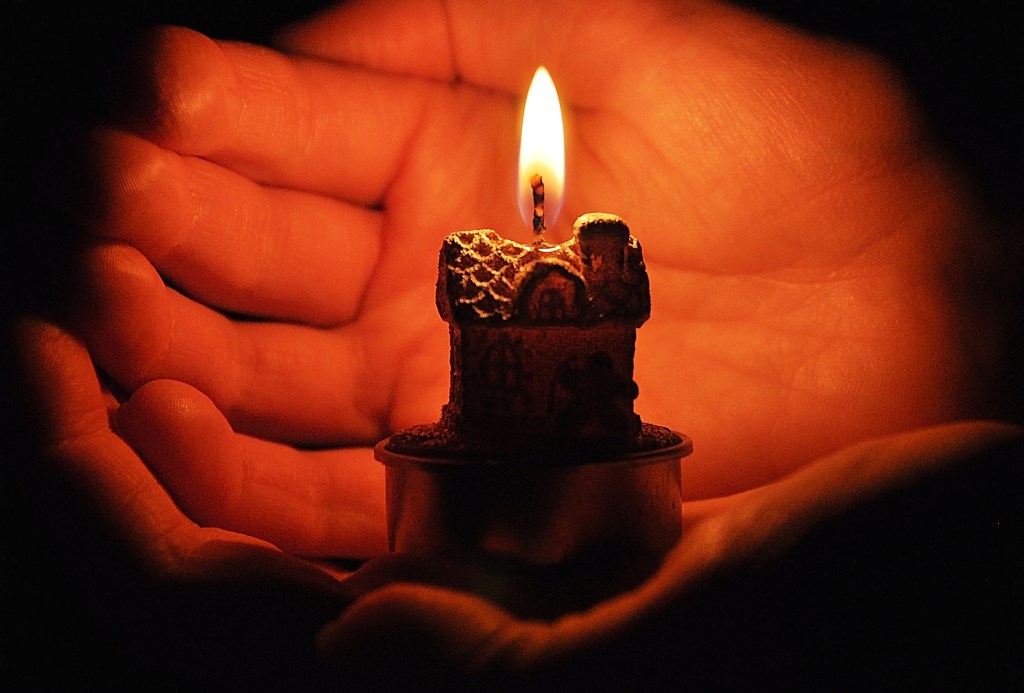
The night before Imbolc, families would make a small effigy of Brigid from bundles of rushes. She was dressed and place in a basket of white flowers and set out overnight. Later, children went house to house with the basket, bringing Brigid’s blessings for the coming year. In return children might receive bits of food or drink. Candles were lit throughout the night to symbolize more light in the coming days and to banish winter’s gloom. It’s easy for us to think how simple it is to light a candle, but back then, candles were a lot of work to make and not wasted, so this was a special honor to Brigid.

Like other festivals, a bonfire and food played a key part. Food was simple; baked goods, winter vegetables, dried fruit, cheese, ewe’s milk, and lamb. If weather permitted, spring cleaning could begin.

Pagans and Christians collided and traditions became mixed. According to Christian tradition, Brigid was born on 1 February about 453 AD. She was the daughter of a slave and a chieftain–Or of a Druid. She was a friend to St. Padraic. Having no interest in marrying, she wanted to create a monastery in Kildare. (Interestingly, at the same site as a shrine to the goddess Brigid.) She was known for her charity and healing powers. She became the first nun in Ireland. She died about 524 AD. She is the saint of Irish nuns, newborns, midwives, dairymaids, and cattle. (There is actually a longer list along these same lines.) The lighting of candles became Candlemas, on 2 February, to celebrate Jesus at the temple and the purification of Mary.

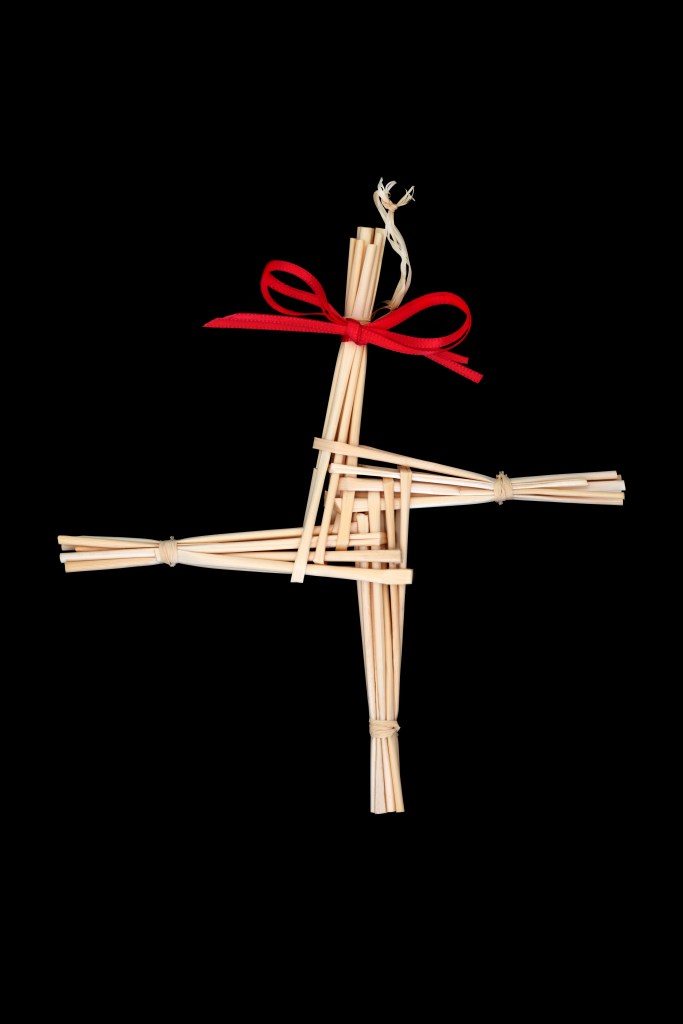
Imbolc became St. Brigid’s Day. An effigy was also made of her, but it was washed in the ocean and then surrounded by candles. Crosses are made out of rushes and used to decorate homes.

Saint Brigids Cross pagan symbol of house blessing protection from evil and fire. Traditionally made in Ireland on Imbolc St Brigid’s feast day.

Imbolc is no longer celebrated as a whole, however, St. Brigid’s Day became a national holiday in the Republic of Ireland in 2023.

Mostly, you can honor Imbolc/St. Brigid’s Day by reflecting on goals for the new year, creating something, baking, cleaning, and lighting candles.

  • Here are some sites you might enjoy:

https://www.mabonhouse.co/imbolc

https://www.limerickpost.ie/2024/01/27/winter-gloom-banished-with-imbolc-celebrations-at-bunratty-castle/

I’m all for the baking and reflecting part. Making St. Brigid’s cross would be a fun project for children also. Do you think you’ll do anything to celebrate? Are the old ways worth keeping? I believe they should at least be remembered as we also remember our ancestors and the lives they led.

Halloween is actually Samhain

Time to celebrate!

Samhain and not Halloween? Actually, Halloween has its roots in the Celtic celebration of Samhain.

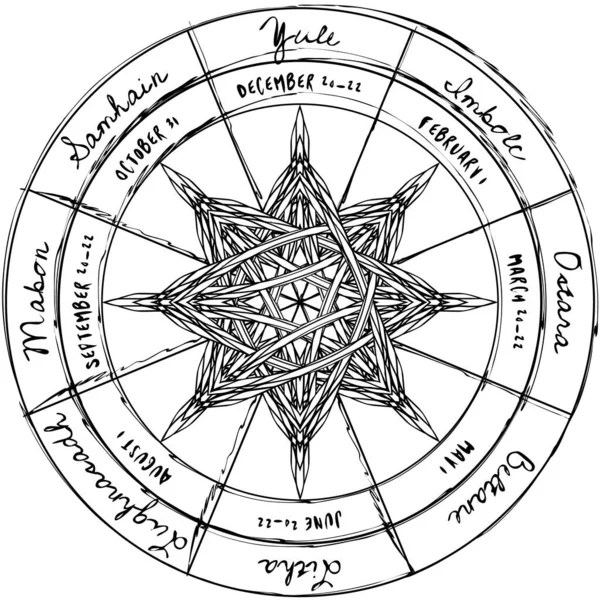
Samhain, pronounced SAH-win, has been celebrated for at least 2000 years and may have originated in an even more ancient celebration dating back about 5000 years. Found in all the Gaelic areas, Samhain is first mentioned in the first century B.C.E. on a bronze calendar found in Gualtic France—the first mention in Irish literature is from the 9th century. It literally translates to ‘summer’s end’. It is also the mark of the Celtic new year. I guess we can think of Samhain as a New Year’s Eve party spent with ghosts and Celtic creatures.

It’s the most important of four fire festivals marking the end of the light half of the year (summer) and the coming of the dark part of the year (winter). Most cultures have some sort of harvest festival, but Samhain has influenced the way we celebrate Halloween today.

The name for the month of November in Irish is Samhain, coming from the celebration on roughly 1 November. There were no calendars, so this fell halfway between the autumnal equinox and the winter solstice. The night before, (Oct 31st), was the fire festival to celebrate the harvest and prepare for winter. The Celtic day began and ended at sunset.

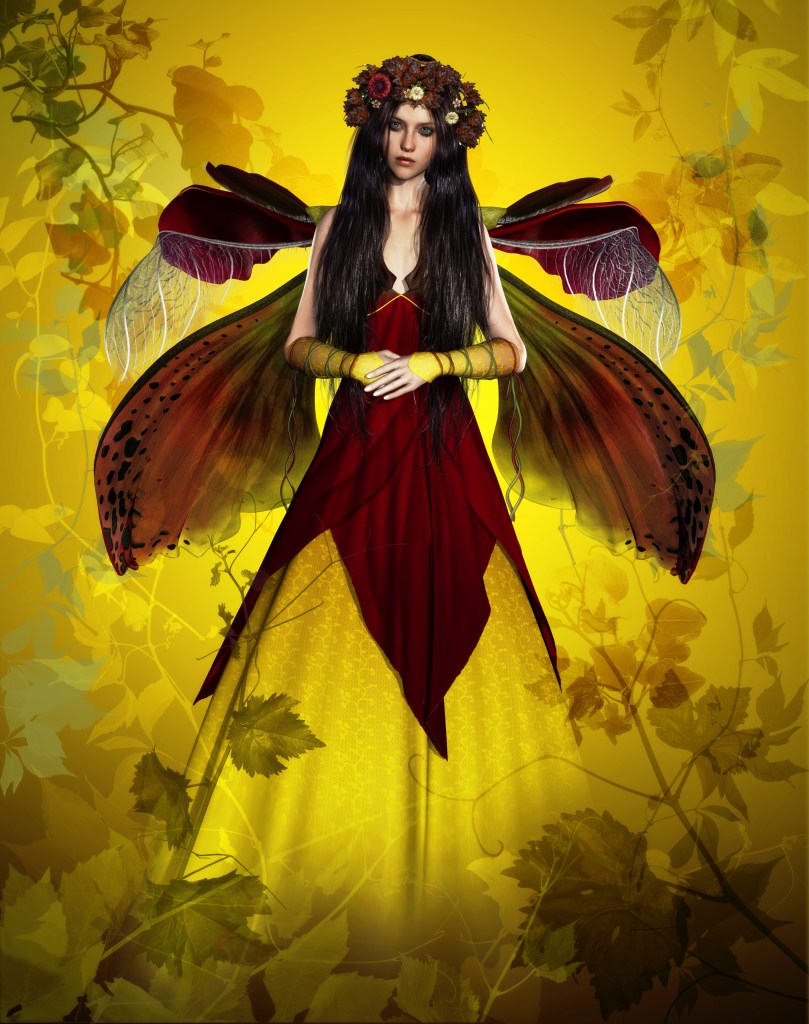
 It was also the night when the veil between the spirit world and physical world was at its thinnest. In folk lore, it was the day that the Hollow Hills would open and the sidhe (she), fairies and magical creatures, were allowed to walk among the living. Hence, all sorts of supernatural things were expected to happen.

Three days and nights marked the mandatory celebration of Samhain. Clans and villagers reported to local rulers or chieftains. The night began with a huge bonfire. The bones of animals were thrown into the fire, and animals may also have been sacrificed; if not for the fire, at least for the feast. Apples were also roasted in the fire. Household fires were put out and relit with a torch from the bonfire.

Meals were prepared for the living and honored ancestors who had passed away. To ward off evil spirits or impish fairies, people dressed up as animals or monsters to confuse them.

Here are a few of the creatures you might run into: The Dullahan. He (sometimes she) is a dark fairy who rides a flame-eyed horse through the night carrying his/her head either in his/her lap or held high for all to see. (Sound like Sleepy Hallow?) It is a harbinger of death. You’ll want to hide, not only because it’s scary, but it will blind you if you see it! Donn. A Milesian invader who was defeated by the Tuatha De Dannan and drowned in the Irish sea. He became the keeper of the gates to the underworld. Spirits pass through those gates on Samhain eve. The Pooka. This is a shapeshifter who comes to the festival of Samhain for gifts from the harvest. An ancient fairy, also know as a Puca—Puck…Maybe that’s where Shakespeare got his idea from? Another headless creature to be aware of on Samhain eve is Lady Gwyn. She and her black pig will chase you if she sees you. Cat Sith. (Sith is a form of sidhe—Star Wars, anyone?) This is a black fairy cat with a white mark on its chest. And how black cats became a part of Halloween. If you left a bit of milk for the Sith, it would bless your house. If not, you were cursed.  

Trick or Treat and the Jack-O-lantern. Children on Samhain eve would dress up and go to their neighbors and ask for a treat. If they didn’t receive a treat, the children would come up with a harmless prank. Does anyone remember Mischief night? It was the night before Halloween when it was all right to do harmless pranks, like on April’s Fools Day. As well as stuff like soap windows, toilet paper trees, etc. It’s probably a good thing it isn’t popular now. But that’s the basis for the trick part of Halloween.

Stingy Jack. He apparently tricked the Devil twice and made a deal that the Devil couldn’t take his soul. When Jack died, he wasn’t allowed in Heaven, so he had to roam the bogs for eternity. He was given a lump of coal to light his way. He carved out a turnip and put the coal inside. Jack of the Lantern—Jack-O-Lantern. Since Samhain, people carved large turnips into scary faces to ward off any evil from sidhe or Jack.

In the 8th century the catholic church added All Souls Day or All Hallows, Nov 1, to the mix in order to change the pagan holiday into a Christian one meant to honor ancestors and saints. All Hallow’s Eve was shortened to Halloween.

When Irish immigrants came to America, they brought these Halloween traditions with them. The pumpkin was easier to carve, so it became the lantern for poor old Jack.

Ireland has a couple of awesome festivals celebrating traditional Irish Samhain/Halloween customs. The Puca Halloween festival, which lasts for four days, in County Meath, needs to be on your schedule if you’re in Ireland at that time. Take a look here to check it out: https://pucafestival.com/ (Even if you don’t go, the videos and pictures, along with interesting information is fantastic!)

Then there is the Derry Halloween Festival – the largest one of its kind in Europe. It’s held inside 400-year-old city walls. It includes light shows, acrobats, and fireworks. Interested? https://derryhalloween.com/ Again, just looking at the site is fascinating.

Both events have free parts and ticketed parts.

What is your favorite Halloween tradition? Do you know where it originated?

If you’d like to dig even deeper into any of these stories, here are some links to great articles and videos: https://www.newgrange.com/samhain.htm

https://www.history.com/topics/holidays/samhain

https://www.history.com/news/history-of-the-jack-o-lantern-irish-origins

https://www.ancienttexts.org/library/celtic/jce/samhain.html

https://www.tiktok.com/foryou

It’s Lughnasadh! Let’s Celebrate!

What exactly is Lughnasadh?

Lughnasadh, pronounced ‘loo-nas-ah’, is an Irish festival that heralds in the harvest season. It’s on the first day of August or celebrated on the day of the full moon nearest 1 August. This is halfway between the summer solstice and the autumn equinox. It is also called Lammas (old English). It’s one of four fire festivals in Ireland. It is also celebrated in Wales, Isle of Man, Cornwall, Scotland, and parts of England. (Celtic influence.)

In ancient Ireland, this was the day to cut grain. If one cut their grain too early, they ran the risk of running out of enough grain to feed their families through the winter. After the harvest, loaves of bread were baked and a celebration ensued. These would include: feasting, matchmaking, trial marriages (in which young couples joined hands through a hole in a wooden door and were married for a year and a day. They then could decide at the next festival if they wanted to stay married), trading, markets, horse races, gatherings of far-flung family, music, storytelling, picking blueberries, law proclamations, visiting holy wells (to leave offerings and pray for health), and athletic contests.

Personally, I think the whole trial marriage idea would make a great novel.

The Tailteann games, considered the first Olympics, originated here. They comprised of competitions in long jumps, high jumps, tug of war, climbing mountains, wrestling, rowing, archery, spear throwing, sword fighting, running, and chariot and horse races. These games were about 1000 years before the Greek Olympics.

Myth surrounding the festival: the Tuatha De Dana god, Lugh, started it as a funeral feast, as well as athletic competition, to honor his foster-mother, Tailtiu. She died of exhaustion after clearing the fields of Ireland so they could be planted. Lugh was a god of many talents. He’s the god of craftsmanship, including; blacksmithing, wheel making, and fighting. (I’m not sure why fighting was in the list for craftsmanship, but it is an art form and this is Irish…)

Christianity adopted the pagan festival by blessing the loaves of bread at mass (Lammas=loaf mass). The mountain climbing became a pilgrimage. Holy wells turned to going to church to give thanks for the harvest and enjoying the fruits of your labor.

Today, with Irish revival, Lughnasadh, like other ancient festivals, are celebrated. One example is the the Puck Fair. It’s probably a survival of the Lughnasadh festival, though the first record of the fair is in 1613. It’s held each year in early August in the town of Killorglin, County Kerry. At the beginning of the three-day street festival, a wild goat is crowned “king,” while a local girl is crowned “queen.” The festival includes traditional music and night concerts, traditional Irish dancing, a parade, arts and crafts workshops, a horse and cattle fair, and trade stalls, to name a few. The festival ends with a fireworks display.

We happened to be in Kerry at this time one year. It was crazy! Hundreds of people for miles in every direction. Unfortunately, we didn’t stop to take in the festivities, but we had to drive very slowly through several streets a few different times and were able to see all the fun things they had going on. Our host at the BnB said they used to go every year and people from all over Ireland attend. Interested? Here’s a link for you: https://www.bandbireland.com/festivals/festivals-and-events/puck-fair

Neo-pagans, Wiccans, and modern Druids also make it a point to celebrate this festival today. Most cultures have probably had a time to give thanks for a bountiful harvest. We have Thanksgiving, which has also changed through time.

Though celebrating fall harvest the first of August seems a wee bit early to me—like going to Hobby Lobby for 4th of July decorations and seeing autumn décor—it was important to the survival of the ancients.

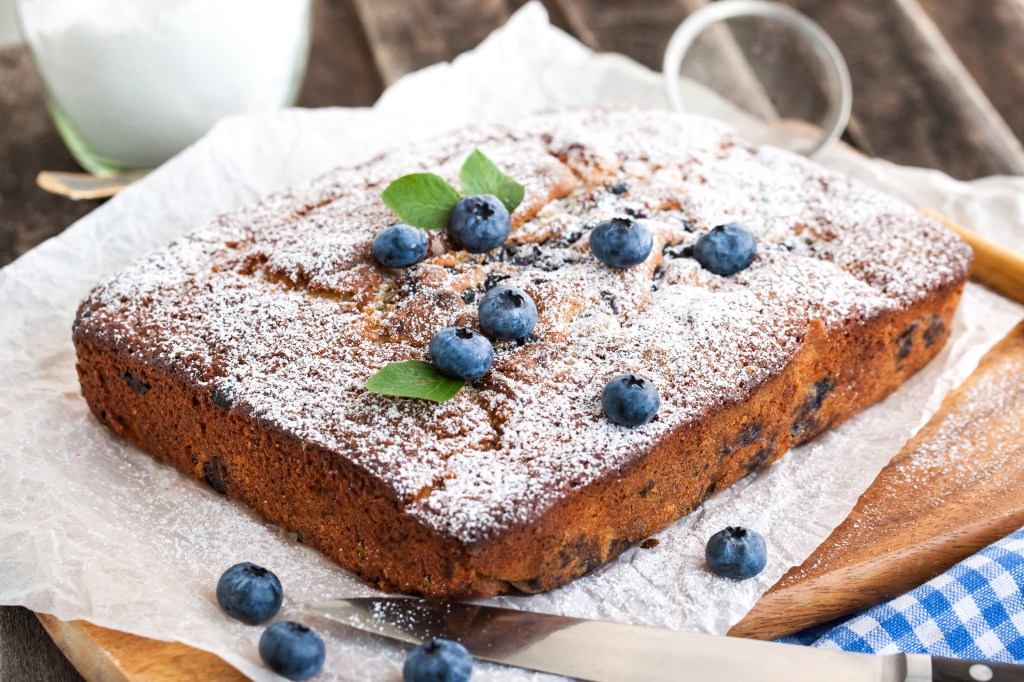
If you want to have your own celebration you can bake some bread and a blueberry pie or cake. Maybe have a bonfire and family competitions while listening to Irish music. Or watch this movie, Dancing at Lughnasa starring Meryl Streep: https://www.imdb.com/title/tt0120643/?ref_=fn_al_tt_1 (Let me know if you watch it and what you think.)

My bread is baked. Blueberry cake sounds good. I think I’ll check out the movie since I haven’t seen it. Are you ready to do some celebrating?