I want to clarify upfront: the term Black Irish is not a racial slur or slur of any kind. But what does it actually mean?
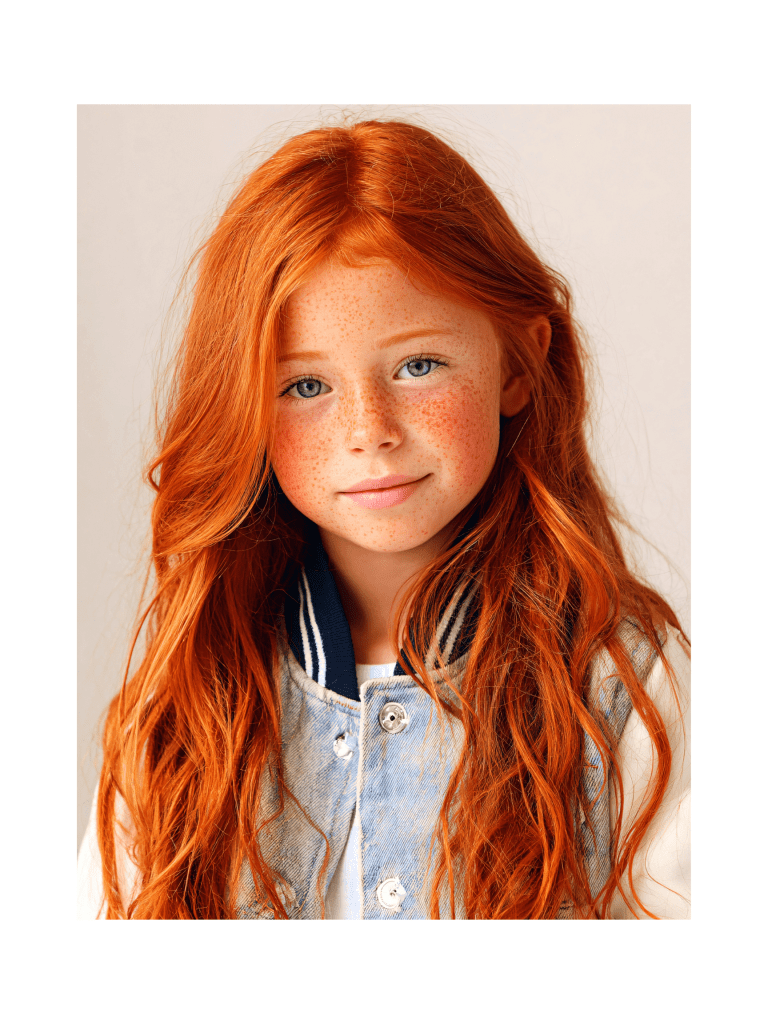
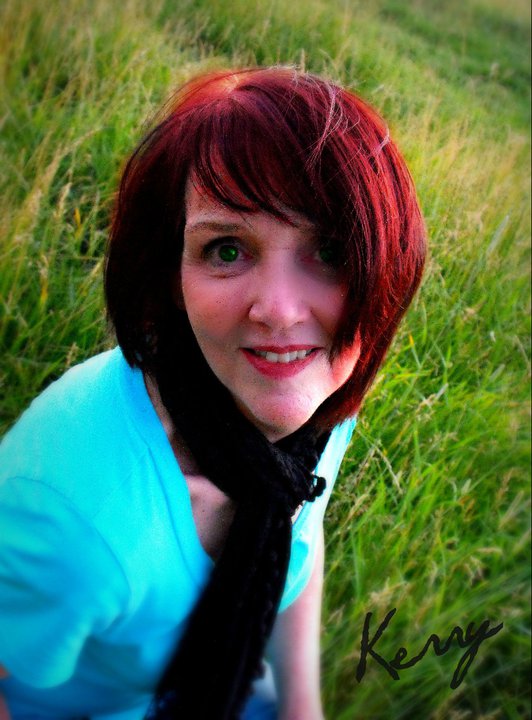
The title Black Irish refers to Irish people who don’t fit the stereotypical image of red hair, blue eyes, and freckles. Instead, they tend to have black or brown hair, darker eyes, and either fair skin or an olive complexion. Is this for real?
Well, yes and no.
I was taught that the Black Irish are the ancient Irish bloodlines that haven’t been mixed with Vikings, English, or other invaders. There might be some truth to that.
Interestingly, the term Black Irish isn’t commonly used in Ireland itself. Instead, it originated among Irish-Americans (and in Canada) in the late 19th century. During the mass Irish immigration to the United States from the 1840s to the early 1900s—and amid the widespread “No Irish Need Apply” discrimination—some felt the term was a way to distinguish between Irish with red hair and those with darker complexions. Perhaps the darker-featured Irish didn’t “look” Irish to some and were thus more accepted?
Since Black Irish isn’t a racial term or an official identity, what is it? It falls more into the realm of mythology and romantic notions of Irish identity—more folklore than fact. Some stories about its origins trace back to survivors of the Spanish Armada in 1588. After the battle of Gravelines, about 28 ships and 9,000 men landed in Ireland. While this was a real event, most of the survivors were either captured or killed. There wouldn’t have been enough men left to significantly impact Irish ancestry, and modern DNA confirms this.
Dark hair and eyes are quite common in Ireland. These features are considered to be from pre-Celtic or Welsh ancestors and are due to natural genetic diversity. Ireland’s history is complex, involving migrations and invasions by Celts, Gaels, Vikings, Normans, Anglo-Saxons, Scots, Welsh, and even people from Northern Spain (Basque).
Regarding red hair, about 10-15% of Irish people have red hair, compared to only 1-2% globally. It’s a distinct Irish trait.
In America, the term Black Irish is often used as a symbol of the diversity, identity, and resilience of the Irish people. You might not hear it much in the West, but I grew up hearing it back East. Have you heard the term before? What did you think it meant?
You may have heard the term Irish Diaspora before, but what does it actually mean? In recent years, the term has become quite broad, but at its core, it refers to people of Irish ancestry who live outside of Ireland—whether they emigrated generations ago or are recent arrivals. It can also include those with distant roots to Ireland who feel connected to Irish culture and heritage. Depending on how you define it, the Irish Diaspora could encompass tens of millions of people around the world!
For this article, I’m focusing on Irish emigrants and their descendants, which brings the number down to the millions—making it a more manageable scope. As a reminder, I like to explore broad topics by providing a basic understanding, offering enough information to educate about different aspects of Ireland, including its history and culture. Each reason I mention for Irish emigration could easily be the subject of several books—it’s a complex and fascinating topic. What follows is just a brief overview of the Irish Diaspora.
The Irish government has refined the definition of the diaspora to include emigrants, their children, and grandchildren. This narrower focus reduces the number of people who fall under the term ‘Irish diaspora.’ Did you know that you can apply for Irish citizenship and get an Irish passport if you have Irish grandparents?
So, why are there so many Irish and their descendants living abroad? Since the 1700s, approximately 10 million people have emigrated from Ireland—more than Ireland’s current population today. What motivated so many Irish to leave, and where did they go?
The first thing to understand is that Ireland was a conquered country. England’s involvement began with the Anglo-Norman invasion in the 12th century. However, it was during the Tudor era, especially under Queen Elizabeth I, that English rule expanded significantly in the 16th century. (Someday, I might dive deeper into that history!) During this period, the English employed various strategies: military conquest (think Cromwell), colonization—bringing Protestant Scots to Northern Ireland and displacing Catholic Irish—and the imposition of English law, language, and religion. Much of this colonization left Ireland in deep poverty and fueled centuries of hardship and conflict.
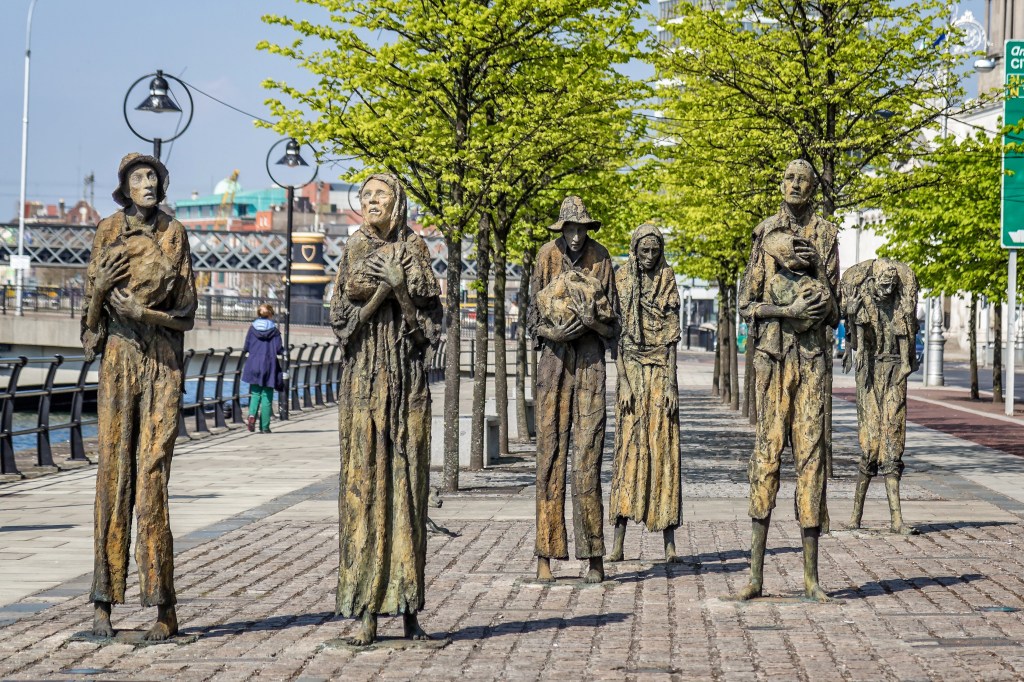
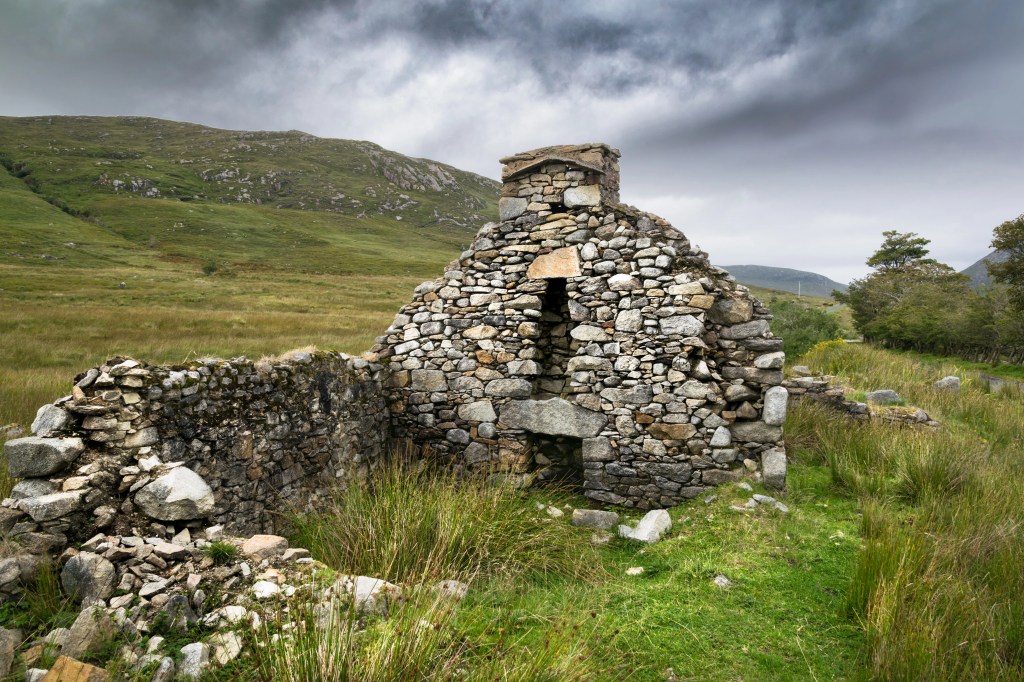
Then came the Gorta Mór—the Great Hunger—in the mid-1840s. When the potato crop failed, millions of Irish people faced starvation. Sadly, England’s response was inadequate; instead of helping, they even sent food from Ireland to England. Families were evicted from their homes, left with nothing, and many consider the famine to be an act of genocide. Millions died, and millions more emigrated—Ireland’s population was halved, and the country is still in the process of recovery today. If you visit Ireland, you’ll see hundreds of abandoned homes, known as Famine Homes, scattered across the landscape as silent reminders of that tragedy.
Later, in the late 1800s, Ireland experienced the Land Wars. Irish tenants, unable to pay exorbitant rents and taxes, fought to defend their rights. This struggle continued until 1914. Imagine enduring the devastation of the famine only to face ongoing evictions and unpayable rents—an ongoing hardship that deeply shaped Irish history and resilience.
Next came the Irish War of Independence. The Irish Republican Brotherhood (IRB) evolved into the Irish Republican Army (IRA), and from 1919 to 1921, they fought a guerrilla war to secure Irish self-rule. The outcome was the establishment of the Irish Free State in 1922, while Northern Ireland remained part of the United Kingdom.
The 1960s and 1970s saw renewed activity with the IRA, as they fought for the rights of Northern Irish people within Britain’s legal system and, ultimately, for a united Ireland. This long struggle finally led to a peace agreement in 1998. Today, Northern Ireland remains part of Great Britain.
So, where did all the Irish go during these waves of emigration? Many headed to the United States, Australia, Great Britain—especially Liverpool—Canada, and even Argentina. These countries have long been popular destinations for Irish emigrants.
Just like in all countries, Ireland today experiences a steady flow of both emigration and immigration. An interesting note from the National Museum of Ireland is that, historically, emigration has involved a higher proportion of females, often young and single.
In my travels and even in teaching, I’ve noticed that people with Irish, Scottish, and Welsh heritage tend to be proud of their Celtic roots—they know they have Celtic blood and celebrate it.
There are countless songs, poems, and stories about the old country. I believe that because many Irish didn’t want to leave their homeland, they passed down that deep longing for home through generations, keeping the spirit of Ireland alive wherever their descendants now live.
Ireland actively works to connect with its diaspora, recognizing how important this link is to their culture, economy, and politics. Sean Fleming has been the Minister of State for Diaspora and Overseas Aid since 2014, a role dedicated to strengthening these international connections.
Additionally, genealogist societies are found in each county, helping people trace their Irish roots. There are also many online groups, especially on Facebook, created to connect people with Ireland and explore their Irish heritage.
Are you a part of this Irish Diaspora? My first Irish ancestors came over in the 1700s, then my great grandmothers in 1897/99. When did your ancestors leave the Emerald Isle? Do you know why they decided to leave?
Ireland has a rich lore of mythological creatures, good, bad, downright evil, and those somewhere in between. Here are a few of those (mostly) harmless beings that dwell in the mists and myths of Ireland.
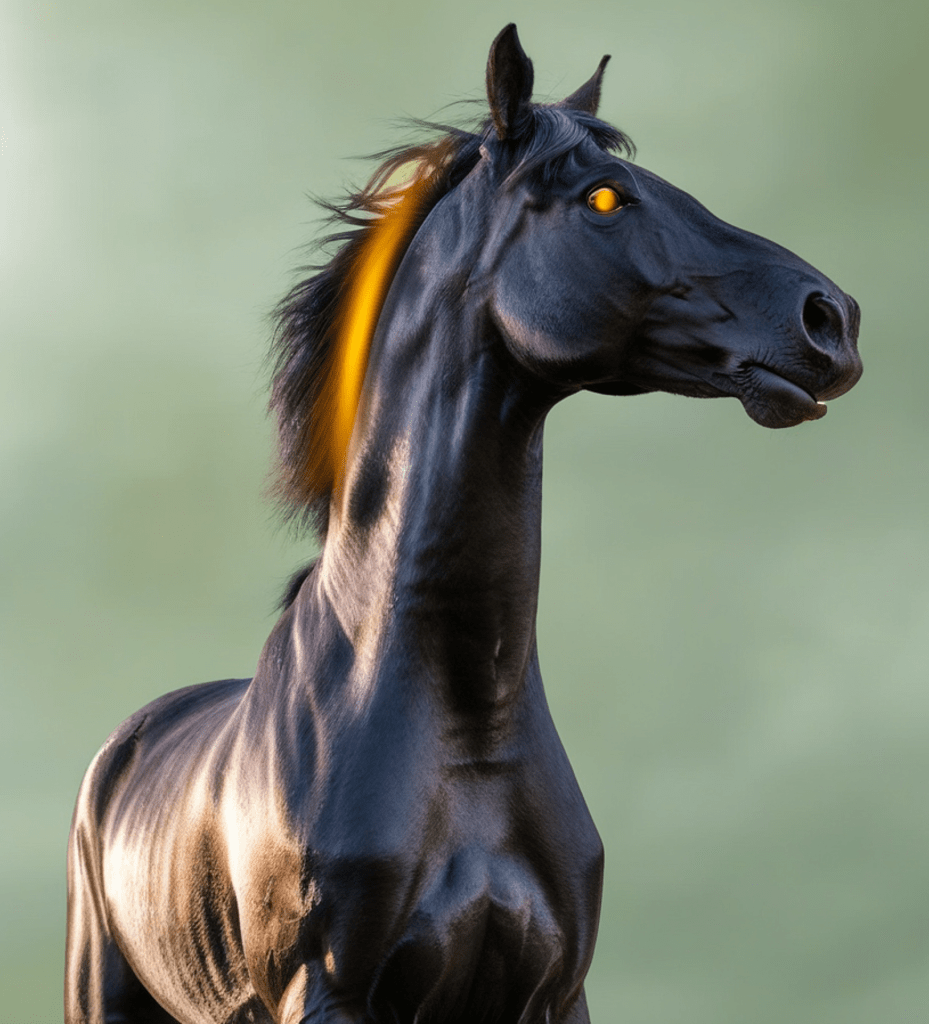
The Pooka. Also know as: Puca, Phouka, Poc, and Puck. Poc is he-goat in Irish. The Pooka is a mischievous fairy, a shape-shifter/goblin/sprite. Shakespeare’s infamous imp in A Mid-summer’s Night Dream is Puck. It can appear as a horse, goat, cat, dog, rabbit, donkey, a beautiful young maiden, or a handsome youth. Even as a human, it may retain some animal features, like ears or a tail. It mostly appears as a magnificent black stallion with yellow or red glowing eyes. It can be found in bogs and marshes. (So, places to avoid?) The Pooka either brings good luck or is a warning of coming doom. It is a trickster and enjoys a good prank. Brian Boru, the greatest high king in Ireland, is the only one to have ever controlled a Pooka. He made a bridle out of the Pooka’s (appearing as a horse) tail hair and rode the Pooka until it became exhausted. It promised to stop tormenting the countryside and never harm an Irishman, unless an outrageous drunk. Of course, the Pooka did not keep it’s promise. If interested, you can find out more here: irishcentral.com/roots/history/irish-legend-pooka
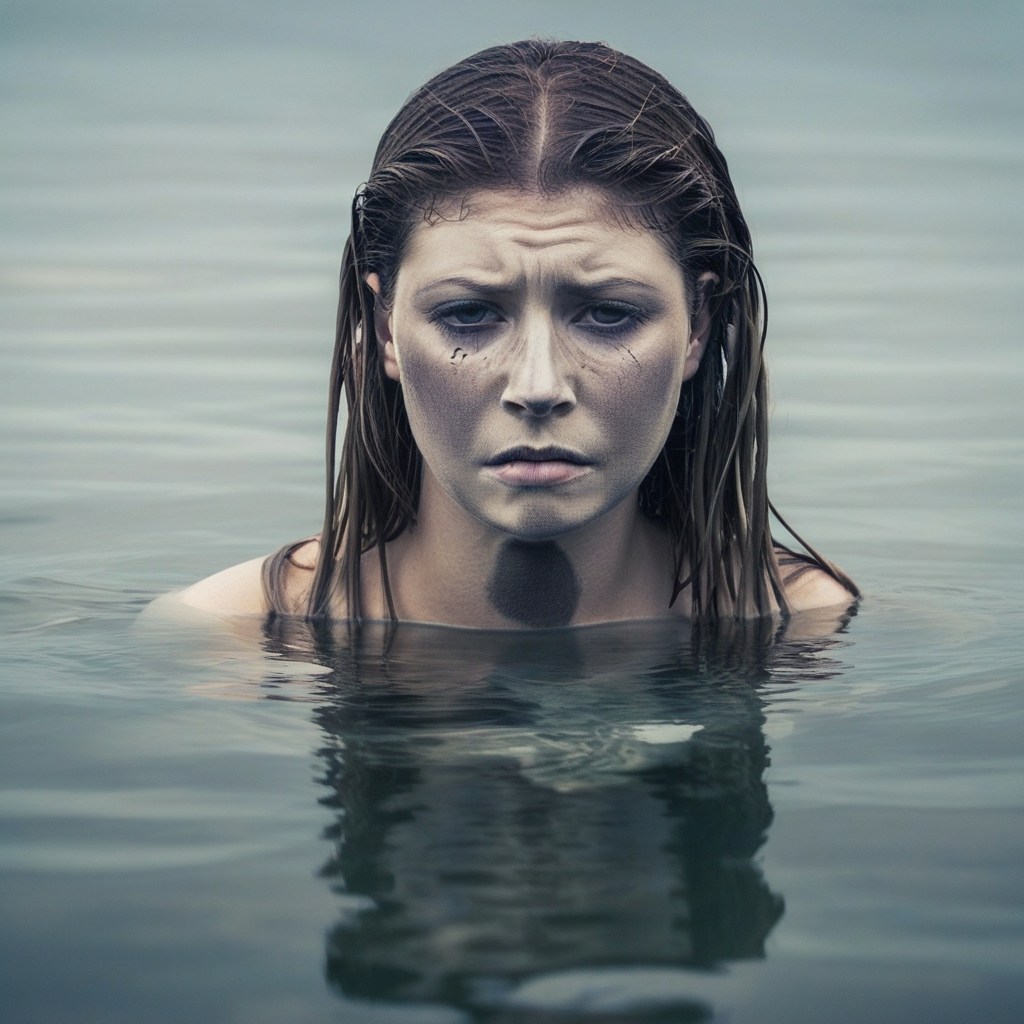
2. Merrow – (Muruch) – is the Irish version of a mermaid. They are sea fairies, but also live on the land. They have green hair and webbed hands. The Merrow has an item, like a hair comb, that allows them (and others) to live and breath under water. If the item is lost or stolen, the Merrow must remain on land. If a man marries a Merrow, he would have to obtain and hide the item, or she would return to the sea. Either way, the poor Merrow would long for her watery home as long as she was on land. They are also the sirens of the sea, luring men to them, either to take them to their deaths, or live with them under the sea. The mermen are apparently extremely ugly and dangerously mean. Perhaps that is why the Merrow seeks a human?
3. Selkie – A Celtic creature, found in Scotland, Iceland, and other coastal places where Celtic peoples lived. A Selkie is a seal in the ocean and a human upon the land. Once on land, they shed their seal skins and hide them. If stolen, the Selkie is landbound until it is returned to them. They are said to make good wives, but will always long for the sea. It would seem that a Merrow and a Selkie could be good friends, if living in the same village…sounds like a good story here…) I first heard the tale of Selkies in a Joan Baez album where she sings old ballads.
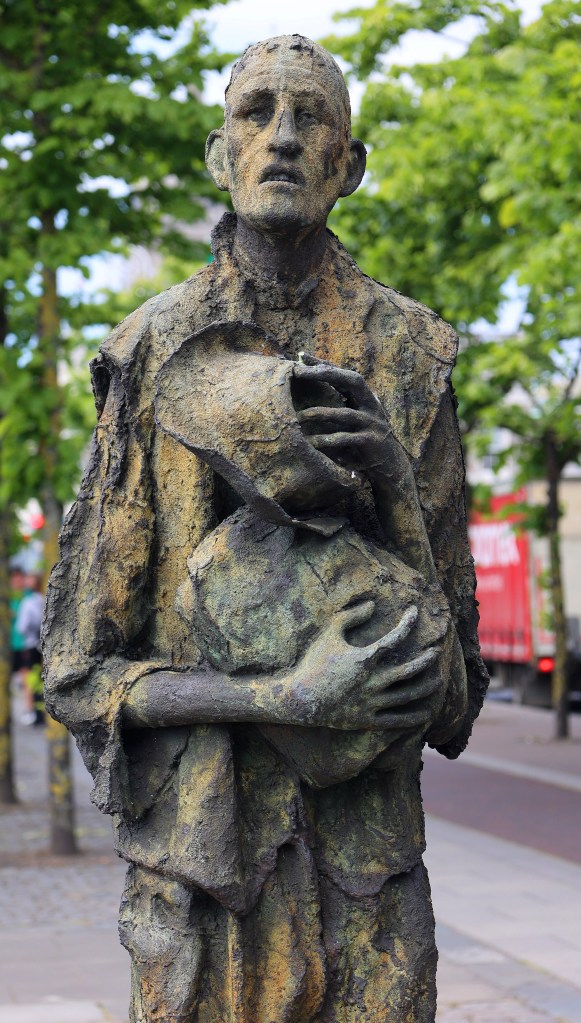
4. Fear Gorta – Fear (far) is man in Irish and Gorta is hunger, so Fear Gorta is a man of hunger, or a starving man. As such, he appears as just that, a beggar that is starving, close to death. His ghoulish appearance is a portend of coming famine. If, as a beggar, you are kind and feed him, he will be generous to you; if not, he will show no mercy, bringing disaster and despair, along with famine. It is said he appeared just before the Great Famine of the mid 1800s in Knockma, county Galway. Maybe someday I’ll touch upon the Great Famine, but it’s such a terrible part of Irish history that I hesitate delving into it.
5. The Far Darrig – (Fear dearg) – the red man. He is similar to a leprechaun in stature and in that he loves mischief and pranks. However, the Far Darrig wears red rather than green and isn’t as fond of gold as the leprechaun. Most of his pranks are playful and harmless, though he can be spiteful.
6. The Bodach – appears as a poor, elderly farmer, wearing a worn hat and chewing hay. He usually foretells of death and disaster. (It would awful if the Far Darrig and Fear Gorta became buddies!) He enjoys sneaking into homes and poking people until they wake and to play pranks on children. A bit of salt on your threshold will keep the creature out. If you’ve been startled awake at night, it might be the Bodach! Read more here:
These are a few of the favorite, more or less harmless creatures of Ireland. It’s interesting to consider a countries history and beliefs when looking into their mythology. After studying The Great Famine, I think the Fear Gorta is the most frightening. He, himself, may be harmless, but what he brings in his wake is not. Did you find any interesting creatures on this list? Did I miss one that you think should have been added?
All cultures have scary creatures. Listed here are a few of the more famous Irish creatures, just in time to haunt you for Halloween.
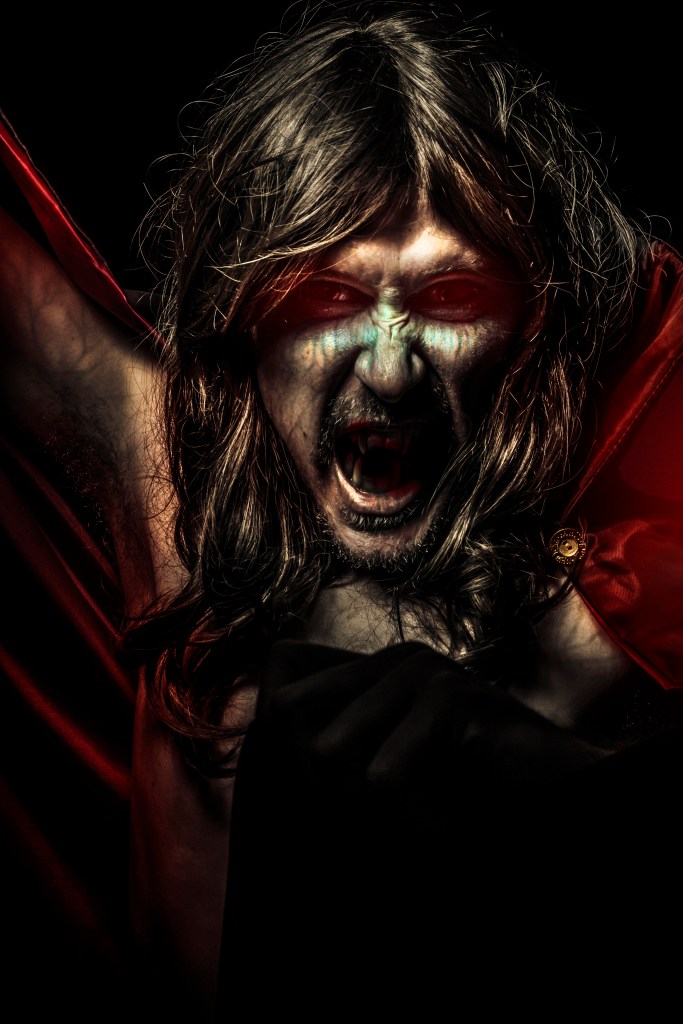
Abhartach (something like; ow-a-ba) – There is some interesting research that points to the Abhartach as the real inspiration for Bram Stoker’s novel, Dracula. Stoker is an Irishman, so he would have been familiar with this creature. The Abhartach was a magical dwarf, and a cruel chieftain. Due to his evil rule, a neighbor chieftain, either Cumhail or Cathain (depending on the story) slew him and buried him, standing up. Abhartach escaped the grave as a walking dead and wreaked havoc, drinking the blood of anyone he came across. He was so powerful he could drain blood from his victim just by standing near them. Cumhail/Cathain again slays him and buries him, once more in a standing position. Abhartach returns again, out for revenge. Cumhail/Cathain finally consults with a druid. Combining two versions; Cumhail/Cathain slays Abhartach with wood from a yew, buries him upside down, puts thorns on the grave, and a large stone (laght) on top. This laght still exists in Slaghtaverty, Derry, Ireland. In case you wanted to visit.
Balor of the evil eye was a giant king of the Formorians. They were malevolent supernatural beings who are eternal enemies to the Tuath De Danann. He had a large eye, somewhat like a cyclops. When he opened his evil eye, he caused mass destruction to everything he looks upon. He learned of a prophecy that his grandson would kill him someday, so he locked his daughter, Ethniu, in a tower. But Cian Mac Cainte, a Tuatha, attacked and recued her. They were married. She had three sons, triplets. Balor orders them all killed. They are cast into the sea. Birog, a woman fairy or druidess, saves one son, Lugh. He later slays Balor.
Bananachs are demons of the air. They often appear as ghoulish goats. Mostly they haunt battlefields, waiting for that last breath so they can collect the souls of the dying and bring them to the devil. They are not wanted in heaven or hell. Bananachs encourage and exult in bloodshed.
The Banshee is probably the most well-known Irish creature. The word derives from Bean, (bon) meaning woman and si or sidhe meaning fairy. Her job is to herald death by keening, weeping, wailing, and shrieking. Sometimes they may take an unexpecting victim on their way to the dying person. Also, they might shriek and wail to drive a person insane. Here’s a fun clip from the movie Darby O’Gill and the Little People that shows both a Banshee and a Dullahan.
Dearg Due is the tragic tale of a beautiful woman forced to marry a cruel man instead of her lover. Her father only wanted profit from marrying her off to a rich man and refused to listen to her pleas or that of her lover. The chieftain she married was exceptionally cruel and often locked her away for weeks at a time. She wasted away and died. The only one to mourn her death was her lost love. Now the story turns from tragic to horrifying. Her rage brings her from the grave, seeking revenge from those who wronged her. She goes to her father and kills him. Next, she visits her husband and sinks her teeth into his neck, drinking his blood. This creates and unsatiable bloodlust. Using her beauty, she lures men to her and feasts on their blood, killing many. Until one day…she simply disappears. She is, supposedly, buried under Strongbow’s tree in Waterford. Not that that would be high on the tourist list.
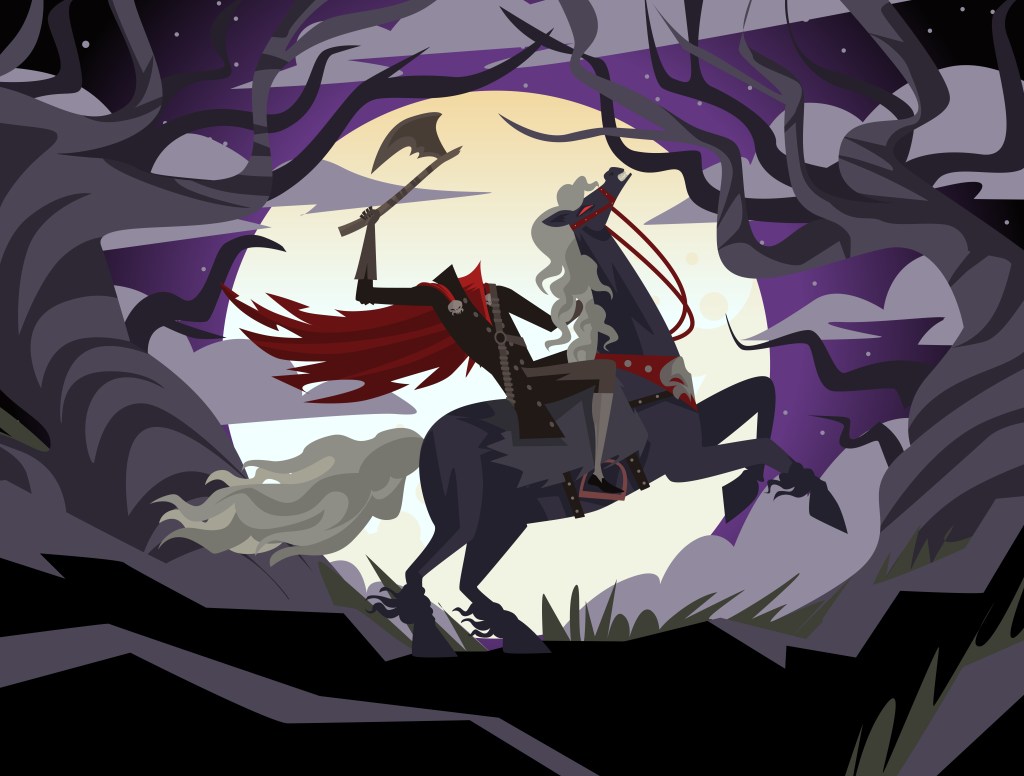
Dullahan is a headless horseman and possibly the inspiration for Sleepy Hallow. He rides a horse or drives the death coach to collect souls of the dead. His whip is made from a human spine and he carries his decomposing head in his arm. If you stumble upon him while collecting souls, he will run you down and take your soul too. Once he speaks your name, you are marked and there is nothing you can do.
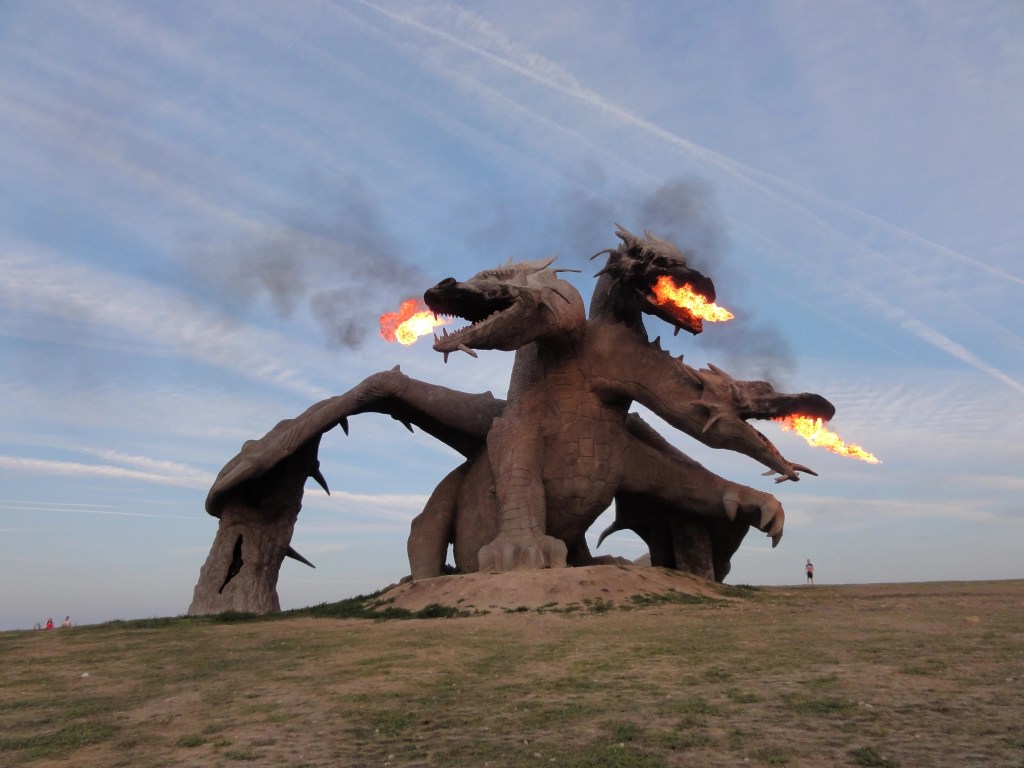
Ellen Trechend was a massive fire-breathing vulture or dragon with three heads. It lived in cave Cruachan in County Roscommon. When it came out of the cave it went on rampage of death and destruction burning everything and everyone in sight. Eventually it was killed by the poet/warrior and hero, Amergin mac Eccit. The cave of Ellen Trechend is located in Roscommon, and interestedly, there are over 200 archaeological sites there. Monuments range from 4000 BC to 400 AD. Truly a place to visit…as long as Ellen Trechend is really dead…
Fomorians – eternal enemies to Tuatha De Danann. Balor (above) was their king. The Fomorians were first in Ireland. Supposedly they built the megalithic monuments (aligned to moon rather than sun.) and fought with Tuatha and Fir Bolg for control of Ireland. Most legends say they are hideous but there are others that claim they were beautiful. There are several intermarriages, so maybe they weren’t so horrible looking. After many wars the Tuatha defeated them in the second battle of Moy Tura. Balor is the grandfather to the greatest Irish hero, CuChulainn.
Oillipheist (ol a fisht) is a huge water serpent that lurks in rivers and lakes; particularly River Shannon in county Cavan. It has control of water, causing floods as well as storms. It is so big it can swallow ships whole. Its gaze will paralyze victims while it drags them to their watery death. It may have hidden treasure in the depths of the murky waters, but no one has ever survived the Oillipheist to tell the tale. Maybe a dip in the river isn’t such a wise idea.
Sluagh (sloo ah) are the unforgiven dead. They are not welcome in heaven or hell, so they wander earth, hunting souls for the devil. They can be invisible, change their appearance, and fly at night. They might sound like a whirlwind of ravens, flapping their wings, cawing, ready to attack. They are skilled trackers and once they have your scent, there is no hope. They attack with the west winds, and even today, cautious people close their west windows when the winds pick up.
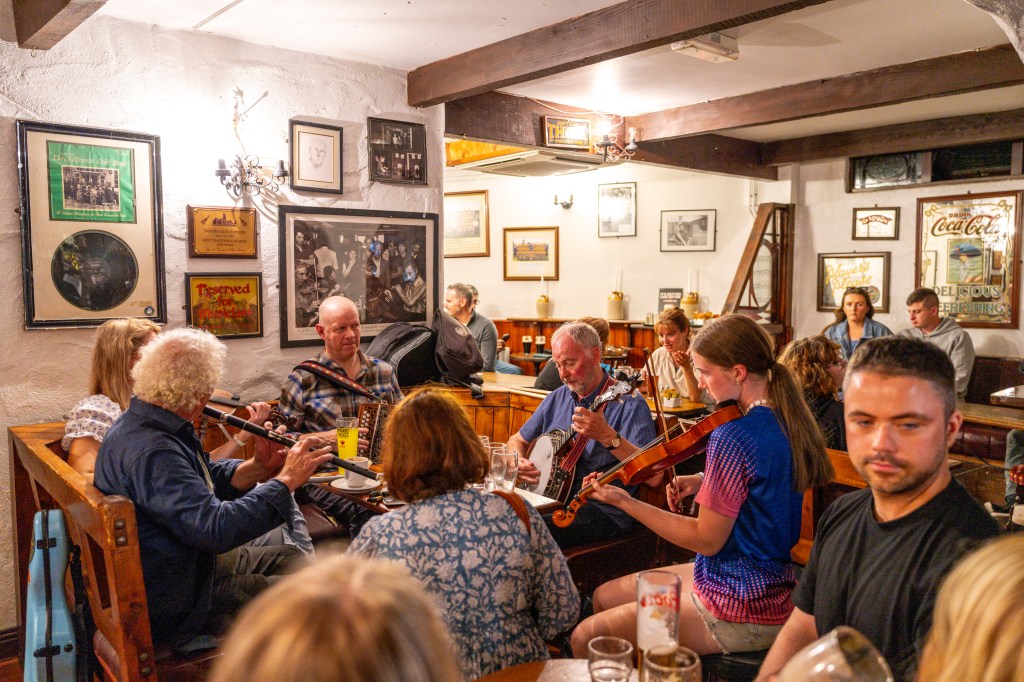
From toe-tapping tunes to ancient battles, Celtic peoples have used instruments to inspire, intimidate, remember culture, and enjoy some craic (a good time). Music has a magical way of transporting you to another time or place. It evokes emotions and memories. I’m not particularly musically inclined, but Scottish bagpipes stir my soul; Irish music speaks to me. Like many Irish Americans, it’s a reminder of ‘the old country’ that our great/grands spoke about. That longing for home that never quite went away.
Here are some instruments you might find as interesting as I did.
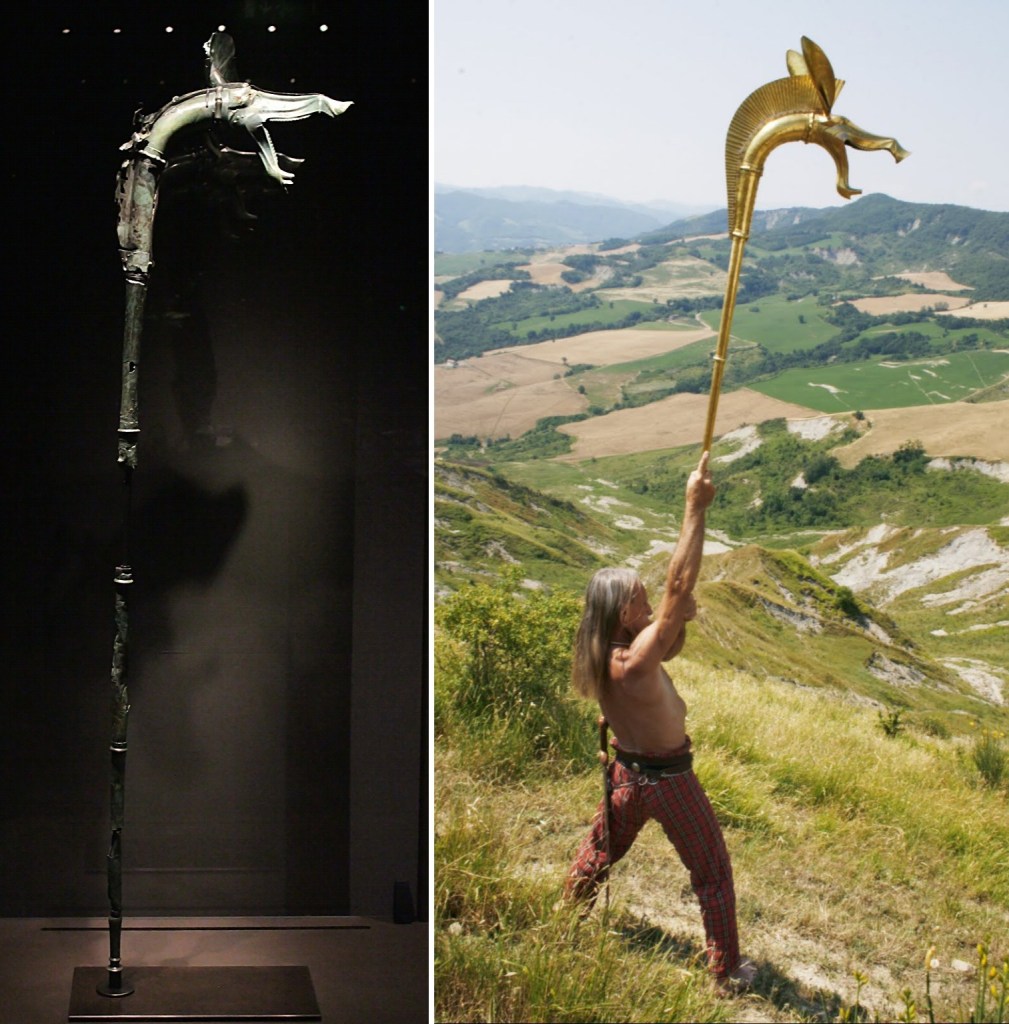
Carnyx – As ancient as it gets! The carnyx is one of the earliest know musical instruments. It’s about 3000 years old and was use during the bronze age. It was a trumpet-based instrument about 12’ long. It had a thin bronze tube which was bent at right angles at both ends. The lower end had a mouthpiece and the top was decorated as a boar’s head or sometimes a serpent. A ‘tongue’ flapped in the creatures’ mouth making a haunting sound that carried over long distances. It was used in both warfare to intimidate enemies and also in ceremonies. Imagine an eerie melody rising from the mists, like wraiths, just before a battle. Especially if you’ve never heard it before—add to that the reputation of the fierceness of the Celts you’re about to fight. Then the drums start. Movies should have the carnyx. Remains of five carnyx have been found, but no complete ones. What’s amazing, but shouldn’t be so surprising, is that you can buy one on Amazon! Check out this video of one being played; you’ve never heard anything quite like it. https://www.youtube.com/watch?v=lVFGT2NX-YQ (Image from across the internet on dozens of sites in as many languages.)
2. Uilleann pipes (E-linn or IL-yen). Scottish pipes are popular world-wide with that either you love them or hate them sentiment. They are popular at parades, funerals, and special occasions. Did you know there was an Irish bagpipe too? Uilleann means ‘pipes of the elbow’. They are played using the arm/elbow, not the mouth. It has a sweeter and quieter sound than other bagpipes, like the Great Irish war-pipes or the Great Highland bagpipes. Surprisingly, bagpipes were brought to Scottland and Ireland by the Romans. Popular in the 1300s, both the Scotts and the Irish used them in battles against the English. The British banned all pipes in 1366 to discourage them as a war instrument. By the 1700s pipes were used by the upper class for enjoyment and ceremonies. The Irish pipe can be played sitting or standing. As they faded from popularity, the pipes were sold to the poorer classes, who added them to folk music. As Irishness declined in the 1800s, the pipes fell out of favor (except for the Irish). Clubs were created in the early 1900s to encourage Irish music, especially the pipes. Eamonn Ceannt led the Dublin Pipers Club to help establish them forever in traditional Irish music. It is said that it takes 7 years to learn, 7 years to play, and 7 years to master. Here are 2 links I hope you’ll take a look at: Jerry O’Sullivan explains the pipes: https://www.youtube.com/watch?v=olA-LAG0aRc&t=52s and listen to them here:
3. The Bodhran. I thought the bodhran drum was as ancient as the carnyx. Nope. It is a simple frame drum with a crossbar to brace the sides. Originally used as (perhaps) a winnowing tool, or for dying wool. Or as a Shamanic drum. The history is unclear. It was used in battles in the 1800s. It does have ancient use on 26 December, with the tradition of the Wren boys. (See my Christmas post for more on that.) In fact, the older generation felt that the only day to take out the bodhran was 26 Dec., any other time was crazy. It actually didn’t gain popularity until the 1960s with the great folk music revival! It has been labeled a poor man’s tambourine. (Sometimes the Wren boys put coins on the drum to make more noise.) It was first played with fingers rather than a tipper or beater. Detailed information here: https://blog.mcneelamusic.com/bodhran-history-evolution/
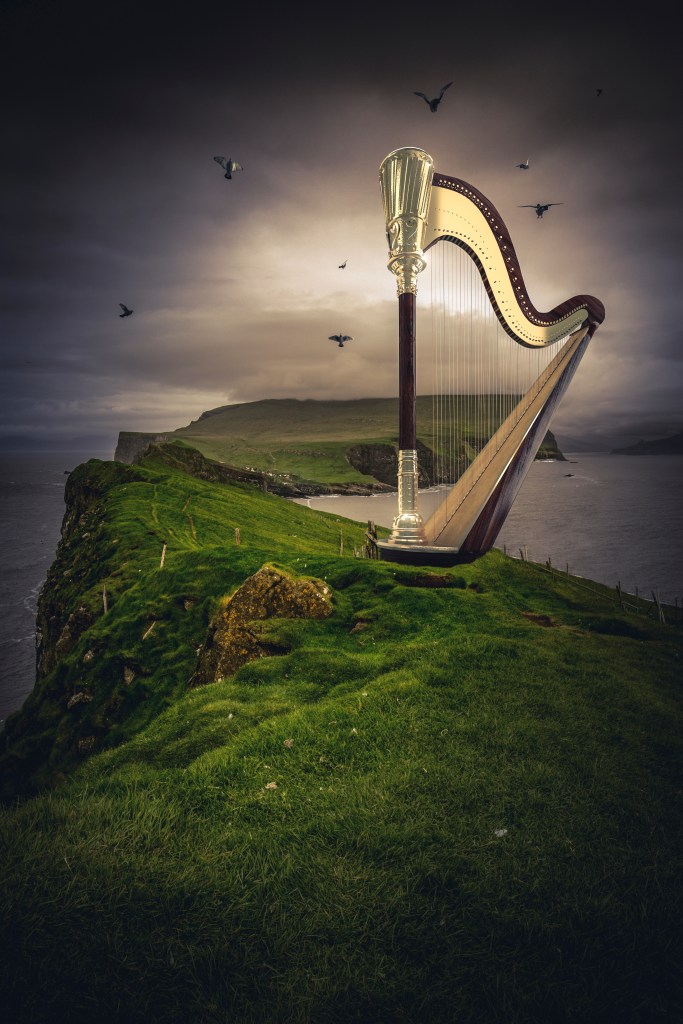
4. Celtic Harp. The harp is the national emblem of Ireland and is on the flag and currency. It also shows up on business logos, like Guinness. History on the harp does go back, at least as far as the high king, Brian Boru, one of Ireland’s most famous kings. (941-1014) He played the harp himself and encouraged music in Ireland. There is a surviving harp that belonged to him and named after him. It’s in display in the Long Room Library in Trinity College in Dublin. In folklore, the Tuath De Danann, Dagda, had a that harp changed the seasons as well as emotions of people. He used it going into battle to make his warriors forget fear. After battle he used it to help them get over wounds and sorrow of lost friends. As Celtic traditions were being replace by British influence, the harp became a symbol of Irish resistance. It was banned in 1650s. Harps and organs were destroyed and harpers were forbidden to play. Earlier, in 1603, Queen Elizabeth decreed that Irish harp players should be hung and all harps burned. That’s one way to make the harp more popular in Ireland. Listen here: https://www.youtube.com/watch?v=ZZmFhsy8QSU
5. Fiddle. Informal playing of the violin. A fiddle is great for jigs and dancing.
As early as the 1100s, the Irish were well known for its musicians. Here’s a somewhat backhanded compliment from a Norman visitor in 1185, ‘the Irish are so barbarous that they cannot be said to have any culture” However, the music: “They [the Irish] seem to be incomparably more skilled in [musical instruments] than any other people that I have seen. The movement is . . . rather quick and lively, while at the same time the melody is sweet and pleasant. It is remarkable how, in spite of the great speed of the fingers, the musical proportion is maintained.” In 1674 Richard Head said, “in every field a fiddle, and the lasses footing it till they were all of a foam.” Remember that the Irish were mostly peasants and instruments cost money. Fiddles were a different instrument than they are now. It was closer to a finger board. There are traditional players today who don’t use a chin or shoulder rests. It is thought that the fiddle was brought to Ireland by the Ulster-Scots. They in turned had gotten the fiddle from the crusaders. Some of the earlier fiddles were even made from tin, as it was easy to make and repair. Listen to this toe-tapping tune, Swallowtail jig: : https://www.youtube.com/watch?v=2ZxAVUsuE4Y
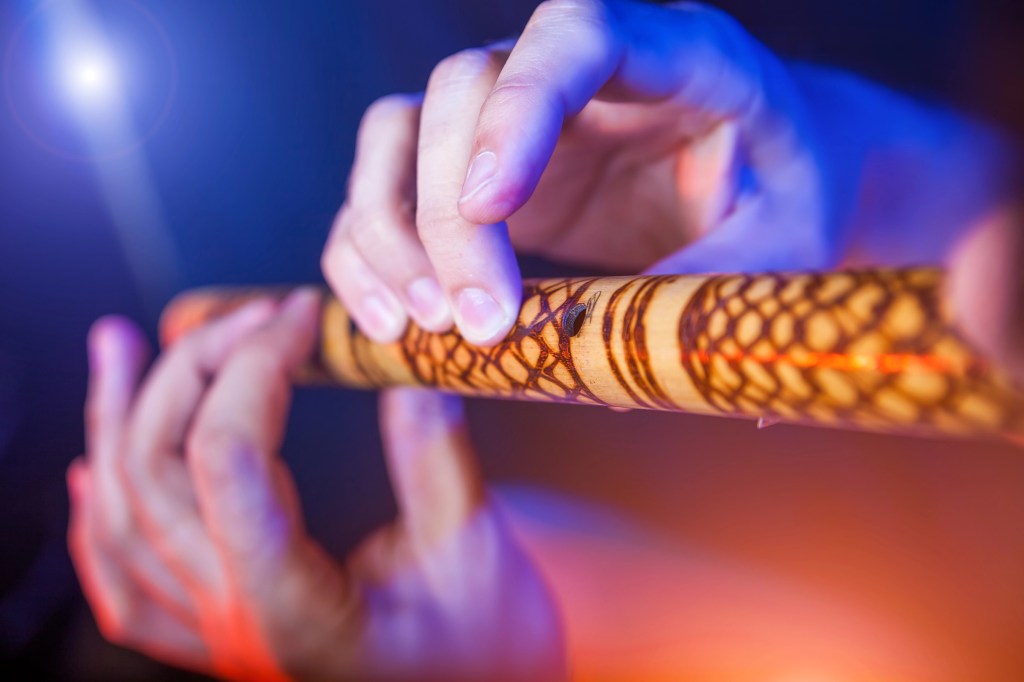
6. Irish flute. The traditional flute is simple and made of wood. The flute was first introduced to Ireland in the 1800s by the English. Though there were always, through most cultures, a form of flute, first made from bones, then wood. I imagine the Irish, like others, used some form of flute in ancient times. Theobald Boehm, a German, later introduced silver and Nichol flutes. The Irish preferred the softer tones of the wooden ones. Listen to Kirsten Allstaff play here: https://www.youtube.com/watch?v=suH5iOqOpO0
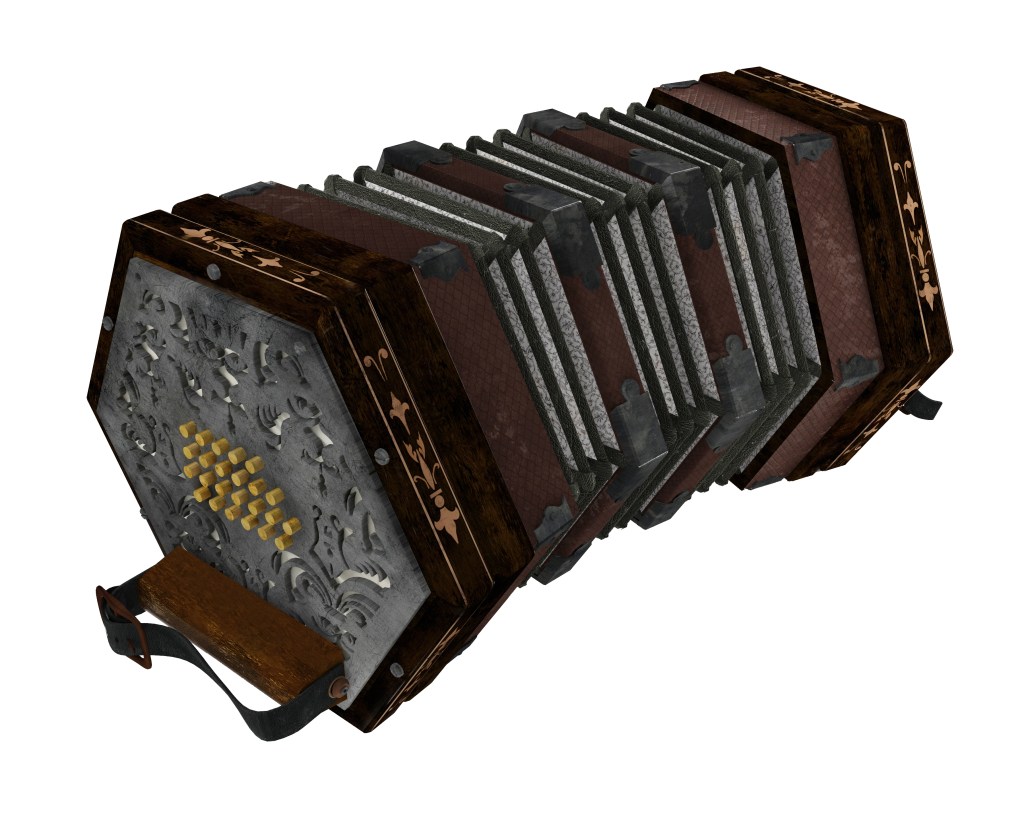
7. Concertina. Invented by Charles Wheatstone, it was a high society thing in England in 1830s. It became popular with the Irish gentry at the same time. A German, Carl Uhlig, created a cheaper version, so the lower class could afford one. It became very popular: ‘a concertina to be found in every household ready to be played by occupants or visitors to entertain the household w traditional Irish music and old tunes.’ With so many peasants playing it, it fell out of fashion with the upper class. (HA!) In the 1930s, as dances were held in parish halls instead of homes, priest opposed to the wild dancing and banned the concertina. Luckily, it’s used today in trad Irish music. https://www.youtube.com/watch?v=nOyuuAR9O-k (Spirit of Doolin)
8. Bouzouki. I know, this is not an Irish word. It’s a variation of the Greek instrument that became popular in the 1960s. In 1970 Peter Abnett made the first Irish bouzouki just for Irish players. He changed the pear-shaped body to a flat one and added straight sides. Highly popular in pub sessions. Listen to Foggy Dew: https://www.youtube.com/watch?v=yvQpNoQ6lxI
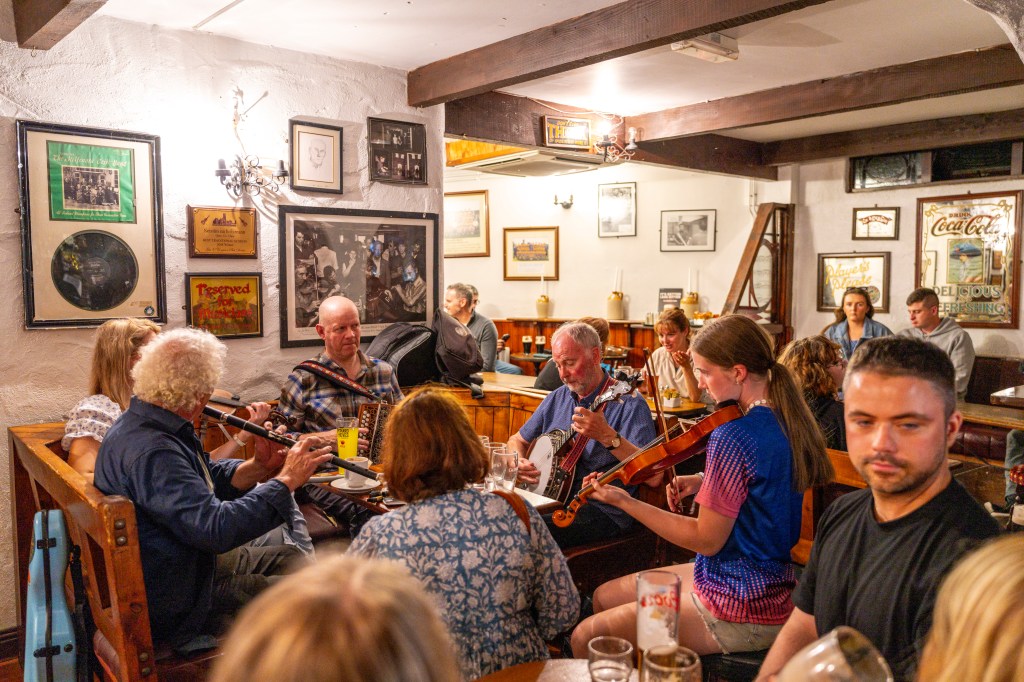
Celtic musical group in a Pub, Doolin, County Clare, Ireland, United Kingdom
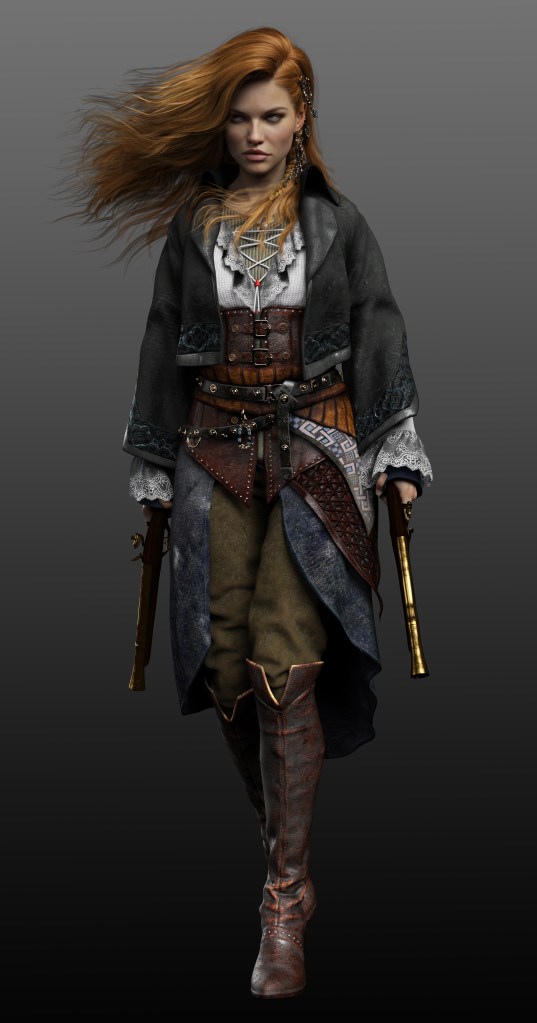
Before the Golden Age of Piracy (1650s-1730s) there arose, out of Ireland, one of the most famous pirates in history; a woman named Grace O’Malley, or Grainee Ni Mhaille in Irish. Her story is fascinating.
There are about 100 known female pirates. Some of the most famous were: Cheng I Sao, Anne Bonny (born in Ireland), Mary Reed, Rachel Wall and of course, Grace O’Malley.
What led these women into a life of piracy, plunder, and murder? For Grace O’Malley, it may not be what you’re thinking.
Grace was born about 1530 at Belcare Castle near Westport, Ireland, in the Connacht region. Her father, a chieftain of the Clan O’Maille, was Eoghan (Owen) Dubhdara (Black Oak) O Maille. Her mother was Maeve or Margaret O Maille. Grace was their only legitimate child. (This is sometimes debated, as there is a brother or half-brother, Donal; but Grace is the only inheritor of all her father had.)
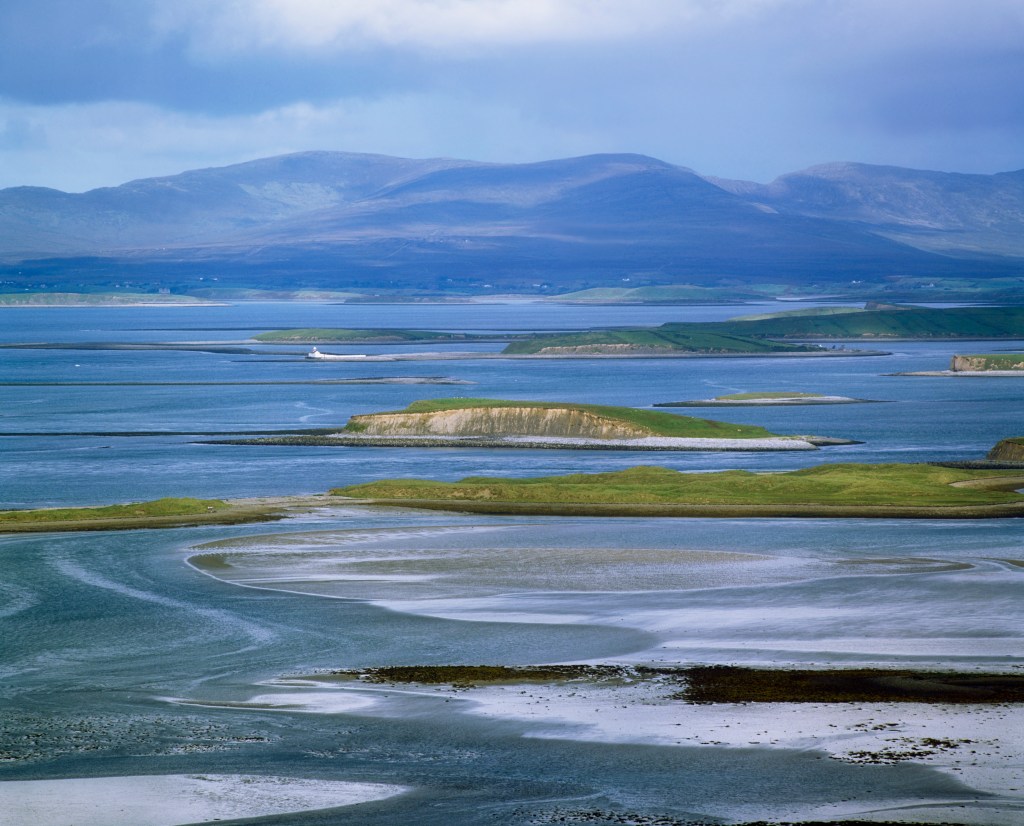
The O Maille motto, powerful by land and by sea, is most fitting. They ruled vast amounts of land in Ireland and controlled Clew bay. Grace was raised a royal child in a castle. She was well schooled and probably spoke many languages. She was trained in seafaring and politics. By all accounts, she had flaming red hair and a stern gaze.
Eoghan O Maille owned many ships and sailed to Spain, Scotland, and other places to trade. One story that personifies Grace’s temperament was when she was eleven-years-old. Supposedly, her father was setting sail and refused to take a young girl aboard ship with him. He told her that her hair was too long and would get caught in the ropes. She cut her hair. Either she snuck on board or he allowed her to accompany him, because she went with him. She is sometimes referred to as Grainne Mhaol, bald Grace, because of this.
How does any of this make Grace a pirate? Unfortunately, she was born at the time of the Tudor reconquest of Ireland. Queen Elizabeth 1 of England felt that by controlling Ireland, England would be safer from Spain and other invaders. Besides, there was all that rich land, cattle, sheep, and important ports. By sending troops to confiscate land, Grace, along with other loyal Irishmen, fought back.
But before all of that, her father married her to Donal (of the Battle) O Flaithbertaigh (O’Flaherty) when she was seventeen. Though a political match, it seemed like they got along well. He taught her pirating and more politics. They had three children; Eoghan O Flaithbertaigh, who was apparently kindhearted and well liked, Margaret/Maeve O Flaherty, who is said to be much like her mother. She married Richard (Devil’s hook) Bourke. He saved her life more than once. (Another great story there.) It was apparently a good marriage. And then there’s Murchad O Flaithbertaigh, reportedly the black sheep of the family. He liked to beat his sister and refused to listen to his mother because she was a woman.
Grace took over all of her father’s lands, castle, ships, and business when he died. Her husband, Donal was ambushed and murdered while on a hunting trip by a rival clan, the Joyces. Perhaps they thought they could take over some of Donal and Grace’s lands. They did not take into account Grace’s strong personality and leadership. Grace rallied her warriors, defeated the Joyces and killed the guilty men who had murdered her husband. She then took over all of Donal’s holdings on behalf of her sons. She had a private army of about two hundred men.
At some point, she recuses a sailor, Hugh de Lacy and they become lovers. The MacMahons, who must not have gotten the memo from the Joyces, killed Hugh. She attacked them at their castle, Doona, and slew her lover’s murderers. They nicknamed her ‘dark lady of Doona.’ She took control of the castle.
Then there is Richard, the Iron, Bourke, who was her second husband. There are two opposing stories about this marriage. One is ‘the love her life’ and the other is that it was a totally political marriage. In this version, once she got his castle, Rockfleet, she divorced him by saying,’ I dismiss you’. Rockfleet was more protected than her castle in Clew bay. It still stands today.
Either way, they fought the English and forged a political stronghold in Connaught. Even after the ‘divorce’, they reunited in order to keep their lands and to fight the English.
They had one son, Tibbot-na-long Bourke. The story goes; she was aboard ship when she gave birth to Tibbot. Hours, or maybe the next day, their ship was attacked by Algerian pirates. She left her berth and rallied her crew, fighting along side them. They ended up capturing the pirate’s ship.
An interesting story, also showcasing Grace’s personality is about Lord Howth. She sailed to visit but he was away and the gates were locked to visitors. She kidnapped his grandson and heir, Christopher St Lawerence. She released him after a promise from Lord Howth that Howth Castle doors will always remain open to unexpected visitors with a place for them ready at the table. It is honored to this day by the descendants.
Richard was to become the chief of all county Mayo. However, the reigning chief submitted to the English, putting Richard’s claim in danger. Grace marched with her army and navy to show her might. She plundered the Earl of Desmond’s land and was captured and imprisoned. He sent her to the dungeons of Dublin castle. Richard rebelled, demanding her release. The English freed Grace to stop Richard.
Lots more battles with the English on sea and on land…
In order to assure Richard’s becoming the Chief of Mayo, she brings in Scottish mercenaries, the Gallowglass. The English give in to her and Richard is made Chief.
Lots more battles with the English on sea and on land…
Richard dies. Rockfleet becomes Grace’s stronghold.
Enter Sir Richard Bingham. His major goal was to destroy Grace and her family. He has her oldest son, Owen murdered. Her son, Murchad, was part of the treachery that led to Owen’s death. Grace disowned Murchad and never spoke to him again.
More battles with the English…
Bingham says he wants a truce and tricks Grace to his headquarters. He arrests her and condemns her to death as a traitor. Her son-in-law rescues her.
Grace flees to Ulster where O’Neill and O’Donnel were plotting to unite the Irish, ally with Spain, and drive the English from Ireland. Unfortunately, the Spanish Armada encounters terrible storms and is destroyed.
Bingham declares war and says, ‘Grace is the nurse to all rebellions in Ireland’. He attacks in full force, destroying all of her ships. She fights back and takes an English ship. Bingham captures Tibbot and charges him with treason which carries a death sentence.
In a bold stroke, Grace writes to Queen Elizabeth 1 and requests an audience. The Queen agreed, much to the chagrin of Bingham.
In Sept 1593 they meet at Greenwich Castle, in England. Some accounts say they spoke Latin, but they probably conversed in English. Grace requested the release of her son and to have her lands returned to her. The Queen agreed, if Grace would cease warring with the English. Grace agreed. This worked for a while.
The end Result: the land Bingham stole was not returned; Bingham was later reinstated. Grace and clan go back to supporting Irish insurgents against the English. This led to the Nine years’ war, 1594-1603 which was the largest conflict against English rule in the Elizabethan era.
Grace was still leading her men in battle at the age of 67!
She died about 1603 at Rockfleet castle. At the time of her death she owned five castles.
Irish historian and novelist Anne Chambers, in her 2006 biography of O’Malley, described her as: “a fearless leader, by land and by sea, a political pragmatist and politician, a ruthless plunderer, a mercenary, a rebel, a shrewd and able negotiator, the protective matriarch of her family and tribe, a genuine inheritor of the Mother Goddess and Warrior Queen attributes of her remote ancestors. Above all else, she emerges as a woman who broke the mould and thereby played a unique role in history.”
In Westport house, in Co Mayo, there stands a statue, and an exhibition on Grace’s life by Anne Chambers. Westport House was built by John Browne and his wife, Maude, a great great granddaughter of Grace.
Why isn’t there a movie about her? If not Hollywood, Ireland should make one. Grace O’Malley has become iconic with Irish rebellion and was as bad-ass as they come. Would you watch a movie about her life and exploits?
Here are some excellent sites with more detailed information:
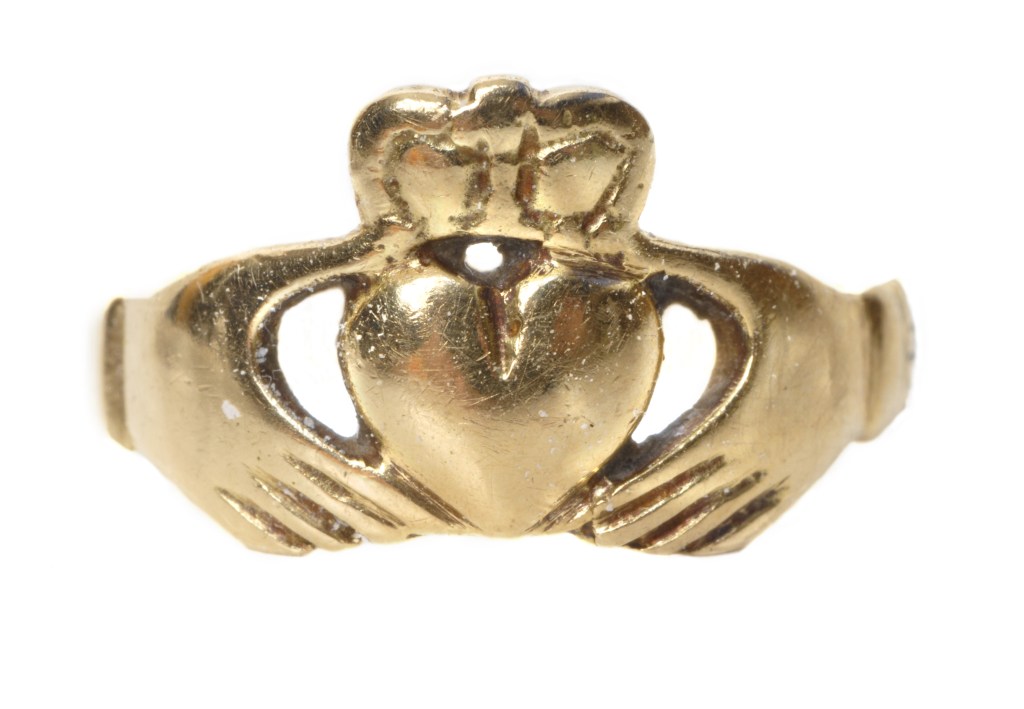
The Claddagh ring has become a symbol of Ireland across the globe. You’ve probably seen one, or may even own one. Do you know the story behind the ring, its meaning, and how to wear a Claddagh ring?
The Claddagh is a relatively new symbol of Ireland as it dates to the 1700s. There are a few stories surrounding its creation. One is Margaret Joyce. She married a Spaniard who left her half his fortune when he died. She used her wealth to build bridges in Galway and Sligo. Because she was so good and generous an eagle dropped a ring in her lap—the first Claddagh. Imaginative, yes. Likely? Not so much.
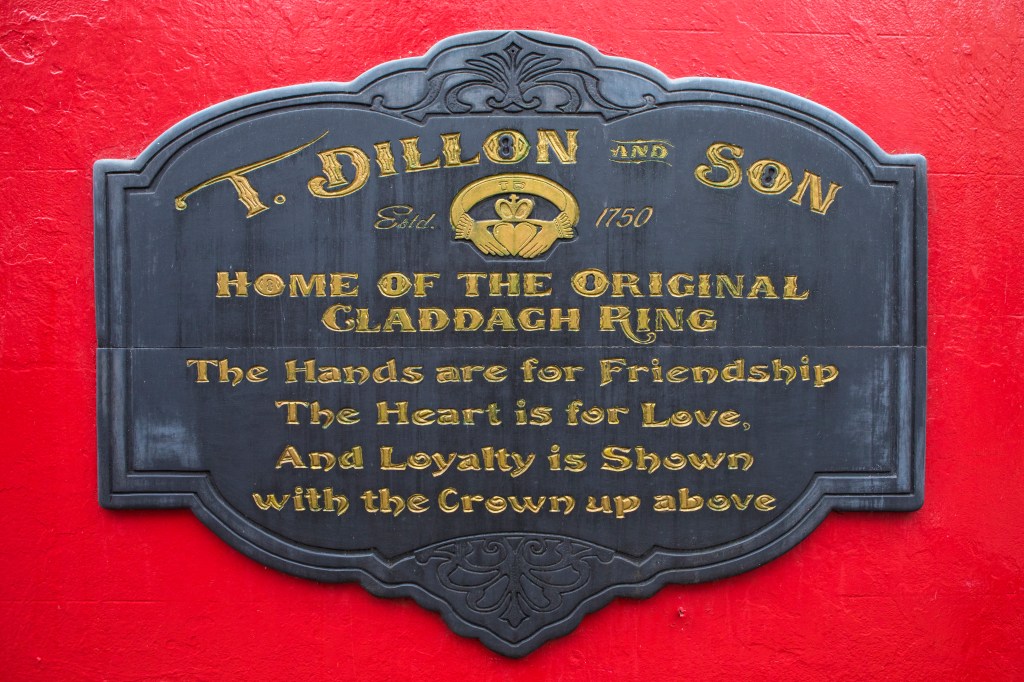
That’s not the story we heard at Dillon of Galway. They are the only firm still in existence since 1750 making the Original Ring. (https://claddaghring.ie/our-company/) When we were there, they had a nice little video showcasing the ‘true’ story behind the ring. There are many, many places that make gorgeous Claddagh rings as well; Google search will bring up tons of places. Then you can get lost in all the beautiful Irish jewelry available. (Mother’s Day is coming up…)
Richard Joyce lived there in the late 1600s. The Joyce family was one of the original tribes of Galway, meaning his family was one of fourteen merchant families. Young Richard was not a poor peasant. He was in love with a young woman. (Her name has been lost to history.) They had plans to marry. Before doing so, he sailed to the West Indies (maybe as an indentured servant, maybe to learn more skills—or both). Unfortunately, pirates attacked and he was taken prisoner and later sold as a slave in Algeria. Fortunately, he was bought by a kind master who was a goldsmith. Recognizing Richard’s skill and intelligence, he taught him the trade. He was in Algeria for fourteen years.
William 111 became the King in 1689. He demanded that all British subjects enslaved be set free. Richard’s master complied, however, he hoped Richard would stay. He offered a daughter to wife and half of everything he owned. Richard refused; he wanted to return to Ireland and his sweetheart. She had waited all those years for him, hoping and praying for his safe return. He created the first Claddagh ring for her, as a wedding ring. Richard also began his own jewelry shop, making the ring for others as well. It became a popular wedding ring and was often handed down from mother to daughter.
Meaning: The heart symbolizes love, the hands signify friendship, and the crown stands for loyalty. Even though there are many variations now, the meaning is the same. Today it can be a gift of friendship, love, marriage, and Irish heritage. It was once considered bad luck to buy one for yourself, but that is no longer believed.
How to wear a Claddagh ring: If single, where it on your right ring finger, with the point facing out to show that you are available. If you are dating, the point goes inward. If engaged, it goes on the left ring finger with the heart outward. Once married, turn the point inward. Of course, you can wear it anyway you like, but that is the tradition. I wear mine on a pinky finger—and no one has commented on it.
The original Claddagh didn’t have gems or stones in it, but now you can have any stone/gem. Anyway you choose to have one, it’s a stunning piece of jewelry.
Take a look here to see a Claddagh with Connemara marble:
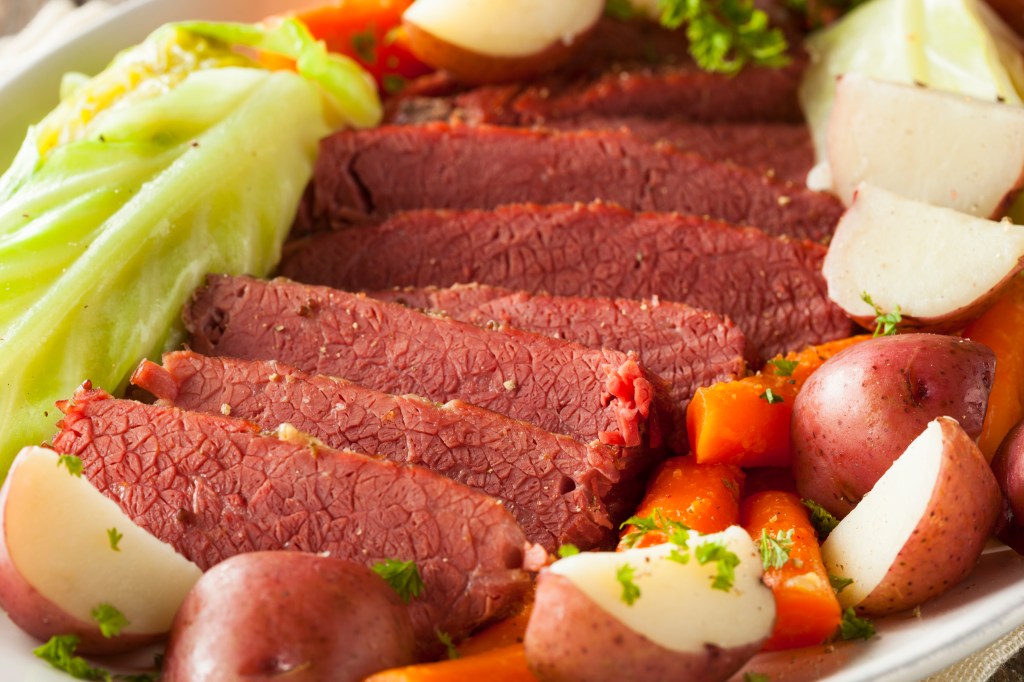
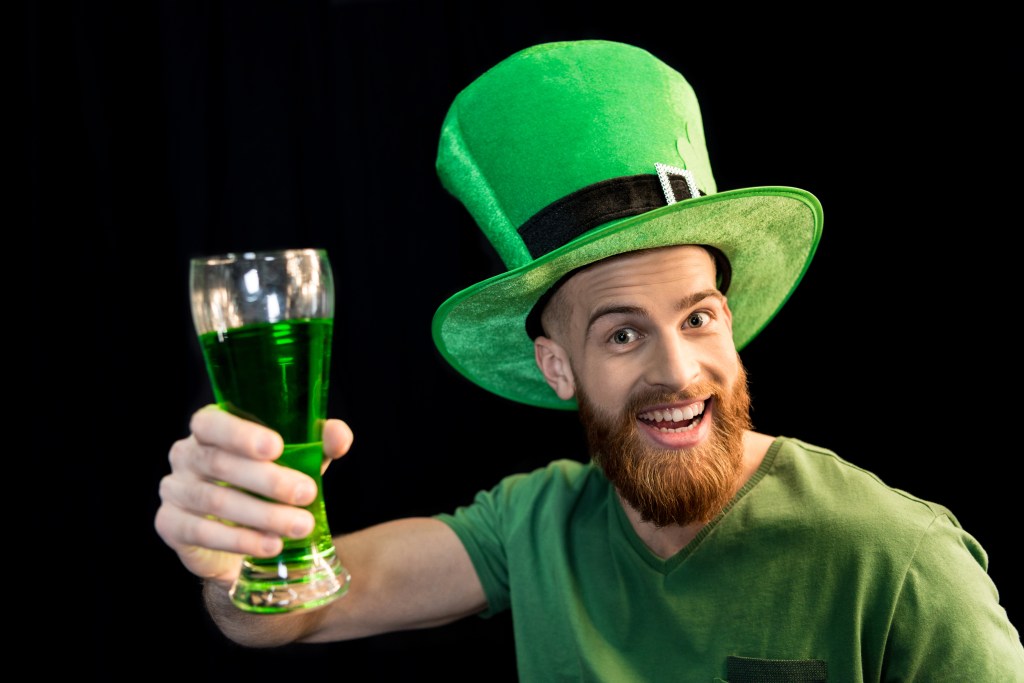
Are you ready for the traditional corned beef and cabbage with Irish soda bread for St. Patrick’s Day? Maybe some green beer? After all, that’s what they do in Ireland, right?
Nope.
Then why do we Americans have it for dinner to celebrate St. Patick’s Day? It all started in Ireland…
The Irish were not much for eating beef, especially in ancient times. Cows were used for milk, cheese, and as labor animals. They were a sign of wealth and power. Clans raided each other and stole cows. If a cow was too old to work or produce milk, then it was used for beef. Pork and lamb were popular meats, if any meat was eaten at all. Mostly, meats were reserved for the wealthy and for feast days.
Both smoking and salting meat has been around for centuries. The Irish used sea ash, which was burned seaweed, as one method of salting meat. Salting meat keep it longer and was important before refrigeration. The navies of the world used salted meats, which lasted for months, in order to have meat at all on those long sea voyages.
England used cows for beef and were considered a beef eating people. When they conquered Ireland, they changed everything. One of the changes was to confiscate land and make the Irish work for the new owners. Since the English needed more beef, they exported tens of thousands of cattle from Ireland. So much so that Cattle acts were passed in 1663 and 1667; no more live cattle could be shipped—but the meat could.
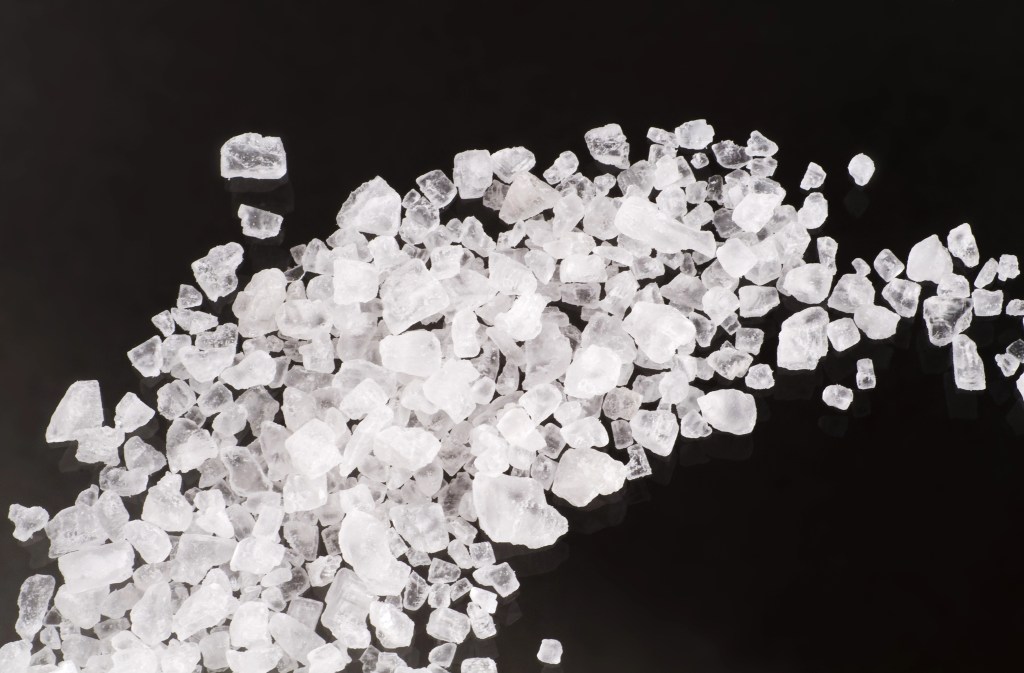
Which brings it back to salting meat. Originally, the salt crystals used were the size of corn kernels. Since Ireland’s salt tax was much less than England’s, it was best to salt the beef and then export it. Which became corned (due to the size of the salt) beef.
Ireland supplied both the British and the French navies with corned beef, as well as the American and French colonies. The Irish, however, were too poor to eat much beef themselves. They tended to have salted pork/bacon. The potato was the most consumed food by the Irish.
Until the Great Famine. By 1845 other countries were producing their own corned beef. Ireland’s potato crop failed for many years. The English refused help. To simplify a very complicated and controversial subject, one third of the Irish left Ireland, mostly to England, the United States, and Australia. One third died of starvation and disease. One third survived and remained. Even today, the population of Ireland is less than pre-famine times.
Those Irish who immigrated to the United States were not welcomed. Employment was difficult to find, with shops putting out signs that said, ‘No Irish need apply’. Even though poor, and living in the slums, their life was better than in Ireland under English rule. Interestedly, their closest neighbors were Jewish. They sold a cheap meat in their delis; corned beef. It was cheaper than bacon, which the Irish would have normally used. Also, cartoonist and other media made fun of the Irish by comparing them to pigs. Insulted, many Irish substituted pork was for cheap beef.
These new immigrants added their favorite vegetables to the meat: potatoes, carrots, and cabbage, and slow roasted it, which became our modern-day corned beef and cabbage. Irish Americans made St. Patrick’s Day a feast day to celebrate their heritage and homeland. In Ireland it was a holy day with church attendance and time spent with family.
Other customs, like green beer, leprechauns, parades, and shamrocks, are also from Irish Americans who wanted to honor and remember their homeland. Interestedly, Abraham Lincoln chose corn beef and cabbage for his first inaugural luncheon (March 1861).
Today, Chicago dies the Chicago River green, parades abound in major cities, and Irish music festivals are everywhere. Cities with a lot of Irish, like Boston and NYC, really celebrate.
Back in Ireland, thanks to tourism (and Guinness), some of the Irish American traditions trickle in. Until 1970 pubs were closed by law in Ireland on St. Patrick’s Day.
So, what do they eat in Ireland on St. Patrick’s Day? Spring lamb is popular, as is Shepard’s pie, Guinness and beef pie, colcannon, and fish stew. (You can find wonderful recipes on Pinterest.) Even today, chicken and pork top the list for types of meat most popular in Ireland over beef.
Being Irish American, we’ll have the corned beef and cabbage along with homemade Irish soda bread (which we have often anyway). What will you be having?
A great article with more in-depth information can be found here:
You have probably seen the 2010 movie, Leap Year, about a woman who chases after the Irish tradition of a woman proposing to a man on Leap Day. What is Leap Day, and how accurate is that tradition?
Leap day comes around once every four years. It all started with Julius Cesar. He (along with advisors and senators) realized their calendar wasn’t really working very well so they created the Julian calendar, and a leap day along with that. It wasn’t perfect and in 1582 Pope Gregory X111 signed into effect the Gregorian calendar, which helped with lost days in the Julian calendar. Leap Day still existed, but now it was set to every four years.
Back to 5th century Ireland.
St Brigid of Kildare, whose feast day is on Feb 1st, apparently met with St. Patrick. She was concerned that men were taking too long to propose and asked for a sanctioned day where women could ask men to marry them instead of waiting for men to pop the question. After some bargaining, St. Patrick agreed that Leap Day would be the exceptional day. According to some legends, Brigid then proposed to St. Patick, who declined. He did however, give her a kiss on the cheek and a silk dress. The years don’t quite work out for this to truly be possible, but it did add to the traditions of Leap Day proposals.
If a woman proposes to a man on Leap Day, and he refuses, he is required to give a gift; such as a silk dress, gloves to hide the fact that she has no ring, or pay a fine.
Irish monks not only spread the gospel, they also took the tradition of Leap Day proposals to other nations, particularly Scotland and England. In 1288 Scotland even passed a law to allow women the right to propose on Leap Day. It is said that Queen Margaret added a small detail; the woman had to wear a red petticoat. (She was only five at the time—maybe red was her favorite color?)
Al Capp’s comic Li’l Abner, capitalizes on this idea creating a Sadie Hawkin’s day. Again, women have the freedom to have one day a year to chase down their man.
Leap Day is also referred to as Bachelors’ Day and Ladies’ Privilege.
Times have changed. Woman don’t need a designated day on which to propose, or ask someone to a dance. Luckily, she can do either without censure from society.
Which brings us back to the movie, Leap Year. It received terrible reviews, especially in Ireland. It’s the movie they ‘love to hate’. But it did bring the old tradition to light and put Ireland in the spot light.
Elsewhere in the world, Leap Day/year is considered bad luck: your marriage is doomed if you marry on this day, bad farming years, and unlucky birthday to name a few things.
An extra day of work? An extra day of fun? Just an extra day? Or does it go unnoticed in your world?
The Emerald Isle – Forty shades of green – Green beer – Shamrocks – Wearing of the Green – Green Leprechauns; what is up with Green being associated with Ireland?
Not only is the landscape considered lush and green, but the color itself has important, as well as, political meaning.
St. Patrick, the patron saint of Ireland, is said to have explained the Holy Trinity by using the shamrock, a type of clover, which grows profusely in Ireland. (Seamrog is the Irish word for ‘little plant’ and hence, shamrock.) But that’s only the beginning.
The English had been trying for several hundred years to subject the Irish into submission. Which the Irish resisted through countless rebellions and strife. Probably where the idea of Irish stubbornness comes into play. Sometime in the early 18th century, soon after the rebellion of 1798, green became the color of Irish nationals. Patriots began wearing green ribbons to show their support of Ireland and its independence. The English were not amused.
Ever attempting to quell Irish rebellion, a ban on wearing green was enforced. You may have heard the popular Irish song, The Wearin’ of the Green. It was written at the time of this ban and is still sung today. Here is part of the song:
“O Paddy dear, and did ye hear the news that’s goin’ round? The shamrock is by law forbid to grow on Irish ground! No more Saint Patrick’s Day we’ll keep, his color can’t be seen For there’s a cruel law ag’in the Wearin’ o’ the Green.” I met with Napper Tandy, and he took me by the hand And he said, “How’s poor old Ireland, and how does she stand?” “She’s the most distressful country that ever yet was seen For they’re hanging men and women there for the Wearin’ o’ the Green”.”
(There are several versions of the song, all with the same theme.)
Ironically, this ‘ban’ forever joined Ireland to the color green. As many Irishmen and woman were forced to leave Ireland for many counties, including America, Australia, and England, and they brought their pride of Ireland with them by ‘wearin’ of the green’.
As the Irish were Catholics, and religion is a political issue in Ireland, green was the color associated with the Catholic Irish.
How does orange come into all of this? William of Orange, a protestant king of England, came to the ‘rescue’ of Irish protestants in the late 1680s. He fought alongside his army in the battle of Boyne and is considered a hero to the protestants in Northern Ireland. You can read a great account here: https://www.libraryireland.com/biography/WilliamIIIofOrange.php
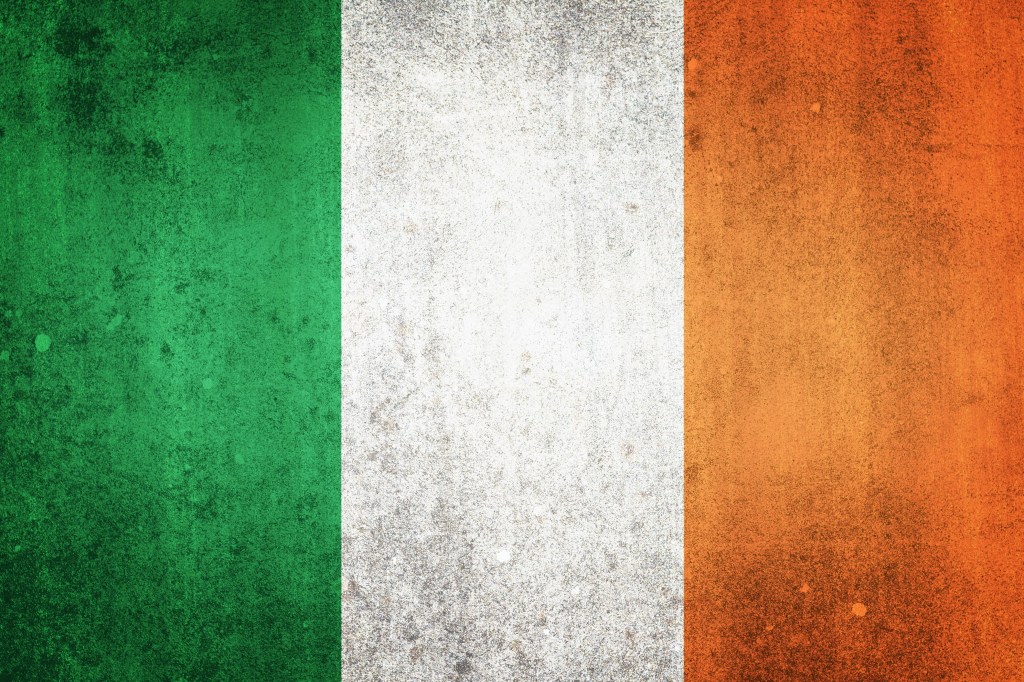
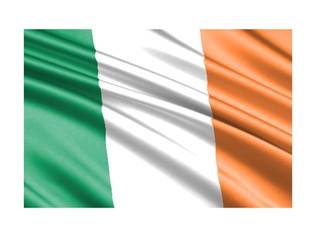
Bringing it to basics then: green is for (Catholic) Irish independence and Orange is in support of Protestants and against an Irish Free State. (Which now exists, after the Easter uprising of 1916 and is known as Ireland rather than Irish Free State – Northern Ireland is still part of the UK.) In some renditions of the Irish flag, the orange may appear gold, but the official color is orange.
White is the hope for peace between Catholics and Protestants.
As late as 2005, the IRA (Irish Republican Army) was active in trying to unite all of Ireland into one country. They announced an end to armed conflict in 2005, bringing some peace to a land torn by war, rebellion and uprising for hundreds of years.
Growing up in NJ I remember St. Patrick Day’s parades where supporters of Ireland wore green and Irish Protestants wore orange. It was a pretty big deal. Maybe a few fights would break out – just a bit of shenanigans by some hooligans drinking too much green beer.