Halloween is actually Samhain

Time to celebrate!

Samhain and not Halloween? Actually, Halloween has its roots in the Celtic celebration of Samhain.

Samhain, pronounced SAH-win, has been celebrated for at least 2000 years and may have originated in an even more ancient celebration dating back about 5000 years. Found in all the Gaelic areas, Samhain is first mentioned in the first century B.C.E. on a bronze calendar found in Gualtic France—the first mention in Irish literature is from the 9th century. It literally translates to ‘summer’s end’. It is also the mark of the Celtic new year. I guess we can think of Samhain as a New Year’s Eve party spent with ghosts and Celtic creatures.

It’s the most important of four fire festivals marking the end of the light half of the year (summer) and the coming of the dark part of the year (winter). Most cultures have some sort of harvest festival, but Samhain has influenced the way we celebrate Halloween today.

The name for the month of November in Irish is Samhain, coming from the celebration on roughly 1 November. There were no calendars, so this fell halfway between the autumnal equinox and the winter solstice. The night before, (Oct 31st), was the fire festival to celebrate the harvest and prepare for winter. The Celtic day began and ended at sunset.

 It was also the night when the veil between the spirit world and physical world was at its thinnest. In folk lore, it was the day that the Hollow Hills would open and the sidhe (she), fairies and magical creatures, were allowed to walk among the living. Hence, all sorts of supernatural things were expected to happen.

Three days and nights marked the mandatory celebration of Samhain. Clans and villagers reported to local rulers or chieftains. The night began with a huge bonfire. The bones of animals were thrown into the fire, and animals may also have been sacrificed; if not for the fire, at least for the feast. Apples were also roasted in the fire. Household fires were put out and relit with a torch from the bonfire.

Meals were prepared for the living and honored ancestors who had passed away. To ward off evil spirits or impish fairies, people dressed up as animals or monsters to confuse them.

Here are a few of the creatures you might run into: The Dullahan. He (sometimes she) is a dark fairy who rides a flame-eyed horse through the night carrying his/her head either in his/her lap or held high for all to see. (Sound like Sleepy Hallow?) It is a harbinger of death. You’ll want to hide, not only because it’s scary, but it will blind you if you see it! Donn. A Milesian invader who was defeated by the Tuatha De Dannan and drowned in the Irish sea. He became the keeper of the gates to the underworld. Spirits pass through those gates on Samhain eve. The Pooka. This is a shapeshifter who comes to the festival of Samhain for gifts from the harvest. An ancient fairy, also know as a Puca—Puck…Maybe that’s where Shakespeare got his idea from? Another headless creature to be aware of on Samhain eve is Lady Gwyn. She and her black pig will chase you if she sees you. Cat Sith. (Sith is a form of sidhe—Star Wars, anyone?) This is a black fairy cat with a white mark on its chest. And how black cats became a part of Halloween. If you left a bit of milk for the Sith, it would bless your house. If not, you were cursed.  

Trick or Treat and the Jack-O-lantern. Children on Samhain eve would dress up and go to their neighbors and ask for a treat. If they didn’t receive a treat, the children would come up with a harmless prank. Does anyone remember Mischief night? It was the night before Halloween when it was all right to do harmless pranks, like on April’s Fools Day. As well as stuff like soap windows, toilet paper trees, etc. It’s probably a good thing it isn’t popular now. But that’s the basis for the trick part of Halloween.

Stingy Jack. He apparently tricked the Devil twice and made a deal that the Devil couldn’t take his soul. When Jack died, he wasn’t allowed in Heaven, so he had to roam the bogs for eternity. He was given a lump of coal to light his way. He carved out a turnip and put the coal inside. Jack of the Lantern—Jack-O-Lantern. Since Samhain, people carved large turnips into scary faces to ward off any evil from sidhe or Jack.

In the 8th century the catholic church added All Souls Day or All Hallows, Nov 1, to the mix in order to change the pagan holiday into a Christian one meant to honor ancestors and saints. All Hallow’s Eve was shortened to Halloween.

When Irish immigrants came to America, they brought these Halloween traditions with them. The pumpkin was easier to carve, so it became the lantern for poor old Jack.

Ireland has a couple of awesome festivals celebrating traditional Irish Samhain/Halloween customs. The Puca Halloween festival, which lasts for four days, in County Meath, needs to be on your schedule if you’re in Ireland at that time. Take a look here to check it out: https://pucafestival.com/ (Even if you don’t go, the videos and pictures, along with interesting information is fantastic!)

Then there is the Derry Halloween Festival – the largest one of its kind in Europe. It’s held inside 400-year-old city walls. It includes light shows, acrobats, and fireworks. Interested? https://derryhalloween.com/ Again, just looking at the site is fascinating.

Both events have free parts and ticketed parts.

What is your favorite Halloween tradition? Do you know where it originated?

If you’d like to dig even deeper into any of these stories, here are some links to great articles and videos: https://www.newgrange.com/samhain.htm

https://www.history.com/topics/holidays/samhain

https://www.history.com/news/history-of-the-jack-o-lantern-irish-origins

https://www.ancienttexts.org/library/celtic/jce/samhain.html

https://www.tiktok.com/foryou

Is Irish a Dead Language?

Recently, I mentioned to someone near and dear to me that I was attempting to learn some Irish, but I felt the pronunciation and words keep changing. They said that was because Irish was a dead language. Is it? What exactly is a dead language?

Irish language is not dead. Granted, it came close. As I’ve mentioned before, English rule pretty much demanded English as the only language. Immigrants, wanting to fit in, stopped speaking Irish. The language persisted in more isolated regions and often as an act of defiance.

One article I read pointed out that people have a difficult time with Irish names because they don’t understand that Irish exists as a language and try to put English rules to said names and it just doesn’t work. Once you realize that the rules are different, then it’s easier to understand how names are pronounced. An example is BH will make a W or a V sound. FH is silent. Like any language, once you learn the rules, alphabet, and pronunciation…well, I’m not going to say it’s easy, but it helps. Helpful site here, if interested: https://www3.smo.uhi.ac.uk/gaeilge/donncha/focal/features/irishsp.html#:~:text=Irish%20does%20the%20same%20sort,bh%20(broad)%20%3D%20w

What makes a language dead? According to Global Language Services, “a dead language is (usually) defined as a language that some people still use, even if there are no native speakers left.” Latin is a prime example. It’s taught and used for educational purposes, but no one speaks it as their primary language. https://www.globallanguageservices.co.uk/difference-extinct-language-dead-language/

 Old English is another example. It was spoken about 500 to 1100 CE. Beowulf is the oldest poem existing in Old English. Here are a few lines:

Hwæt. We Gardena in geardagum,

þeodcyninga, þrym gefrunon,

hu ða æþelingas ellen fremedon.

Oft Scyld Scefing sceaþena þreatum,

monegum mægþum, meodosetla ofteah,

egsode eorlas.

I had an English professor who spoke Old English and often read to us in that language. Though interesting to listen to, no one goes around speaking it anymore. And since there are no living people who speak Latin or Old English, we don’t even know if the pronunciation is correct.

Manx is an interesting language. It’s from the Isle of Man and was once dead, but the community revived it; it’s being taught on the Isle and is not longer a dead language; nor is it on its way to an extinct language.

I live close to a Ute reservation and sadly, many of the younger generation (at least here) don’t know the language. Many Native American languages have died.

Back to Irish. It is not dead. But, according to some sources, it is an endangered language. Approximately two million people in Ireland (including Northern Ireland) speak Irish—as a second language.  In 1922 the Free State was established (Republic of Ireland). They declared Irish the national language and a revival of all things Irish became popular. It is taught in schools, and in Connacht at least, I heard many people speaking it as their native tongue. The Government will require 20% of new public service employees to speak Irish by 2030. One of my favorite sites has a great little article on this: https://www.irishcentral.com/opinion/irish-language-legacy-cultural-wellbeing

 The younger generation is also involved by creating YouTube, TikTok, and Instagram posts to highlight and arrange meetings in the Irish language.

 Here are some wonderful songs in Irish you should check out:

https://www.irishcentral.com/culture/entertainment/avicii-wake-me-up-irish?fbclid=IwAR202gUBDmhs62lTfDO8-67s1NxyJ6PDRXAjpZGziaW6OrgJsWgCoB4umaI

You can give Irish a try on Duolingo and Mango (and probably other sites offering language learning). https://www.bitesize.irish/ is a great place for beginners also. This article highlights resources too: https://letslearnirish.com/articles/12-best-free-irish-resources/. Rosetta stone even has an Irish course. Some courses are free and some are not.

On one of the YouTube songs a comment was along the lines of, ‘I speak many languages and Irish is the most beautiful.’

My great grand mothers both spoke Irish. I wish I’d met them and learned a few things from them. Maybe learning a bit now will help me to better connect to them—and help keep the Irish language from dying out altogether.

What do you think? Should the Irish try to continue to revive their language? Is it a lost cause?

Beltane

.

There are eight main (once) sacred days in Ireland. Imbolc/St. Brigid’s day, Ostara, Beltane, Litha, Lammas, Mabon, Samhain, and Yule. Since it’s almost May, I’m going to highlight Beltane.

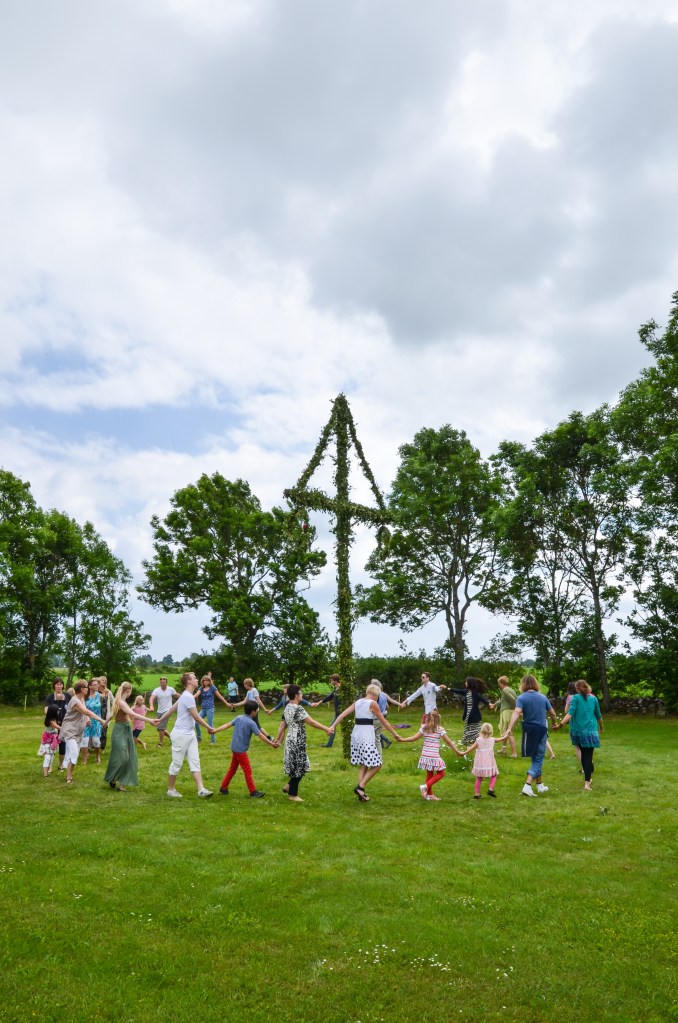
Beltane is celebrated on the 1st of May. In the United States, you may have celebrated or heard of May Day. I do remember having special spring things at school for May Day and one park near my apartment went all out. There was a flag pole in the center of the park and on May Day, they tied colorful ribbons to the top and children would take the bottom end and skip around the pole, twisting the ribbon around it. Then we’d make flower crowns and have cupcakes. I was surprised that no one I know in the west remembers any May Day celebrations. Maybe it’s all the Irish in the east? At any rate, May Day comes from Beltane.

Beltane is about halfway between the spring equinox and the summer solstice. It is a Celtic word for “the fires of Bel”. Bel is most likely Belenus, the sun god. There are other spellings, which then would interpret as ‘a bright fire’, or ‘a lucky fire’. Pagans (then and now) light two bonfires, believing that the smoke purifies and increases fertility. One could dance around the flames or jump over them. In the old days, they’d run cattle between the two fires. It is celebrated in Ireland, Scotland, the Isle of Man, Wales, Devon, and Cornwall. (This is the Gaelic regions of the British Isles.)

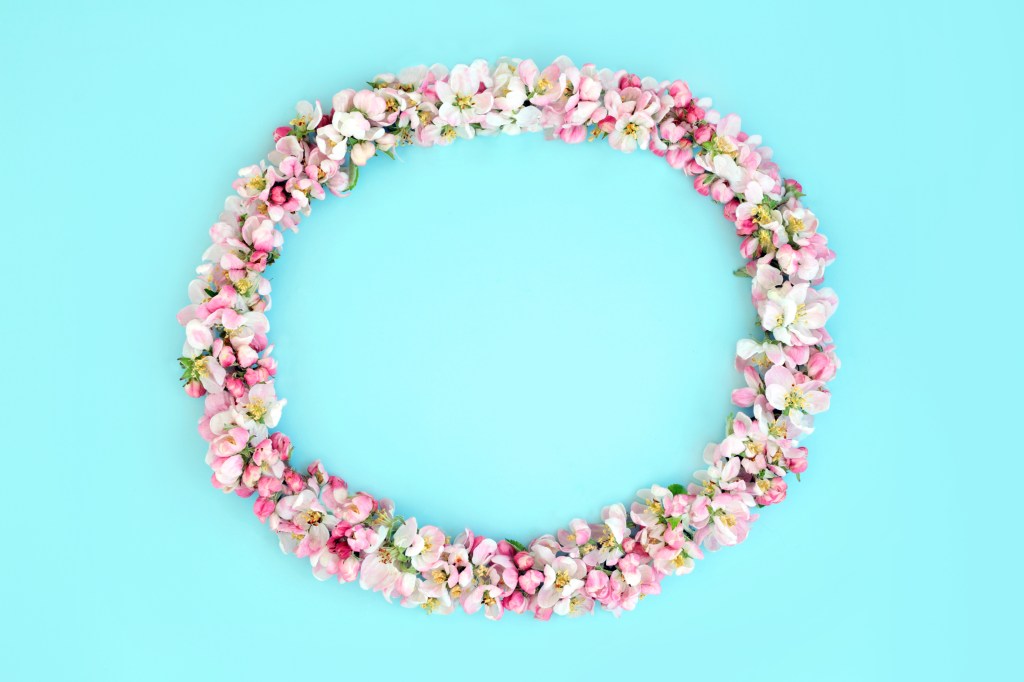
This is a time that pays tribute to Mother Earth and Father Sun. Modern day Pagans/Wiccans/Etc. have revived many of the celebrations. Some fun activities you can do is weave flower crowns, create your own May Pole, and my favorite suggestion is to create a May basket with flowers/seeds/spring type things, and bring it to someone who may need cheering up.
If you think about how hard survival was in the past, especially making it through winter, it’s easy to see how celebrating spring makes sense. Warmth, food, baby animals, and life returning to the world after living through a bitter time would be joyous. Maybe we take spring for granted and giving a nod to some of the old ways can show gratitude for all we have. After all, there is something magical in budding leaves and those flowers peeking out of the ground, brown grass turning green, and a breeze blowing warm instead of cold.

Hmmm, what should I put in my May basket?

If you happen to be in a place that does celebrate Beltane, you might want to join the festival. See what your local area has—you might be surprised. Just so you know, if you search for information on Pinterest or search engines, you’ll start to get a lot of pagan-ish stuff popping up!

All cultures have some sort of spring celebration, so you might want to see what your ancestors did to celebrate spring.

Do you have any May Day memories? Is there a Beltane festival in your area? I’d love to know!

Leprechauns

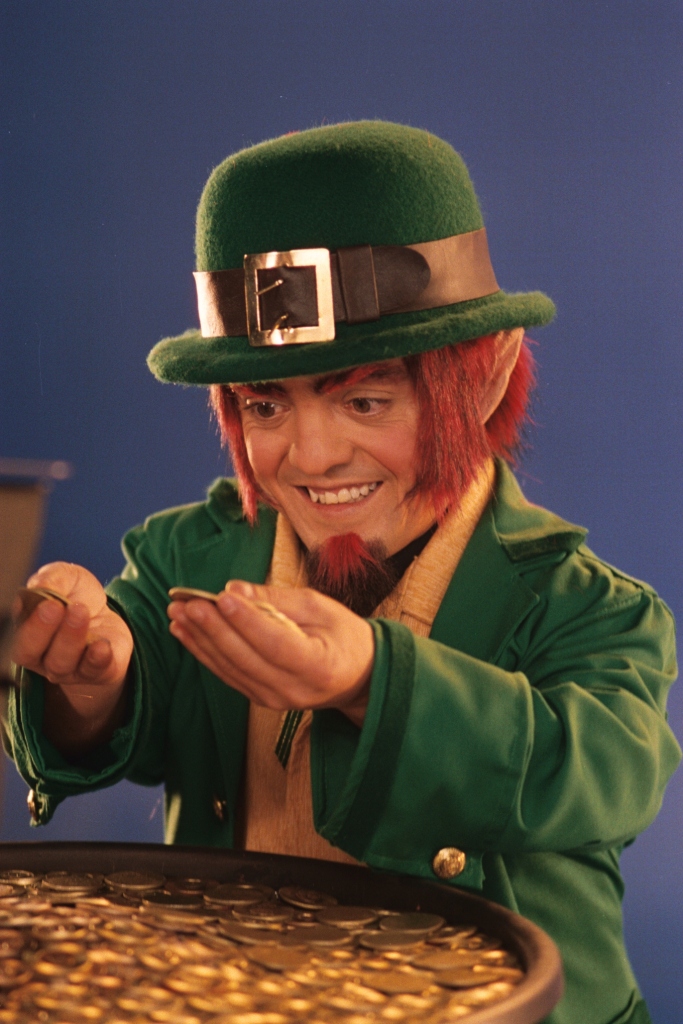
Quick – what’s the first thing that comes to mind when I say, ‘Ireland’? If you thought of a leprechaun, you’re certainly not alone. A wee man, the leprechaun is iconic and several happen to appear across the United States every March. Maybe you’ve seen one.

When it comes to Irish creatures, the leprechaun falls into the not particularly harmful category. We know they are bearded fairies dressed in green (red in older stories), are mischievous, love gold (which they keep hidden at the end of a rainbow), and are rather irreverent, yet loveable. Living alone in remote areas, Leprechauns were typically shoemakers in the tales of yore.

Where did they come from? According to etymonline.com/word/leprechaun, it was thought the word came from the Old Irish luchorpan, meaning “a very small body.” However, Simon Rodway, Michael Clarke, and Jocopo Bisagni (Cambrian Medieval Celtic Studies) believe the root of the word comes from the Roman Luperci. Which is funny since they were young men who ran around naked at the festival of Lupercalia. Due to a couple hundred years and translation errors, these Luperci ended up at the leprechaun we know today. (Sounds like an Irish tale to me…)

The first time leprechauns appear is in a story about Fergus, a king of Ulster, in about the 7th century. Here, leprechauns can live under water and grant wishes.

After the English discouraged all things Irish, the wee folk were kept alive only in folklore. Yeats, the great Irish writer, and part of a revivalist movement to bring back Irish-ness to the world, reintroduced the leprechaun. (Late 19th century) It was a hit!

One of my favorite (new) traditions: Head to the Cooley mountains in County Louth to a placed called Slieve Foye, home to the last leprechauns, in April. Dress up as a leprechaun (or not) and see if you can find any hiding in the nooks of the mountains. If you do see a leprechaun, do not take your eyes from them for even a second as they will disappear. They have storytelling and activities along with the search for the wee folk. 236 leprechauns are known to live there. (I’m not making this up!) https://www.independent.ie/regionals/argus/localnotes/leprechaun-hunt-returns-to-slieve-foy-34541789.html and https://www.thelastleprechaunsofireland.com/

However, you are asked to not capture leprechauns.  Slieve Foye has been granted, by the EU, protected sanctuary rights—meaning leprechauns are protected under European law. (Also protected are animals and flora.)

The Clurichaun is sometimes considered the bad-tempered cousin to the leprechaun. They’re also trickers, but rather than being a man, they take the shape of an old man. They also vanish if you take your eyes from them. Clurichauns are know to like alcohol even more than leprechauns.

If you’re looking for a movie to celebrate St. Patrick’s Day try the classic, Darby O’Gill and the Little People. Finian’s Rainbow is another one. I also enjoyed The Luck of the Irish. There is a horror movie titled Leprechaun, if you’re into that sort of thing. I think that’s just wrong. (Besides, what kind of Irish name is Lubdan Buttowski?)

Meanwhile, wishing you and yours “Leprechauns, castles, good luck and laughter…”

The Ferocious O Flahertys…

From the Ferocious O Flahertys O Lord deliver us”.

How cool is that?

We stayed in a charming little town near Galway, Oughterard, on one of our visits to Ireland. DNA showed all my Irish lines were from the Connaught area, so I asked a friendly store owner where different clans were located. He had a map on the wall showing ancient clan territories. I knew I had Flaherty ancestors—and there they were—right in Oughterard. He told us there was a Flaherty castle just down the road. So, off we went.

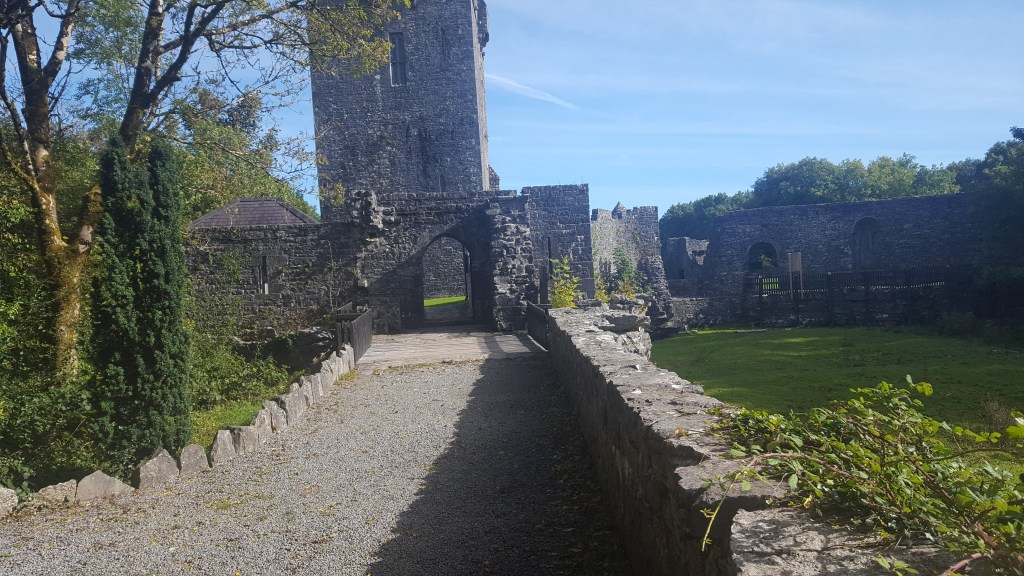
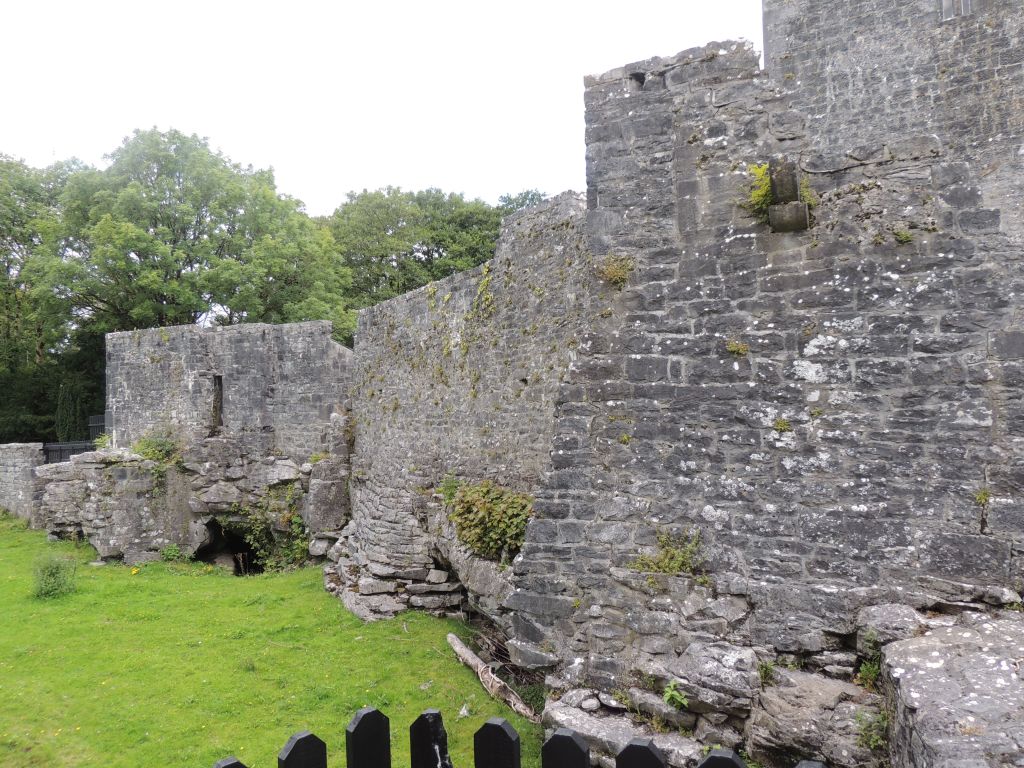
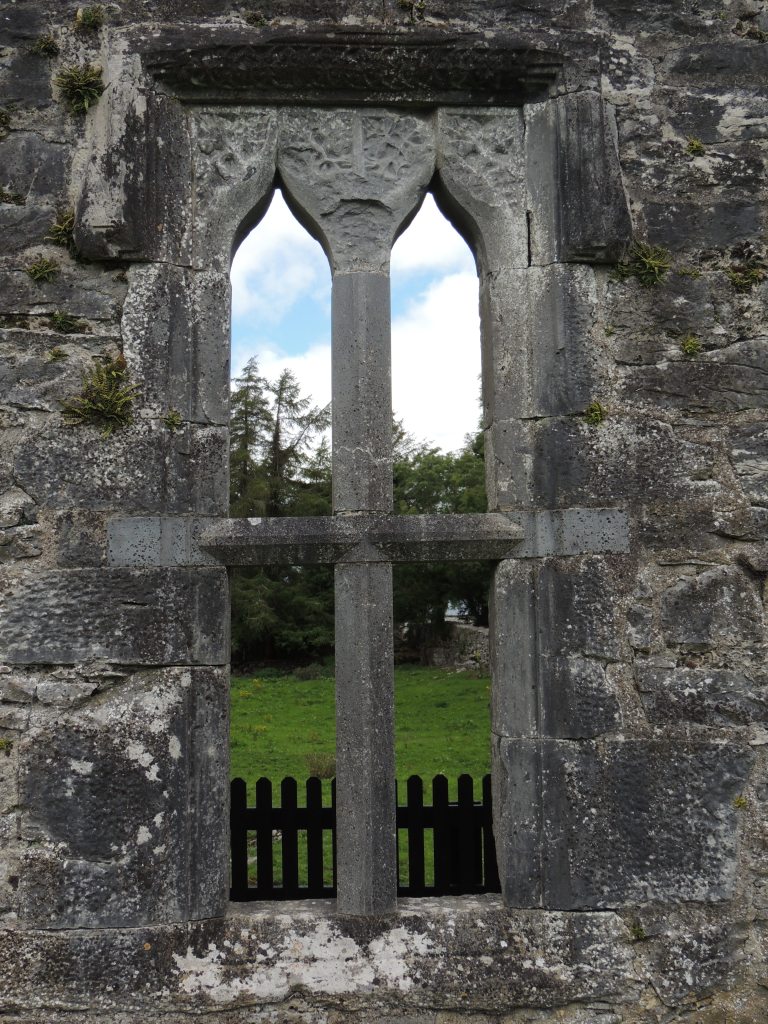
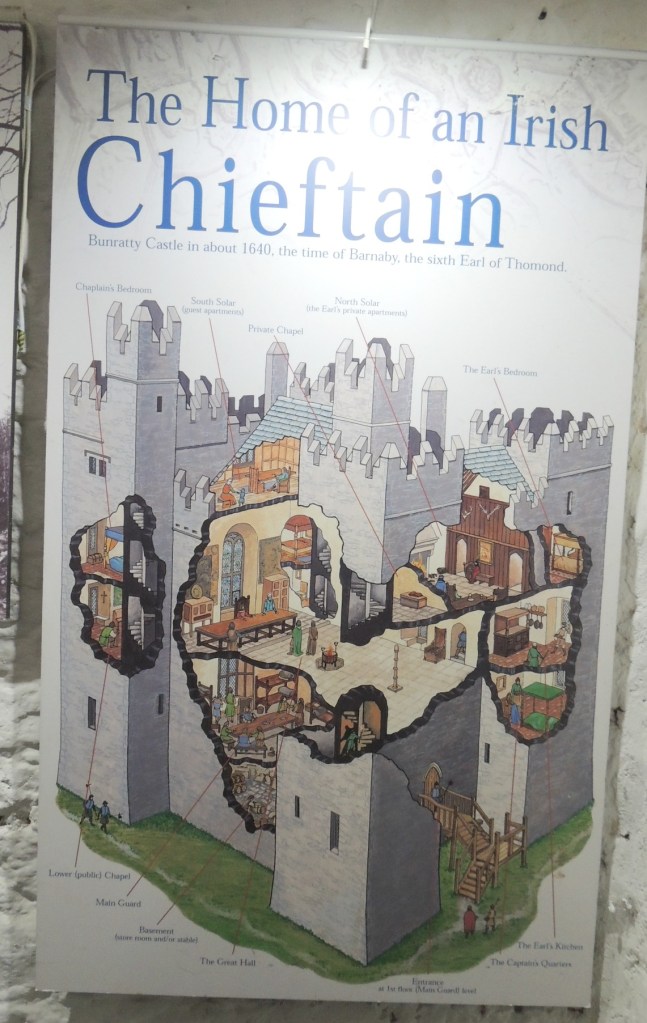
The correct name is Aughnanure (Pronounced something like: On a nur) Castle. It’s a fun few hours to stroll the grounds and remains of the castle (or Irish Towers). There are no tour guides, but information is posted in the rooms. It has quite the interesting history, which is nice to know before you go.

Here’s a quick version: It all started in the 12th century. Normans (read: conquerors) moved into the area. They wanted the seaport of Galway and eventually convince/forced the Flahertys (ancient name: Ó Flaithbheartaigh) out of their land. The Flahertys, not being cowed at all, built a well-fortified castle in 1490 against the invaders who’d pushed them to the high hills. They continued to harass the Norman families in Galway. Indeed, records state they were a “mountainous and wild people”.

The Flahertys, whose motto is “fortune favors the strong”, ruled from this castle and high country for about 300 years. (That is longer than the United States has been a country!) They were such a problem for those in Galway that the Normans built a wall and made a plaque that said: “From the Ferocious O Flaherty’s O Lord deliver us”.

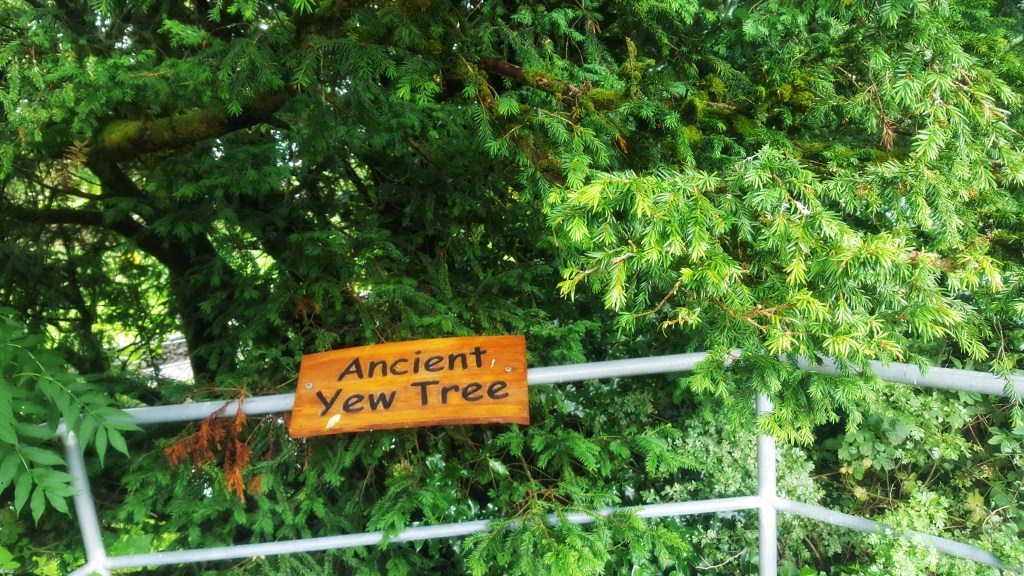
At the time, Aughnanure Castle was well situated with a river on one side that afforded a harbor to the castle. It’s no longer there, but if you hike down the small incline, you can see where it once flowed. There was also a forest of yew trees; only one is left. The remains still have the ‘murder hole’, where arrows/stones or boiling water/oil could be poured on attackers. There is a trap door in the banquet hall that when activated dumped an unwanted person into the river that flowed under the hall. (Devious!) There’s also the classic Medieval staircase which is narrow and would be extremely difficult for invaders to ascend, but it’s not a difficult climb when you don’t have to fight your way up the stairs.

An interesting, though morbid (or exciting, depending on your view) story: After a siege by the Normans on the Flaherty, the clan agreed to pay a tribute to the Normans. But they never did. After a few years the Normans (De Burgh family) sent a son to force the issue. The young man was invited to join a banquet. (Should have known better.) He was seated over the trap door. At some point, the Flahertys tripped the trap and the unfortunate lad plummeted into the river. And was drowned. His body was retrieved and he was beheaded. A son of Flaherty rode to Galway and threw the sack with the head at the DeBurghs. The Normans gave chase, but it was also a trap. The Flahertys were waiting over a hill. Not many De Burghs returned to Galway.

Flaherty Clan remained at Aughnanure until Cromwell. Which is another story.

I enjoyed learning about my Irish ancestors—though I don’t know that mine actually lived at Aughnanure. But I have Flahertys from the area, so there’s a good chance they’re a long ago great someone or other.

If you’re interested in reading a bit more, try these sites: https://www.enjoy-irish-culture.com/castles-of-ireland-aughnanure.html

Irish, Gaelic, or Celtic?

(Raise your hand if you get confused.)

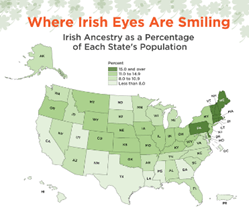
In the United States over 50 million people have Irish ancestry, while about 25 million have Scottish. (Image is from https://commons.wikimedia.org/wiki/File:Irish_ancestry_in_the_USA_2018.png) Sometimes the terms Irish, Celtic, Scots-Irish, and Gaelic are lumped together. Let’s get a few things straightened out, shall we?

BASIC GUIDE~

Scots-Irish: This is not when you have ancestors who came from Scotland and ancestors who came from Ireland. This becomes complicated, but we’re talking Irish history, so I suppose that’s to be expected. Here’s a BRIEF version—in the 1500s England, and much of Scotland, became Protestant, thanks to King Henry V111 and the Protestant Reformation’s influence. His daughter, Queen Elizabeth, wanted better control over her lands, Ireland being one of them. Northern Ireland was pretty much in England’s power, but full of Irish Catholics. Her brilliant idea was to displace the Catholic Irish and bring in the Protestant Scottish. After her death, King James carried out the plan. And King Charles after him. Due to political problems in Scotland, many found this to be a viable solution. Their children were born and raised in Ireland. And their children. They became Irish. The Scots-Irish. (Which is why there was a religious/political problem—but that’s a story for another post.) If you have ancestors who are Scots-Irish, this is your heritage. It will help you do research if you’re looking for family in Ireland. When these Scots-Irish went to America, many chose to use this term to identify themselves as Protestant Scotts from Ireland. It’s become a common term in the United States. This migration and settlement pattern contributed to the unique heritage of the Scots-Irish in the United States.

Irish: The Irish speak Irish, not Gaelic. The confusion comes from the Irish word for Irish—Gaeilge (pronounced Gwal-gah). If you refer to their language it is simply, Irish.

Gaelic is the term for the Scottish language.

It is also a term used to describe the people and culture of Ireland and Scotland. So, the Gaelic people of Ireland speak Irish, and the Gaelic people of Scotland speak Gaelic. (You can get around this by saying Irish Gaelic or Scottish Gaelic, if not in those countries. It is polite to know the difference if in Ireland or Scotland.) Summary: The Irish language is called Gaeilge. Many people refer to it as Irish, but the term Gaelic usually refers to the Scottish language or Celtic culture.

Are you still with me?

Celtic is a broad definition used to describe the people and culture of Ireland, Scotland, Wales, the Isle of Man, Cornwall, and parts of Brittany. The Celts were an ancient group of tribes from central Europe. They migrated to Britain about 1,000BC (Iron Age). Both the Greeks and Romans wrote about them. If you’re interested in more in-depth information, take a look at this site:  https://museum.wales/articles/1341/Who-were-the-Celts/


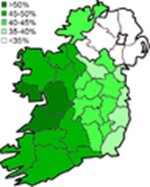
 (Image:https://commons.wikimedia.org/wiki/Category:Linguistic_maps_of_Ireland)

The map shows where Irish is spoken in Ireland. Notice it is much less in Northern Ireland.

One more thing; the Irish language was almost wiped out. The English passed laws making it illegal for English living in Ireland to speak Irish, and for the native speaker to speak Irish if talking to an Englishman. Anyone who wanted to get ahead in life had to speak English. The Great Famine had roughly 1/3 of the population leaving Ireland, which added to the problem. Irish was banned in the courts of Northern Ireland and repressed throughout Ireland. Today, Ireland is reviving its language. It is a protected nation language. Signs are in Irish first, then English. It is taught in schools. You could give it a try using apps such as Duolingo, Mango, and lessons online, like this: https://www.bitesize.irish/gachla/irish-for-beginners/

When we were in Ireland (north west/Connacht area), many people spoke Irish. I tried my hand saying a few words. They laughed—then tried to help me. You try it: Go raibh maith agat (thank you)—pronounce it sorta like this: grr a ma a got. (But then, that’s where they started laughing…) I like Le do thoil (please). Low-da-hell (sorta like go to hell, so it’s easy to remember. Only don’t say that. Please.)

Warning: Irish is a really, really, difficult language. I think it was created by drunken angels dancing on the cliffs of Moher. (LOL)

I still love it.

The GAA and Hurling

hurling1

I’ll come right out and say it – I don’t much like sports. I’ve never understood the culture; money spent and made, clothing, equipment, (especially) crazed fans, confusing rules; massive boredom. And I do have people in my life who love football, basketball, fishing, golf, hunting and soccer (which isn’t bad, as far as sports go). They’ve tried, truly, they have, to convince me of the benefits and enjoyment of sports. I will admit that viewing a game in person is infinitely better than watching on TV, or even worse, listening to it. But still, I’d rather read a book. Or stare off into space. Or clean the house.

That said, I found a sport that I find fascinating. While in pub in Dingle, Ireland, we watched a final match in the game of hurling. I was hooked.

What is hurling?

The game itself: Hurling is a fast paced game, the fastest paced game in the world. The field is 1 1/2 more in length than an American football field and almost twice the width. That makes for a lot of running! There are two teams of fifteen each. Six forward, six defenders, two mid-fielders, and a goal keeper. The stick is called a hurley and the ball a sliotar. Here are the playing rules as per the GAA (Gaelic Athletic Association) found at: gaa.ie,  “*Playing Rules *You may strike the ball on the ground, or in the air. You may catch the ball or pick up the ball with your hurley into your hand and carry it for not more than four steps in the hand. After those steps you may bounce the ball on the hurley and back to the hand, but you are forbidden to catch the ball more than twice. You can run balancing or bouncing the ball (the solo) on the hurley indefinitely. Players may contest for the ball by playing it with the hurley or by shoulder charging an opponent side-to-side. To score, you strike the ball over the crossbar with the hurley or under the crossbar and into the net for a goal, the latter being the equivalent of three points.” You can watch clips of games on the GAA site also.

The teams are all male; but don’t despair, there is a woman’s equivalent. It’s called the Camogie (pronounced Cam-gee). I haven’t yet seen one of their games.

Back to the pub: it was crowded with cheering patrons, a couple of TVs with the game on and plenty of drink and excellent food. At first I thought it was going to be boring and loud, but I was oh so wrong. At least on the boring part. I was mesmerized, as was my son-in-law, who is a huge soccer fan. We couldn’t get enough. Unfortunately, the game ended way too soon. And this from me!

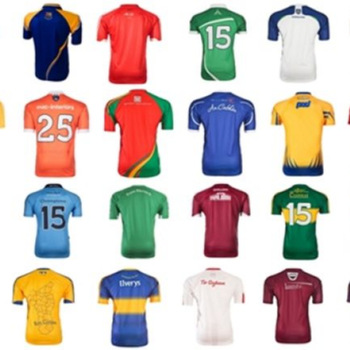
Later, in Galway, we went to a sporting goods store, mostly to find county shirts. Since some of my ancestors come from Galway, we wanted to get a shirt from there. You can only buy shirts in the county for that county (at least that was our experience). We later got a shirt in Sligo also, another area my ancestors came from. (Picture from stock images.)

Irish-County-GAA-jerseys-Uniform-Gaelic-Hurling.jpg_350x350

My son-in-law was all for buying a hurley set for his family. Alas, my daughter talked some sense into him (where would they play and with whom? Much less getting all of it back to the states.)

But it doesn’t end there. The history of hurling and the GAA is fascinating. Hurling is an ancient Celtic game, dating around 3000 years old. It is mentioned in Celtic mythology. Irishmen have been playing the game for a long time; until the English came to Ireland.

The English and the Irish viewed the world differently. Not only was the language different, but the entire culture, from laws to dress, were different. The English considered the Irish to be wild savages and it would benefit the Irish to be forced into the English way of thinking. Over the centuries, several laws and policies were set in place to remove the Irishness from the inhabitants. During the Celtic Revival (late 1800s), many Irish wanted a return to their culture. They brought back Irish language, dance, literature, and sports.

Michael Cusack, in 1884, meet with other like-minded men and together they created the GAA. On their website, even today, it states: “The Association also promotes Irish music, song and dance and the Irish language as an integral part of its objectives.” They bought land around Dublin and built Croke Park, still in use today.

Politics, never far from Irish anything, also played a part in the early days. British were required to have permits if they wanted to play and if one was in the British forces, one was prohibited from being on a team. In fact, from 1901-1971, any GAA member taking part in, or even watching, non-Gaelic sport, was ousted from the GAA.

During the war of Independence (early 1900s), trouble broke out. Some of the founding members were more radical than others, and the English, fearing trouble, sent spies to the GAA. (Very simplified telling here.) Those spies were found out and assassinated. In reprisal, the English went to Croke Park during a hurling match and opened fire, killing thirteen, plus two were killed by the stampede of the 5,000 spectators. If you’re interested in the full story, go here: http://www.theirishstory.com/2011/11/21/today-in-irish-history-bloody-sunday-november-21-1920/#.XIRg2FxKg2w

It became illegal to play hurling games as it was counted as a ‘gathering of rebels’.

The Free-State of Ireland won its independence from England in 1922. Northern Ireland is still part of Great Britain. Hurling was once more a sport of the Irish.

The GAA is an amateur Association, and always has been. “Players, even at the highest level, do not receive payment for playing and the volunteer ethos remains one of the most important aspects of the GAA.” (from gaa.ie)

It’s a world wide game now, with leagues all over. In the USA there are over 130 Hurling clubs. Here is where you can find out more information on them: http://usgaa.org

Let me know if you get to go to an actual game of hurling, or if you watch it on TV.

I’d love to know what you think.


The Colors of Ireland’s Flag

The Emerald Isle – Forty shades of green – Green beer – Shamrocks – Wearing of the Green – Green Leprechauns; what is up with Green being associated with Ireland?

Not only is the landscape considered lush and green, but the color itself has important, as well as, political meaning.

St. Patrick, the patron saint of Ireland, is said to have explained the Holy Trinity by using the shamrock, a type of clover, which grows profusely in Ireland. (Seamrog is the Irish word for ‘little plant’ and hence, shamrock.) But that’s only the beginning.

The English had been trying for several hundred years to subject the Irish into submission. Which the Irish resisted through countless rebellions and strife. Probably where the idea of Irish stubbornness comes into play. Sometime in the early 18th century, soon after the rebellion of 1798, green became the color of Irish nationals. Patriots began wearing green ribbons to show their support of Ireland and its independence. The English were not amused.

Ever attempting to quell Irish rebellion, a ban on wearing green was enforced. You may have heard the popular Irish song, The Wearin’ of the Green. It was written at the time of this ban and is still sung today. Here is part of the song:

“O Paddy dear, and did ye hear the news that’s goin’ round?
The shamrock is by law forbid to grow on Irish ground!
No more Saint Patrick’s Day we’ll keep, his color can’t be seen
For there’s a cruel law ag’in the Wearin’ o’ the Green.”
I met with Napper Tandy, and he took me by the hand
And he said, “How’s poor old Ireland, and how does she stand?”
“She’s the most distressful country that ever yet was seen
For they’re hanging men and women there for the Wearin’ o’ the Green”.”

(There are several versions of the song, all with the same theme.)

Ironically, this ‘ban’ forever joined Ireland to the color green. As many Irishmen and woman were forced to leave Ireland for many counties, including America, Australia, and England, and they brought their pride of Ireland with them by ‘wearin’ of the green’.

As the Irish were Catholics, and religion is a political issue in Ireland, green was the color associated with the Catholic Irish.

How does orange come into all of this? William of Orange, a protestant king of England, came to the ‘rescue’ of Irish protestants in the late 1680s. He fought alongside his army in the battle of Boyne and is considered a hero to the protestants in Northern Ireland. You can read a great account here: https://www.libraryireland.com/biography/WilliamIIIofOrange.php

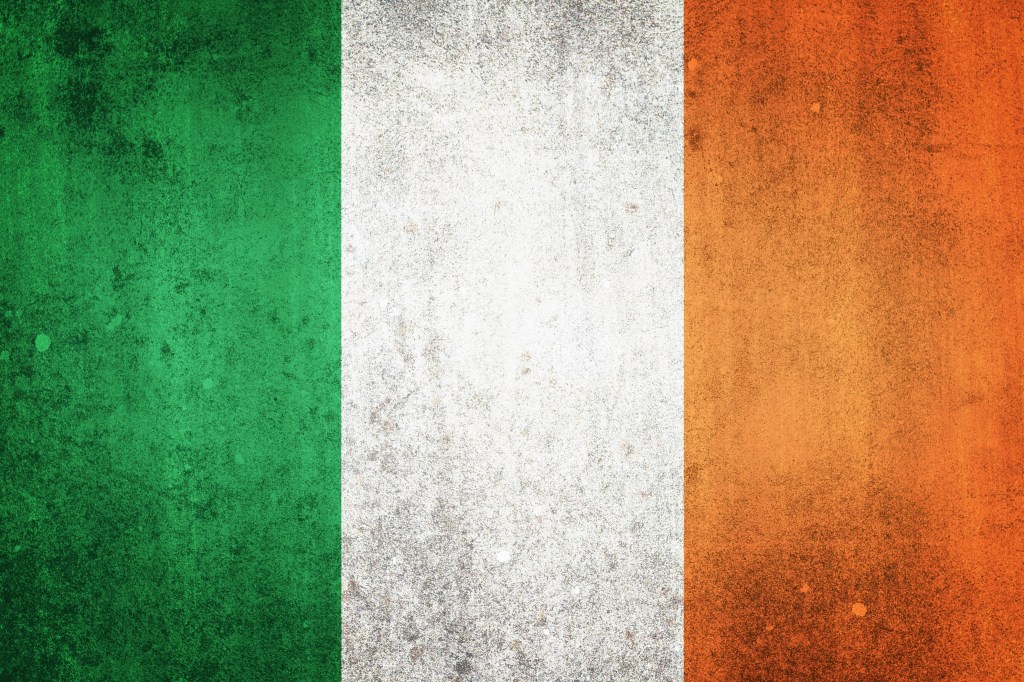
Bringing it to basics then: green is for (Catholic) Irish independence and Orange is in support of Protestants and against an Irish Free State. (Which now exists, after the Easter uprising of 1916 and is known as Ireland rather than Irish Free State – Northern Ireland is still part of the UK.) In some renditions of the Irish flag, the orange may appear gold, but the official color is orange.

White is the hope for peace between Catholics and Protestants.

As late as 2005, the IRA (Irish Republican Army) was active in trying to unite all of Ireland into one country. They announced an end to armed conflict in 2005, bringing some peace to a land torn by war, rebellion and uprising for hundreds of years.

Growing up in NJ I remember St. Patrick Day’s parades where supporters of Ireland wore green and Irish Protestants wore orange. It was a pretty big deal. Maybe a few fights would break out – just a bit of shenanigans by some hooligans drinking too much green beer.


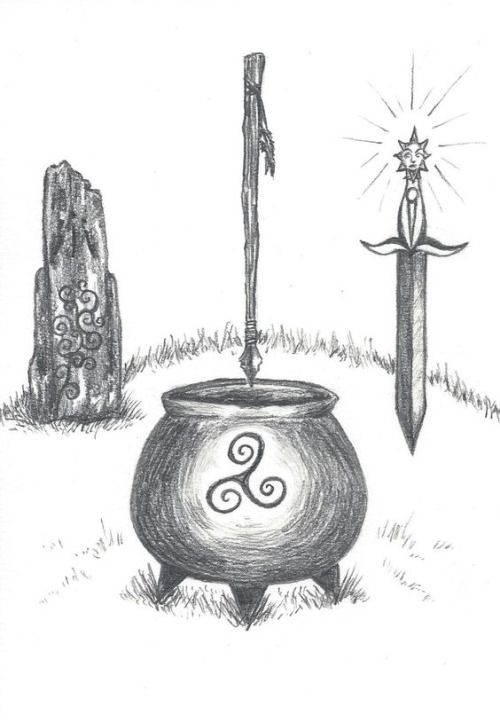
The Four Treasures of The Tuatha De Danann

four treasures

When the Tuatha De Danann came to Ireland in ships from the far north, they brought with them magical treasures. Each treasure comes of a different city and each treasure was brought by the poet of that city.  I think the term ‘poet’ can be used pretty broadly; they were trained in all of the arts, including magic and druidry. These treasures, or hallows, are an integral part of Irish mythology. There are many stories, both ancient and modern, where these treasures are mentioned or referred to. They make a good tale, even today. Check out Valerie Biel’s books starting with Circle of Nine. They are a fantasy series incorporating Irish mythology and the four treasures. http://www.valeriebiel.com

And you’ve probably heard of The Druid Chronicles too. The series is laced with Irish references. https://kevinhearne.com/novels/

Cauldron by Lorriane Mulholland

The first treasure (not in any specific order of importance) is the Cauldron of Dagda. (The picture is from Google and is by Lorriane Mulholland.) The cauldron was brought by the poet Semias from the island city of Muirias to Ireland. This cauldron had an endless supply of food, that not only filled the person eating, but also restored health and vigor. Dagda was regarded as a god of the Tuath, the father/chieftain. He was also considered a great druid, mixing wisdom with magic.

nuadasword

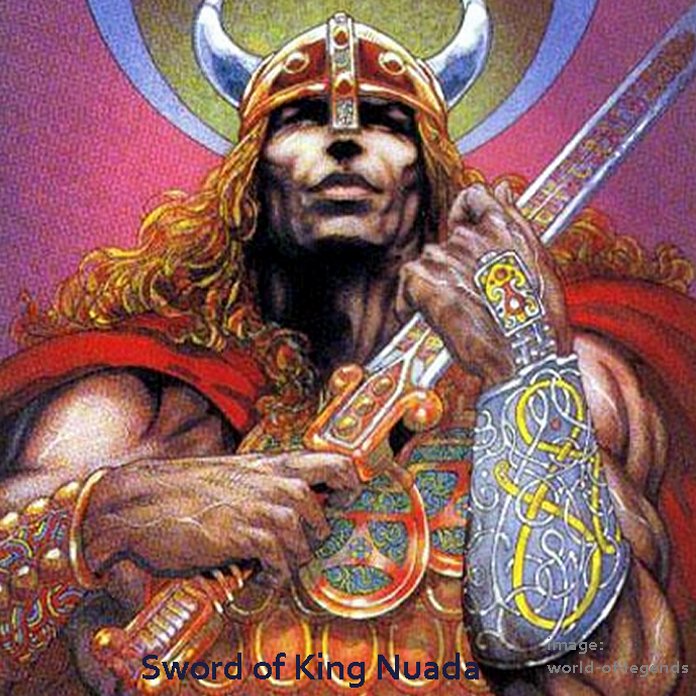
Second is the Sword of Nuada. (This picture comes from ancientpages.com) Interestingly, it was not brought to Ireland by Nuada, but used by him in battle. The sword was brought by the poet Uiscias from the city of Findias. Nuada was the first king of the Tuatha. Once the sword was drawn, no one could escape it’s lethal blow. Not only that, but an enemy was drawn to it, so running away wasn’t an option.

Tara_stone

Next is the Stone of Destiny. In Irish it’s known as Lia Fail. It was brought by the poet Morfessa from the city of Falias. It would cry out when the rightful heir touched it. Reminds me of King Arthur legends with Excalibur. (I’m sure the Irish legend is first.) Cuchulain, a great hero in Irish mythology, apparently got pretty angry when the stone refused to cry out to the man he wanted to be king. He tried to split it with his sword. After that the stone wouldn’t declare the true ruler, until Brian Boru in 1002. Since then, it’s been silent. The stone remains among us mortals, in County Meath, on the hill Tara. I haven’t yet been there, but I am surprised at the size. It’s above ground height is just over 3′. From the pictures it looks taller. On the other hand, that’s quite a stone to bring all the way from…Morfessa. Like all Irish monuments, it’s open to the public. Many battles were fought at the foot hills of Tara.

lugh spear2

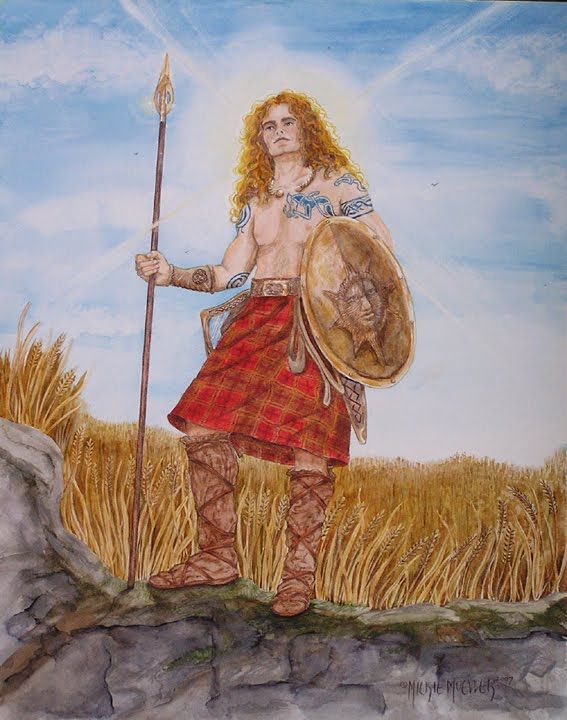
Lastly, is the Spear of Lugh. (This image comes from Grannulu’ Grove, where there are blogs about Ireland you might enjoy.) It was brought by Esras from the city of Gorias. Lugh, like Nuada, is the barer of the weapon. He is considered a young warrior god of light for the Tuatha. No one could withstand the spear, making the wielder invincible. The Smithsonian channel did a show on sacred sites in Ireland. An interesting idea they presented is that of the legend of Lugh. He coincides with a comet. Up until that time, most Irish legends are concerned with the earth. But the comet brought attention to the sky. Lugh is shown as bright light, wielding a spear, shooting across the sky, like a comet.  Ancients would have been astounded by a comet, believing it something to do with the gods. It makes interesting scientific sense of lore. The show was fascinating, and if you’re a fan of ancient Ireland, you may want to take a look at it.

All of treasures are really ways to win a war and run a kingdom. An army needs food to sustain it and weapons to overcome the enemy as well as a ruler that you have total faith in.

The Stone of Lia Fail is the only remaining treasure. Remember how the Tuatha went to the otherworld? Well, they took their treasures with them. Was it to protect humans from too much power and magic, or to jealously guard them?

Have you been to County Meath and seen the Lia Fail? If so, I’d love to know your thoughts.

The Tuatha De Danann

Tuatha arriving in Ireland

Who were The Tuatha De Dannan?

Now mind, this little snippet is taking in thousands of years of oral history and a myriad of legends and myths. Let me state now that I believe there was such a race of people, though probably not as they are often depicted. I’m going to tackle this subject as ancient history. OK, mixed with myths. (But then, I believe there was a King Arthur; just not the rewritten medieval version.)

The People of the goddess Dana (or Danu) arrived in Ireland from the north, in ships. They set fire to those ships so they could never return from whence they came. Myth has them arriving in a cloud. Perhaps the smoke of the burning ships mixed with the constant Irish mists gave rise to this idea. The reason they left their homeland is not known. One account I read stated that the Tuaths came from Greece. They were tall with dark hair and eyes and pale skin. Maybe the present day ‘dark Irish’ are descendants of the Tuath. (Since I fit that description, I’m all for it.)

The Fir Bolgs were earlier inhabitants and many wars broke out between them. The Tuath prevailed, sending the Fir Bolgs to the hills and underground. Many who study Irish history felt that the rise of leprechauns comes from the displaced Fir Bolgs, who stole and harried the Tuaths after the wars. Another constant enemy were the Formorians. Some scholars, however, believe the Fir Bolgs and Formorians may be the same people; others see them as a type–good vs evil.

The Tuaths ruled Ireland and brought culture, art, architecture,  druids, and magic. They were gifted in necromancy as well. They had four magical treasures; the Stone of Fal, Spear of Lug, Sword of Nuadu, and Cauldron of the Dagda. I’ll discuss this in a later post.

The final invasion (for the Tuatha De Dannan) came from the Milesians, a people from Portugal and Spain. According to Seumas McManus in his book, The Story of the Irish Race, the Milesians were a Celtic tribe scattered throughout Europe. A calling of the Clans went out and the clan gathered. It took years to build ships and for word to get to the scattered tribes. When they were ready, they set sail and landed in Ireland; their Land of Destiny.

Of course, they had to defeat the Tuatha De Dannan, which they eventually did. An agreement was made that each race would take half the land. The Milesians, apparently being a cunning people, divided Ireland in half; the Milesians would inhabit above ground while the Tuatha De Dannan would live in the Underworld–where they became the Fae/Fairies of Ireland.  Mr. McManus points out that most conquerors despise those they’ve defeated, but not so the Milesians. They turned the Tuatha De Dannan into gods and goddess and as characters in their mythology.

In modern times, the Tuatha De Dannan have been used to influence elves and fairies. They have also been mentioned in movies and games. I remember Willow using the name as part of a spell. Have you heard the term in books or movies?

Do you believe they were an actual race or total myth? Or maybe a mix of the two? Whatever you believe, they are an interesting people with a rich history and have left an indelible imprint on Ireland.