Christmas in Ireland

Nollig Shona Duit (NO-ligh HO-nuh ghwich) or Happy Christmas to you.

(Nollaig is also the word for December)

Though I have been in Ireland in summertime and autumns, I have not (yet) been there at Christmastime. I feel like I’m missing something. It is on our ‘bucket list’. Looking at Irish traditions is tricky, as it would be to write about an America Christmas. Traditions in the south would vary from those in the west, or east coast. Even then, families have their own traditions that their neighbors might not have. Also, to label something as ‘Irish’ could be misleading because many of the traditions are also in Scotland, Wales, and England.

However, there are some common themes that many in Ireland enjoy for this festive season. You may even have some of these traditions yourselves! Here are a few:

Traditionally speaking, December 8th has been the day to begin Christmas decorating, shopping, and preparing. (The Feast of the Immaculate Conception.) However, like most everywhere, many begin much earlier (or later). Christmas markets are a more modern addition to the festivities.

Twelve Days of Christmas, or Twelvetide, is December 25th to January 6th. This is the span between Christ’s birth and the coming of the Magi; the Epiphany or Three Kings’ Day. There are usually celebrations of some sort all twelve days, both religious and secular. January 6th is traditionally the day decorations are taken down and Christmas is officially over. One interesting article mentioned the twelve pubs of Christmas—the object being to visit a new pub every night and play different games, like only using your left hand.

The awful Christmas sweater contests have caught on in Ireland as well as the USA. In fact, in a world comparison, Ireland came in first place, Canada second, and the USA third. (Finland last.)

The Christmas Carol is a classic, with at least twenty-four movie adaptions. (And then all the TV shows that have snippets during Christmas.) The first movie, 1908, is only about six minutes. But, have you heard of “The Dead”? It’s a short story with similar themes written by James Joyce in 1907. It’s included in a collection of short stories titled The Dubliners. Many Irish read this story at Christmas time. I will have to give this one a try. James Joyce is pretty awesome.

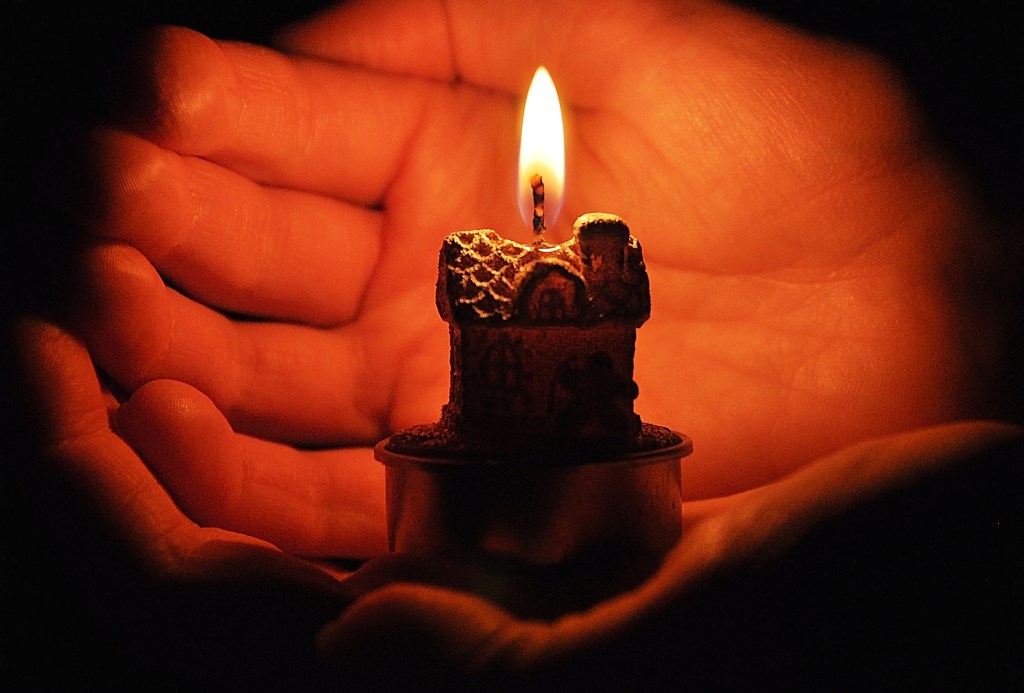
Christmas Eve begins with a light in the window to welcome Mary and Joseph. Going back in time it also showed a safe house for priests to perform mass as in penal times mass was not allowed. (English Penal laws against the Catholic Irish were in place for most of the 1700s.) The youngest in the household should light the candle and a girl named Mary should be the one to put it out. Many countries leave gifts for Santa. Milk and cookies are popular in the USA. Mince pie and Guinness are popular treats for Daidi na Nollag (Santy) in Ireland, along with a carrot for the reindeer. Midnight mass, usually at 10pm now, was and is a huge social gathering on Christmas Eve.  

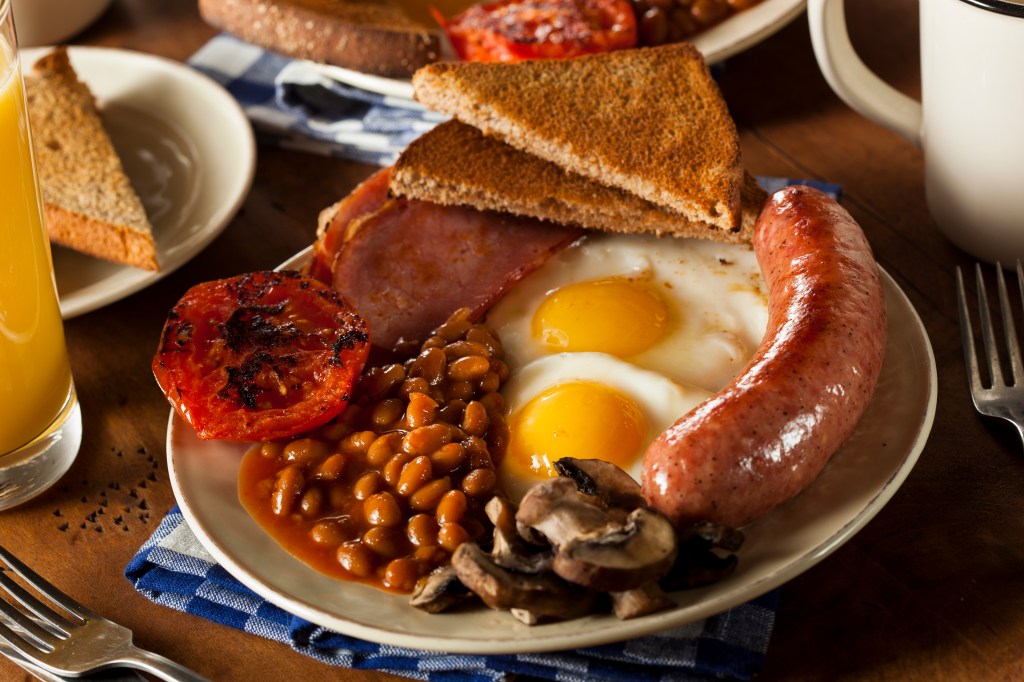
Christmas morning might very well find hundreds, all over Ireland, jumping into the ocean in their swim suits. Brrrr. Many do this for charities. It’s also considered a great cure for a hangover. Whether before or after gifts, a full Irish breakfast is a must.

What’s on the menu? Black and white pudding, rashers, eggs, bread, beans, mushrooms, tomatoes, potatoes, tea, and coffee. What are black and white puddings? Blood sausage. I have not tried this, but it’s apparently delicious. Here are some sites to buy or make your own: https://www.foodireland.com/donnelly-black-white-pudding-8oz-8-pack.html

Rashers are Irish bacon, and this I have had. It’s wonderful and I don’t know why we don’t have it here. It’s more like ham than our bacon, made from the pork loin rather than the pork belly.
Dinner time. Like in the USA, there is some sort of meat, typically a turkey. (Ham, goose, duck or salmon could also be the meat of choice.) Spiced beef is popular in Co. Cork. Gravy, homemade cranberry sauce, and a bread sauce accompany the meats. I had never heard of bread sauce. It’s cream and onions thickened with bread. Here’s a recipe: https://flawlessfood.co.uk/bread-sauce/ . Carrots, turnips, and Brussel sprouts are common sides, along with several potato dishes. Here’s a fun site for menu ideas: https://www.irishtimes.com/food/recipes/2023/11/23/old-irish-dishes-that-imbue-christmas-dinner-with-exotic-flavours/

Christmas poppers are a fun tradition. We’ve done that a few times and you can find them online and in some stores in the USA. Here’s a homemade one:  https://www.amazon.com/Handmade-English-Christmas-Table-Decorations/dp/B082DL5WY6/ref=sr_1_2_sspa?crid=3S7WP5F3BU0O2&keywords=christmas+crackers+with+snap+and+prizes&qid=1702773201&sprefix=christmas+cracker%2Caps%2C159&sr=8-2-spons&sp_csd=d2lkZ2V0TmFtZT1zcF9hdGY&psc=1&smid=A3HA8E34B7O9H9

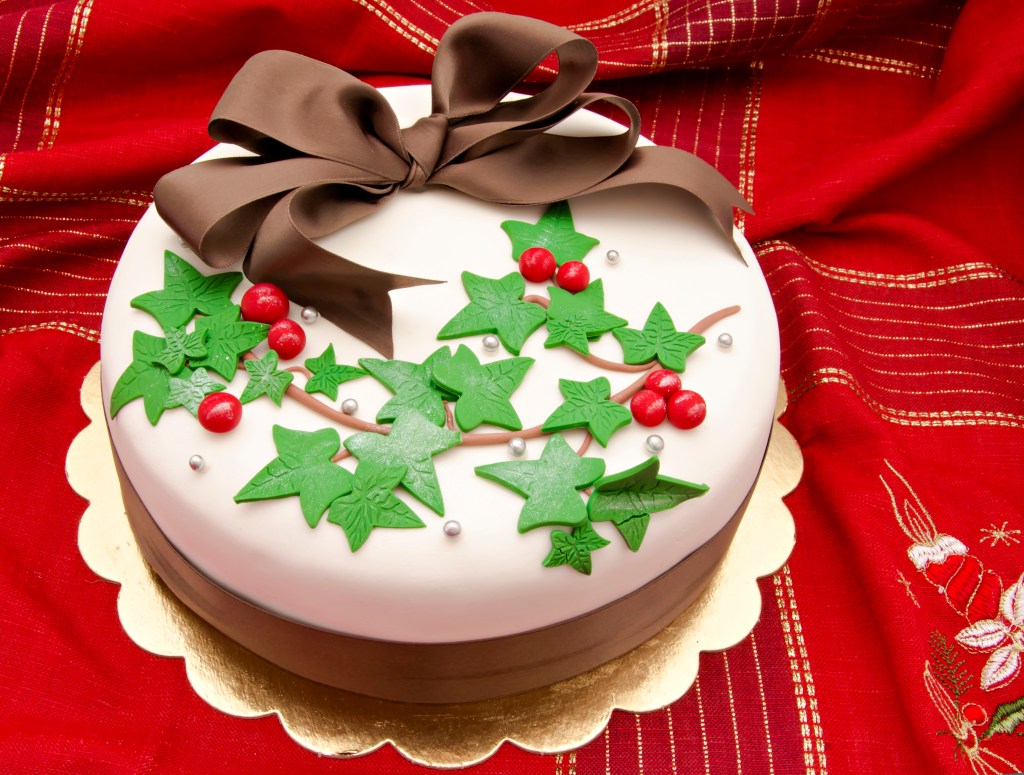
The most popular food I found was the Iced Christmas Cake. This is a dark fruit cake that one should start in Oct for the best flavor. It’s wrapped in foil and spiked with whiskey as it mellow and matures. It’s later covered in royal icing and covered and decorated in marzipan. Here’s a recipe if you’re brave enough to try it: https://thefoodellers.com/en/traditional-irish-christmas-cake-recipe

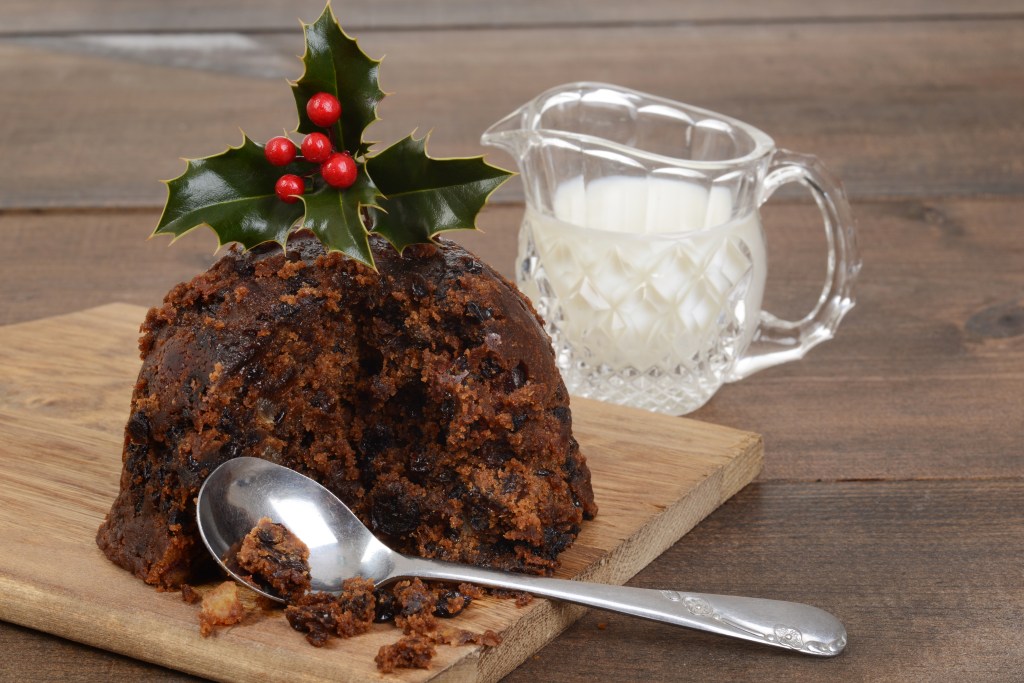
Next is the Irish Christmas pudding, which is like the English one, also known as Plum pudding or Figgy pudding. In the past, it was made with porridge and scraps of meat or fish and thickened with bread crumbs and eggs. Prunes were later added. Now, it’s a steamed bread pudding douse in brandy. Try it and let me know what you think: https://www.countryliving.com/uk/create/food-and-drink/recipes/a209/stir-it-up-sunday-christmas-pudding-recipe

A tin of biscuits (cookies) and some Cadbury roses are also a must to nibble on throughout the day. (Hazel Caramel is the most popular one in Ireland.)

Mince pies are small pastries. They used to be meat pies, now apples, spices, suet, currants, and sugar make up the little pies. A dollop of whipped cream is nice to add.

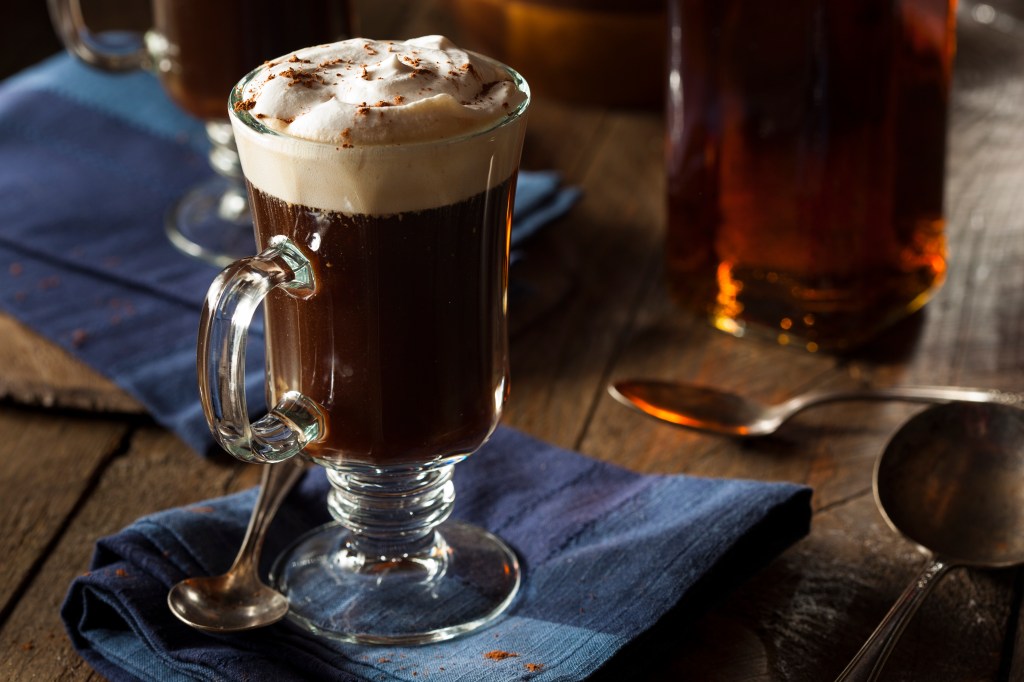
Would it be Ireland without Irish coffee? This concoction was apparently created in 1943 by Joe Sherridan in Limerick. (Strong coffee, brown sugar, Irish whiskey, and double cream.) Then there’s hot whiskey, mulled wine, hot spiced port, whiskey eggnog, and Baileys liqueur. Maybe the Christmas swim should take place the day after Christmas.

Saint Steven’s Day. (26th December) Since he’s the patron saint of horses, why not have horse races? If you look on YouTube you can watch the Wren Boys. It’s not as popular as it once was, but I think there is a revival on this one. The story goes: during penal times a village plotted against the local British soldiers. The townsmen surrounded the soldiers, but a flock of wrens pecked on the soldier’s drums and woke them. The plot failed and the wren became the ‘devil’s bird’. Now, a group will dress up in old clothes and straw and march with drums from house to house. A holly bush with a dead wren (old days) was carried at the head of the procession.

January 6th. Nollaig na mBan. Women’s Christmas. The women, who’ve worked for months to make Christmas special, get a day off with friends while the men take down Christmas and do the chores. It’s evolved into more of a time to gather with friends, but still, a great idea.

Do you have any of these traditions? Which are your favorites? Ready to try something new? I’m not sure about the blood pudding, and I don’t drink, but everything else sounds fun. I’d love to watch the Wren boys procession in person.

Halloween is actually Samhain

Time to celebrate!

Samhain and not Halloween? Actually, Halloween has its roots in the Celtic celebration of Samhain.

Samhain, pronounced SAH-win, has been celebrated for at least 2000 years and may have originated in an even more ancient celebration dating back about 5000 years. Found in all the Gaelic areas, Samhain is first mentioned in the first century B.C.E. on a bronze calendar found in Gualtic France—the first mention in Irish literature is from the 9th century. It literally translates to ‘summer’s end’. It is also the mark of the Celtic new year. I guess we can think of Samhain as a New Year’s Eve party spent with ghosts and Celtic creatures.

It’s the most important of four fire festivals marking the end of the light half of the year (summer) and the coming of the dark part of the year (winter). Most cultures have some sort of harvest festival, but Samhain has influenced the way we celebrate Halloween today.

The name for the month of November in Irish is Samhain, coming from the celebration on roughly 1 November. There were no calendars, so this fell halfway between the autumnal equinox and the winter solstice. The night before, (Oct 31st), was the fire festival to celebrate the harvest and prepare for winter. The Celtic day began and ended at sunset.

 It was also the night when the veil between the spirit world and physical world was at its thinnest. In folk lore, it was the day that the Hollow Hills would open and the sidhe (she), fairies and magical creatures, were allowed to walk among the living. Hence, all sorts of supernatural things were expected to happen.

Three days and nights marked the mandatory celebration of Samhain. Clans and villagers reported to local rulers or chieftains. The night began with a huge bonfire. The bones of animals were thrown into the fire, and animals may also have been sacrificed; if not for the fire, at least for the feast. Apples were also roasted in the fire. Household fires were put out and relit with a torch from the bonfire.

Meals were prepared for the living and honored ancestors who had passed away. To ward off evil spirits or impish fairies, people dressed up as animals or monsters to confuse them.

Here are a few of the creatures you might run into: The Dullahan. He (sometimes she) is a dark fairy who rides a flame-eyed horse through the night carrying his/her head either in his/her lap or held high for all to see. (Sound like Sleepy Hallow?) It is a harbinger of death. You’ll want to hide, not only because it’s scary, but it will blind you if you see it! Donn. A Milesian invader who was defeated by the Tuatha De Dannan and drowned in the Irish sea. He became the keeper of the gates to the underworld. Spirits pass through those gates on Samhain eve. The Pooka. This is a shapeshifter who comes to the festival of Samhain for gifts from the harvest. An ancient fairy, also know as a Puca—Puck…Maybe that’s where Shakespeare got his idea from? Another headless creature to be aware of on Samhain eve is Lady Gwyn. She and her black pig will chase you if she sees you. Cat Sith. (Sith is a form of sidhe—Star Wars, anyone?) This is a black fairy cat with a white mark on its chest. And how black cats became a part of Halloween. If you left a bit of milk for the Sith, it would bless your house. If not, you were cursed.  

Trick or Treat and the Jack-O-lantern. Children on Samhain eve would dress up and go to their neighbors and ask for a treat. If they didn’t receive a treat, the children would come up with a harmless prank. Does anyone remember Mischief night? It was the night before Halloween when it was all right to do harmless pranks, like on April’s Fools Day. As well as stuff like soap windows, toilet paper trees, etc. It’s probably a good thing it isn’t popular now. But that’s the basis for the trick part of Halloween.

Stingy Jack. He apparently tricked the Devil twice and made a deal that the Devil couldn’t take his soul. When Jack died, he wasn’t allowed in Heaven, so he had to roam the bogs for eternity. He was given a lump of coal to light his way. He carved out a turnip and put the coal inside. Jack of the Lantern—Jack-O-Lantern. Since Samhain, people carved large turnips into scary faces to ward off any evil from sidhe or Jack.

In the 8th century the catholic church added All Souls Day or All Hallows, Nov 1, to the mix in order to change the pagan holiday into a Christian one meant to honor ancestors and saints. All Hallow’s Eve was shortened to Halloween.

When Irish immigrants came to America, they brought these Halloween traditions with them. The pumpkin was easier to carve, so it became the lantern for poor old Jack.

Ireland has a couple of awesome festivals celebrating traditional Irish Samhain/Halloween customs. The Puca Halloween festival, which lasts for four days, in County Meath, needs to be on your schedule if you’re in Ireland at that time. Take a look here to check it out: https://pucafestival.com/ (Even if you don’t go, the videos and pictures, along with interesting information is fantastic!)

Then there is the Derry Halloween Festival – the largest one of its kind in Europe. It’s held inside 400-year-old city walls. It includes light shows, acrobats, and fireworks. Interested? https://derryhalloween.com/ Again, just looking at the site is fascinating.

Both events have free parts and ticketed parts.

What is your favorite Halloween tradition? Do you know where it originated?

If you’d like to dig even deeper into any of these stories, here are some links to great articles and videos: https://www.newgrange.com/samhain.htm

https://www.history.com/topics/holidays/samhain

https://www.history.com/news/history-of-the-jack-o-lantern-irish-origins

https://www.ancienttexts.org/library/celtic/jce/samhain.html

https://www.tiktok.com/foryou

Is Irish a Dead Language?

Recently, I mentioned to someone near and dear to me that I was attempting to learn some Irish, but I felt the pronunciation and words keep changing. They said that was because Irish was a dead language. Is it? What exactly is a dead language?

Irish language is not dead. Granted, it came close. As I’ve mentioned before, English rule pretty much demanded English as the only language. Immigrants, wanting to fit in, stopped speaking Irish. The language persisted in more isolated regions and often as an act of defiance.

One article I read pointed out that people have a difficult time with Irish names because they don’t understand that Irish exists as a language and try to put English rules to said names and it just doesn’t work. Once you realize that the rules are different, then it’s easier to understand how names are pronounced. An example is BH will make a W or a V sound. FH is silent. Like any language, once you learn the rules, alphabet, and pronunciation…well, I’m not going to say it’s easy, but it helps. Helpful site here, if interested: https://www3.smo.uhi.ac.uk/gaeilge/donncha/focal/features/irishsp.html#:~:text=Irish%20does%20the%20same%20sort,bh%20(broad)%20%3D%20w

What makes a language dead? According to Global Language Services, “a dead language is (usually) defined as a language that some people still use, even if there are no native speakers left.” Latin is a prime example. It’s taught and used for educational purposes, but no one speaks it as their primary language. https://www.globallanguageservices.co.uk/difference-extinct-language-dead-language/

 Old English is another example. It was spoken about 500 to 1100 CE. Beowulf is the oldest poem existing in Old English. Here are a few lines:

Hwæt. We Gardena in geardagum,

þeodcyninga, þrym gefrunon,

hu ða æþelingas ellen fremedon.

Oft Scyld Scefing sceaþena þreatum,

monegum mægþum, meodosetla ofteah,

egsode eorlas.

I had an English professor who spoke Old English and often read to us in that language. Though interesting to listen to, no one goes around speaking it anymore. And since there are no living people who speak Latin or Old English, we don’t even know if the pronunciation is correct.

Manx is an interesting language. It’s from the Isle of Man and was once dead, but the community revived it; it’s being taught on the Isle and is not longer a dead language; nor is it on its way to an extinct language.

I live close to a Ute reservation and sadly, many of the younger generation (at least here) don’t know the language. Many Native American languages have died.

Back to Irish. It is not dead. But, according to some sources, it is an endangered language. Approximately two million people in Ireland (including Northern Ireland) speak Irish—as a second language.  In 1922 the Free State was established (Republic of Ireland). They declared Irish the national language and a revival of all things Irish became popular. It is taught in schools, and in Connacht at least, I heard many people speaking it as their native tongue. The Government will require 20% of new public service employees to speak Irish by 2030. One of my favorite sites has a great little article on this: https://www.irishcentral.com/opinion/irish-language-legacy-cultural-wellbeing

 The younger generation is also involved by creating YouTube, TikTok, and Instagram posts to highlight and arrange meetings in the Irish language.

 Here are some wonderful songs in Irish you should check out:

https://www.irishcentral.com/culture/entertainment/avicii-wake-me-up-irish?fbclid=IwAR202gUBDmhs62lTfDO8-67s1NxyJ6PDRXAjpZGziaW6OrgJsWgCoB4umaI

You can give Irish a try on Duolingo and Mango (and probably other sites offering language learning). https://www.bitesize.irish/ is a great place for beginners also. This article highlights resources too: https://letslearnirish.com/articles/12-best-free-irish-resources/. Rosetta stone even has an Irish course. Some courses are free and some are not.

On one of the YouTube songs a comment was along the lines of, ‘I speak many languages and Irish is the most beautiful.’

My great grand mothers both spoke Irish. I wish I’d met them and learned a few things from them. Maybe learning a bit now will help me to better connect to them—and help keep the Irish language from dying out altogether.

What do you think? Should the Irish try to continue to revive their language? Is it a lost cause?

It’s Lughnasadh! Let’s Celebrate!

What exactly is Lughnasadh?

Lughnasadh, pronounced ‘loo-nas-ah’, is an Irish festival that heralds in the harvest season. It’s on the first day of August or celebrated on the day of the full moon nearest 1 August. This is halfway between the summer solstice and the autumn equinox. It is also called Lammas (old English). It’s one of four fire festivals in Ireland. It is also celebrated in Wales, Isle of Man, Cornwall, Scotland, and parts of England. (Celtic influence.)

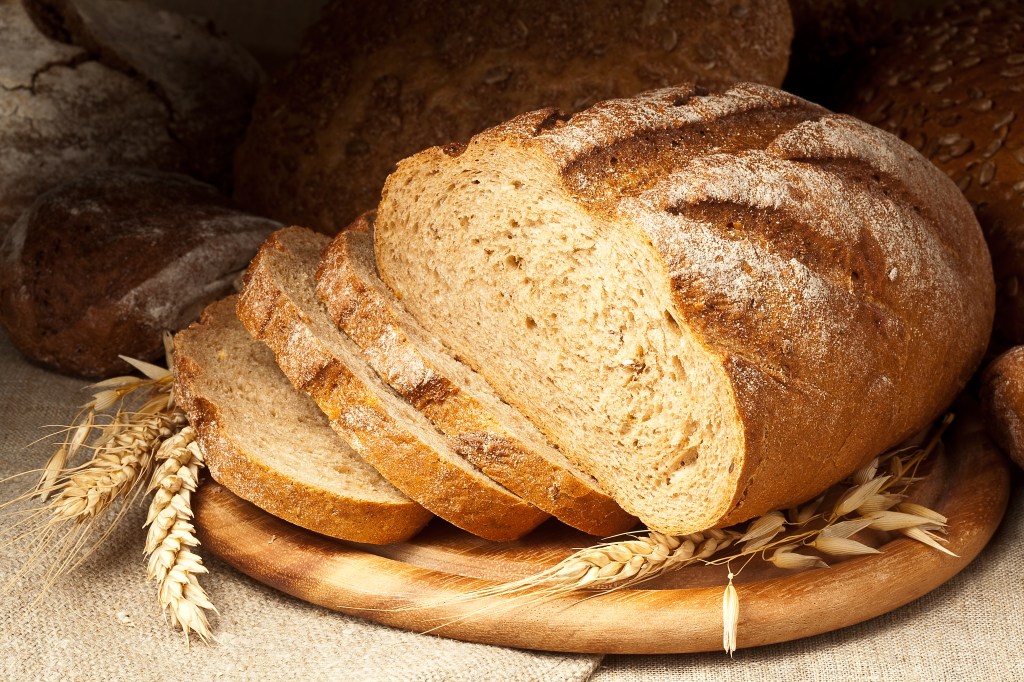
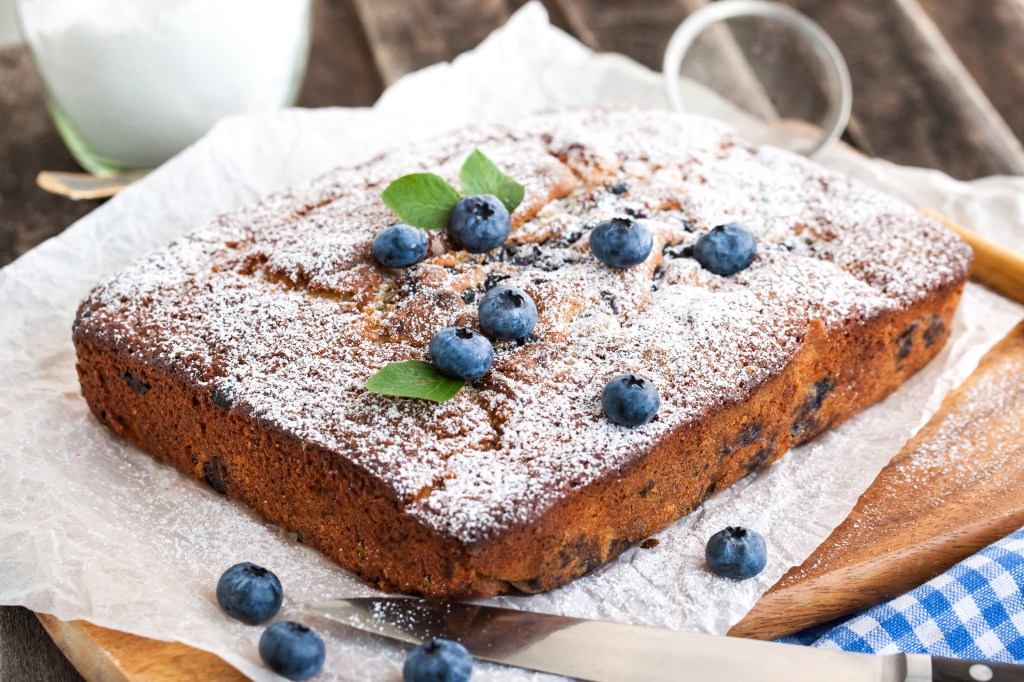
In ancient Ireland, this was the day to cut grain. If one cut their grain too early, they ran the risk of running out of enough grain to feed their families through the winter. After the harvest, loaves of bread were baked and a celebration ensued. These would include: feasting, matchmaking, trial marriages (in which young couples joined hands through a hole in a wooden door and were married for a year and a day. They then could decide at the next festival if they wanted to stay married), trading, markets, horse races, gatherings of far-flung family, music, storytelling, picking blueberries, law proclamations, visiting holy wells (to leave offerings and pray for health), and athletic contests.

Personally, I think the whole trial marriage idea would make a great novel.

The Tailteann games, considered the first Olympics, originated here. They comprised of competitions in long jumps, high jumps, tug of war, climbing mountains, wrestling, rowing, archery, spear throwing, sword fighting, running, and chariot and horse races. These games were about 1000 years before the Greek Olympics.

Myth surrounding the festival: the Tuatha De Dana god, Lugh, started it as a funeral feast, as well as athletic competition, to honor his foster-mother, Tailtiu. She died of exhaustion after clearing the fields of Ireland so they could be planted. Lugh was a god of many talents. He’s the god of craftsmanship, including; blacksmithing, wheel making, and fighting. (I’m not sure why fighting was in the list for craftsmanship, but it is an art form and this is Irish…)

Christianity adopted the pagan festival by blessing the loaves of bread at mass (Lammas=loaf mass). The mountain climbing became a pilgrimage. Holy wells turned to going to church to give thanks for the harvest and enjoying the fruits of your labor.

Today, with Irish revival, Lughnasadh, like other ancient festivals, are celebrated. One example is the the Puck Fair. It’s probably a survival of the Lughnasadh festival, though the first record of the fair is in 1613. It’s held each year in early August in the town of Killorglin, County Kerry. At the beginning of the three-day street festival, a wild goat is crowned “king,” while a local girl is crowned “queen.” The festival includes traditional music and night concerts, traditional Irish dancing, a parade, arts and crafts workshops, a horse and cattle fair, and trade stalls, to name a few. The festival ends with a fireworks display.

We happened to be in Kerry at this time one year. It was crazy! Hundreds of people for miles in every direction. Unfortunately, we didn’t stop to take in the festivities, but we had to drive very slowly through several streets a few different times and were able to see all the fun things they had going on. Our host at the BnB said they used to go every year and people from all over Ireland attend. Interested? Here’s a link for you: https://www.bandbireland.com/festivals/festivals-and-events/puck-fair

Neo-pagans, Wiccans, and modern Druids also make it a point to celebrate this festival today. Most cultures have probably had a time to give thanks for a bountiful harvest. We have Thanksgiving, which has also changed through time.

Though celebrating fall harvest the first of August seems a wee bit early to me—like going to Hobby Lobby for 4th of July decorations and seeing autumn décor—it was important to the survival of the ancients.

If you want to have your own celebration you can bake some bread and a blueberry pie or cake. Maybe have a bonfire and family competitions while listening to Irish music. Or watch this movie, Dancing at Lughnasa starring Meryl Streep: https://www.imdb.com/title/tt0120643/?ref_=fn_al_tt_1 (Let me know if you watch it and what you think.)

My bread is baked. Blueberry cake sounds good. I think I’ll check out the movie since I haven’t seen it. Are you ready to do some celebrating?  

A bit about Thatched roofs

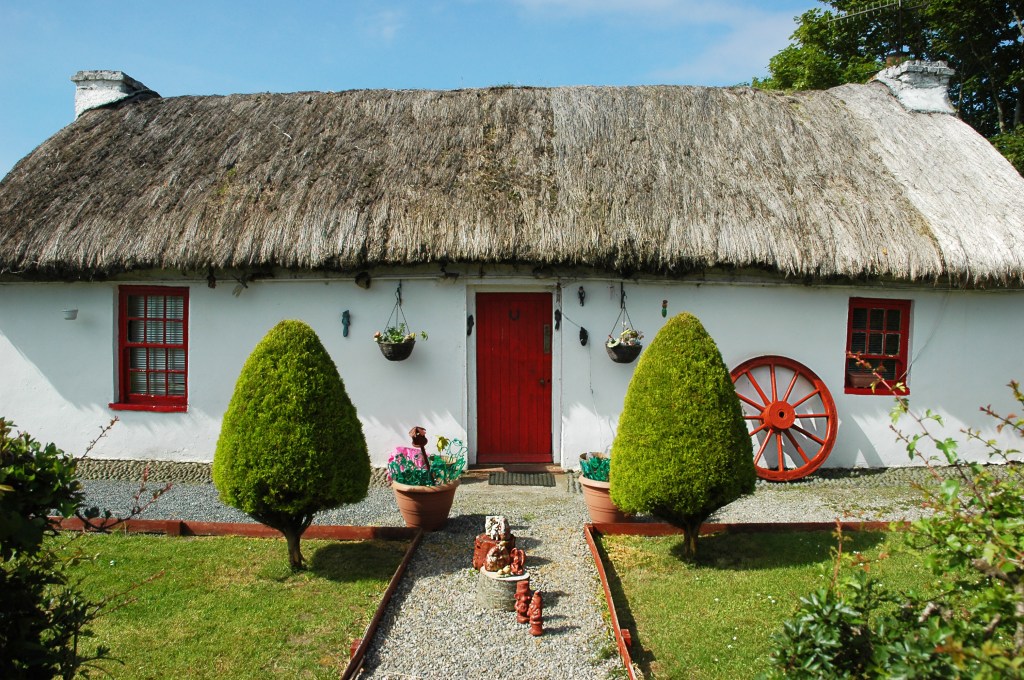
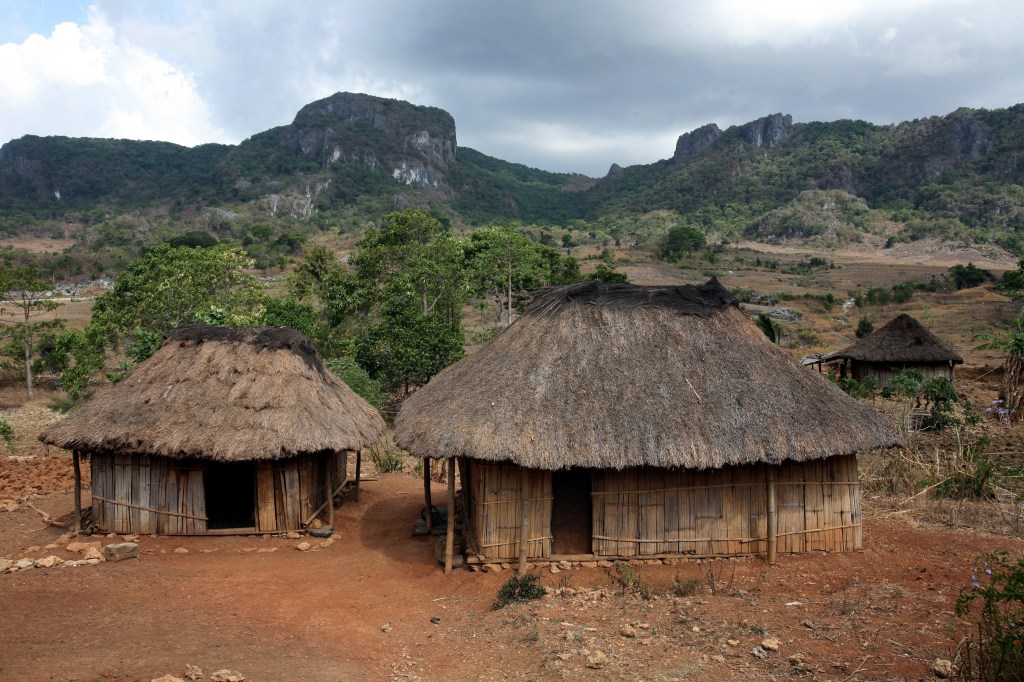
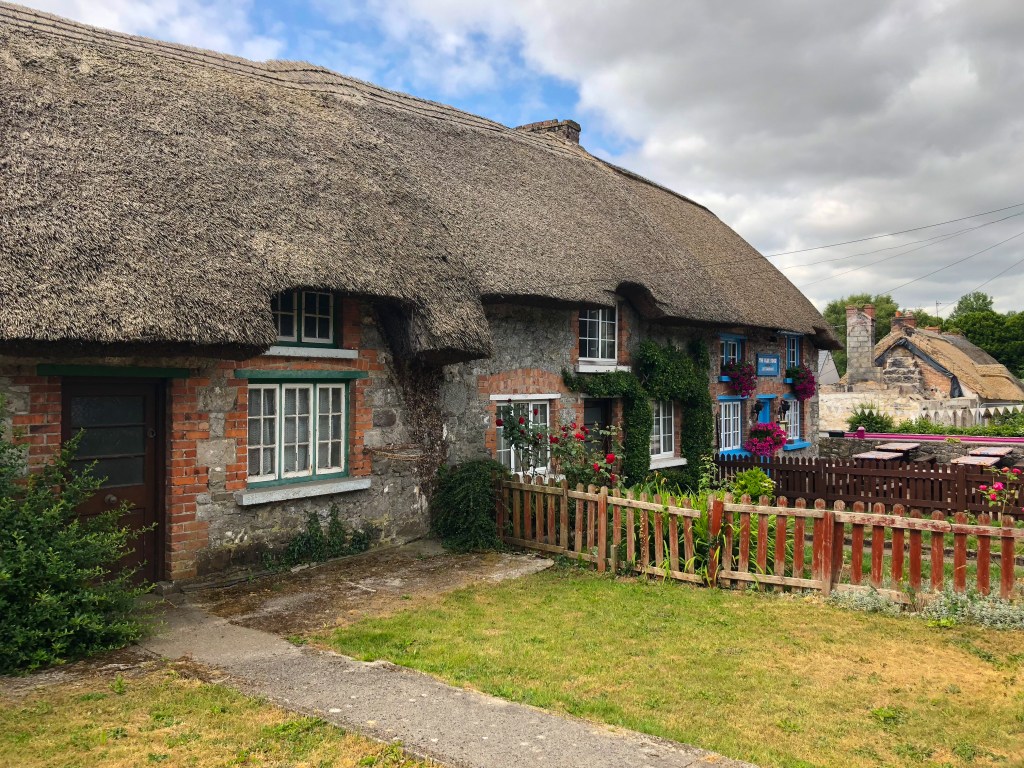
When one thinks of Ireland, even today, picturesque images of thatched cottages usually come to mind.

               As iconic as that is, thatching is a technique that has been around for thousands of years, all over the world, not just Ireland or the United Kingdom.

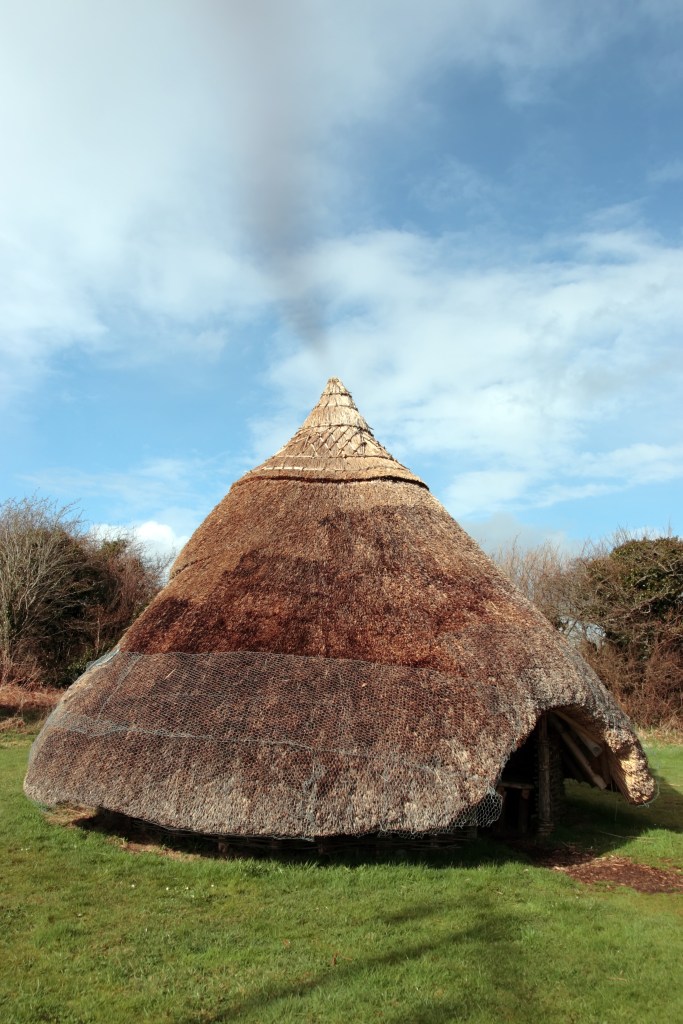
In England, The Howick House (“Britain’s oldest house”), located in Northumberland, England, dates back to 7600 BC and is known to have been thatched. (That’s not a picture of the Howick house though.) Iron age (approximately 1,200 to 550 BC) towers and fortresses around the world used thatch for roofing. Thatch was even used on castles, both during and after construction. Many of the main buildings had tile roofs, but the less important areas used thatched roofs.

The first version of thatching was a simple sod roof; materials readily handy and useable worldwide. It was very common in colder countries, such as Iceland, Denmark, and Sweden because it was a good insulator from the cold.

 A thatched roof has been a popular choice in Germany, Denmark, the Netherlands, France, Italy, and Belgium, as well as Ireland and the UK. If you search online, you’ll find examples of early thatching in Japan, Africa, and South America. Maya, Incas, and Aztecs used them. People used what was available and reeds, grasses, and straw were handy choices.

The United States used to have some thatched roofs; early immigrants using what they knew. There wasn’t a native source of reeds or long grasses that can be readily harvested for thatching, so it was soon replaced by wood shingles.

Why was thatching so popular for so long in Ireland? It was easy, inexpensive, waterproof, long lasting, and insulating.

Materials used, such as water reed were easy to obtain and are waterproof. When enough of these are bundled together, water can’t penetrate and will run off. Thatch also has a greater insulating quality than any other traditional roof covering. It will keep a home warm in winter and cool in summer. Another bonus is that it was highly sound-proof. Depending on the quality, and repairs, a thatched roof could last up to forty years.

There were drawbacks to a thatched roof. Ever hear of a canopy bed? People had to come up with some ways to keep animals and insects from falling on them while they slept! Thatch roofs attracted all sorts of animals. Common pests included birds, rats, mice, insects, squirrels, and even household cats.

Another downfall of a thatched roof is it does smell because it’s made from organic material, so it has a distinct scent, both when it’s fresh and as it ages. In visiting places with thatched cottages, I did not notice this at all. Maybe because there was often a peat fire burning, or a stack of peat nearby, so that was the pervading smell, which is very pleasant.

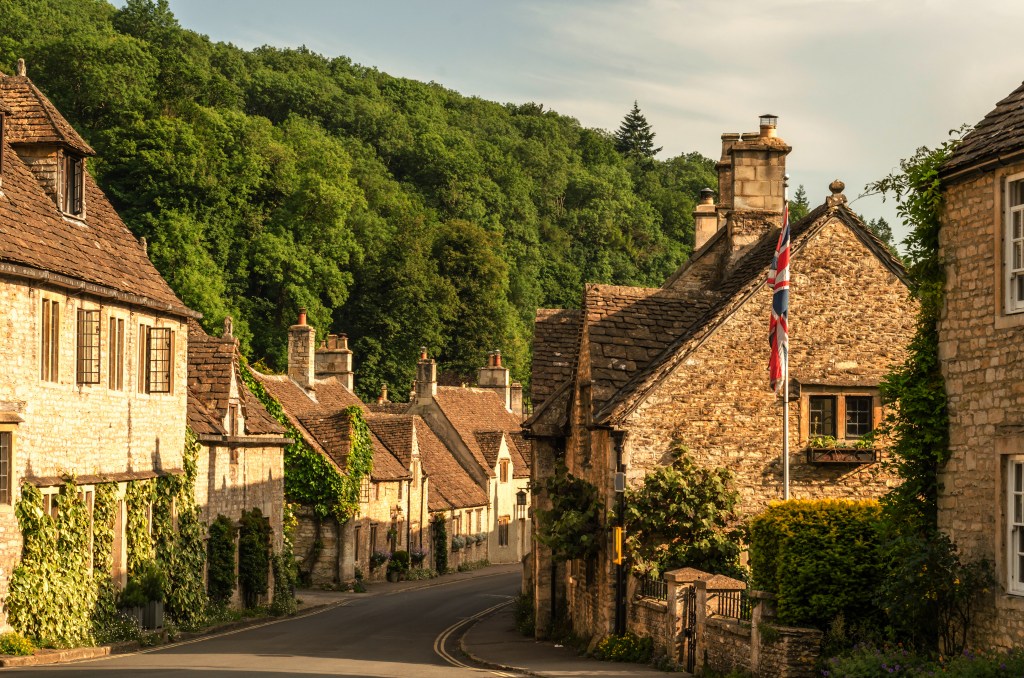
During the Tudor period, thatched roofs started to die off. Wealthy people chose tiles. That also helped to lessen the dangers of a fire spreading so rapidly. London’s first building regulations, the ordinance of 1212, banned the use of thatch to try to avoid the rapid spread of fire.

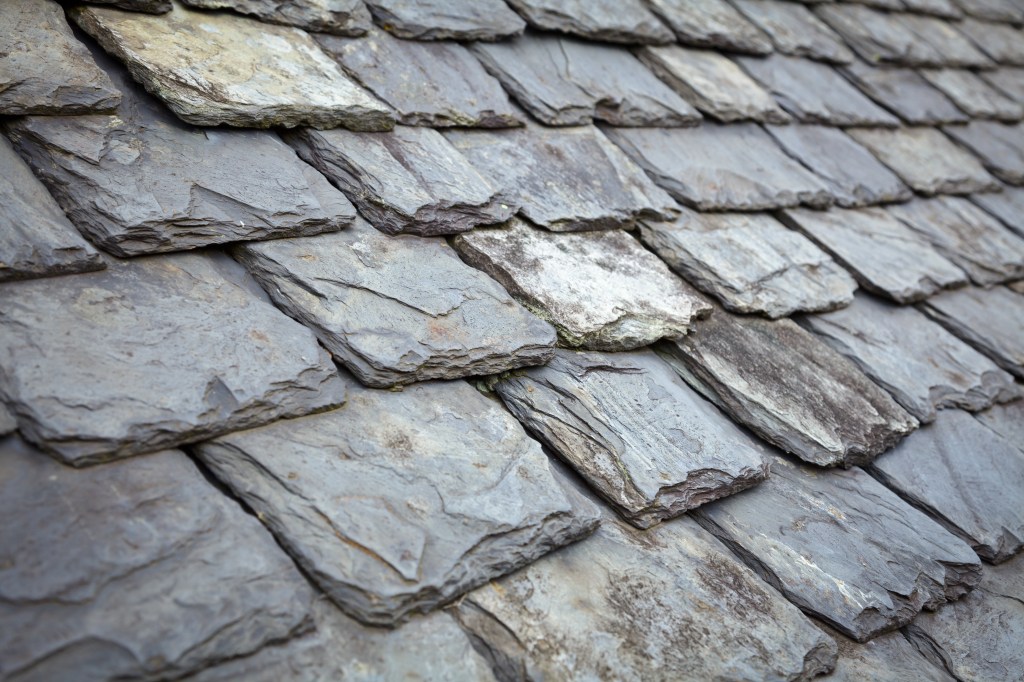
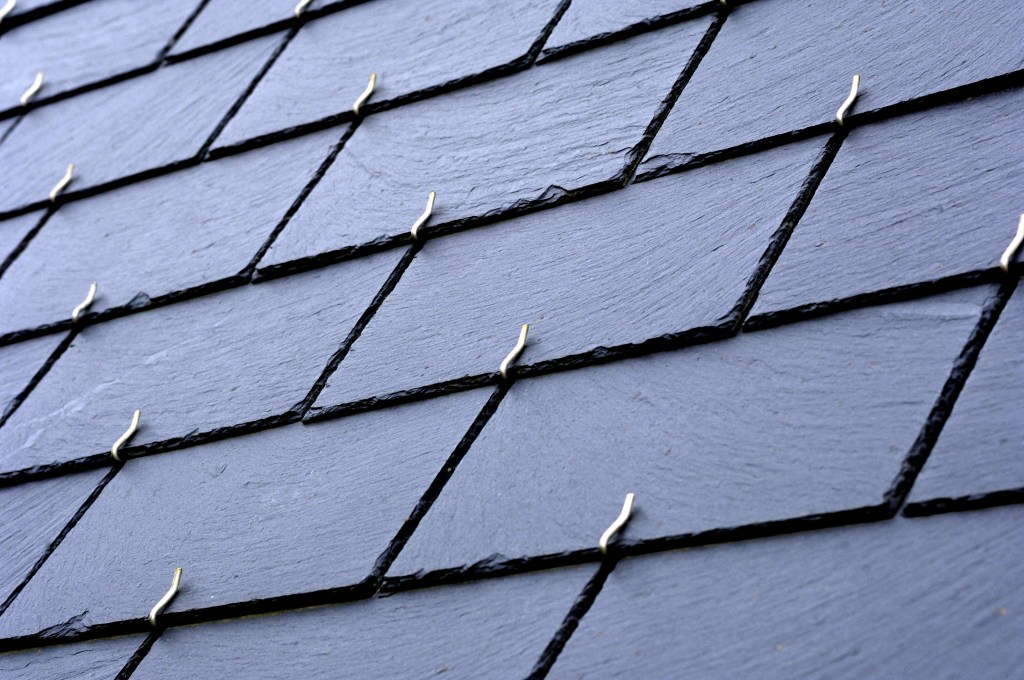
 Poorer people continued to use thatching, and the Irish were poor. Even so, in Ireland people living in thatched cottages started to decline in the 1920s and 1930s as slate roofing, which became a more durable and cheaper alternative, became popular.  

Slate became popular because they last longer. Also, slate doesn’t catch fire as easily. It became cheaper to use than thatch. At one time, hundreds of slate quarries operated in Ireland, but today there is only one working slate quarry in Ireland, the Valentia quarry on Valentia Island off the southwest coast. They opened in 1816 and give tours today.  https://valentiaisland.ie/history_culture/grotto-slate-quarry/#:~:text=Valentia%20Slate%20quarry%20is%20the,more%20about%20this%20fantastic%20place!

One place we stayed had several cottages on site to chose from. They had some thatched, some with slate, and some with modern roofing material. The owners told us it represented Ireland through time. We mentioned how much we loved seeing thatched cottages dotting the countryside. The woman told of a house down the road that the new owners had removed the perfectly good thatch and replaced it with modern roofing tiles. Why would they do that? My husband asked. The woman took a long draw on her cigarette and with narrowed eyes said, ‘They’re British, and they’re Protestant. Need I say more?” No ma’am.

Today, there is some concern over the future of thatched roofs in Ireland. Here’s a snippet from the Irish Examiner: “With fewer than 3,000 still in existence, communities must be supported in their efforts to repair, preserve, and restore the built heritage,” Minister of State Malcolm Noonan said. “Now, more than ever, communities must be supported in their efforts to repair, preserve, and restore the built heritageIt is an integral part of our culture, our sense of pride and is of huge importance to our local economies.” Irish examiner.com https://www.irishexaminer.com/farming/arid-40091318.html

For generations, the trade of thatching was passed from father to son. Today thatching is a specialized skill. Last time I visited Ireland I was pleased to see several new homes being built with thatched roofs. We also saw many being repaired. Thatching a cottage in Ireland today will cost around €10,000-€20,000 and will take about a month or two to complete. A quick search shows several places that will thatch a roof: (They’re interesting to look at.)

http://www.paulcookmasterthatcher.co.uk/

Roof Thatcher

https://www.thatchco.com/index.htm

I think the thatched cottages of Ireland will remain as iconic as harps, shamrock, and leprechauns for the unseeable future. And that’s a good thing.

What do you think about the future of thatched cottages in Ireland?

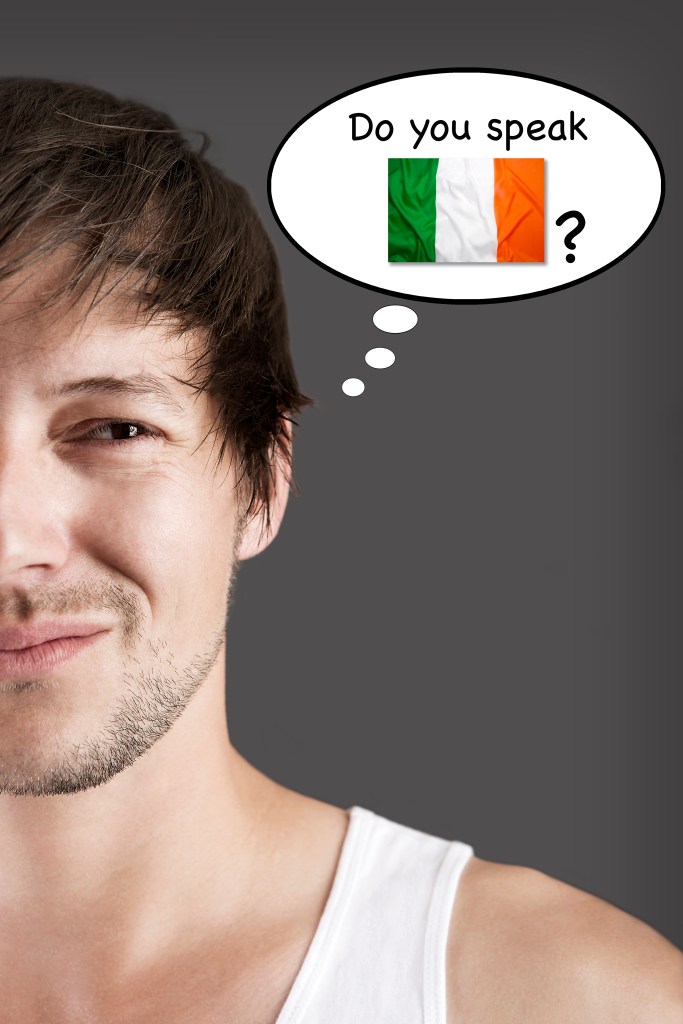
Are you speaking Irish?

Can you understand any of this?

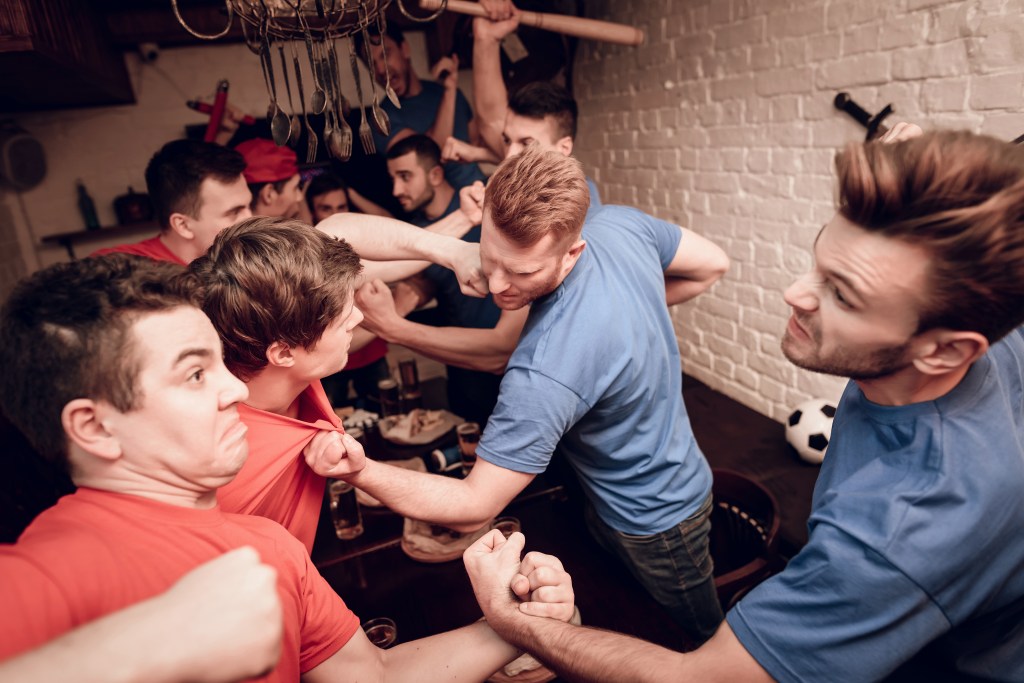
A slew of Hooligans and their buddies were at the boycott. It was a real donnybrook! They smashed whisky bottles to smithereens and shouted phony slogans. They wore matching trousers and brogues. There were slobs galore hanging around who really dug what was going on and shouting, ‘shut your gob!’ to the crowd. It was a bunch of malarkey and no good shenanigans!

Though some words might be outdated or unfamiliar, you’ve probably heard most of these Irish words which made their way into the English language. As a living language, English takes words from all over the world and makes them its own. Irish is no exception and perhaps should be expected as so many Irish have emigrated to England, the United States, Canada, and Australia.

I love this quote by James D. Nicoll: “The problem with defending the purity of the English language is that English is about as pure as a cribhouse whore. We don’t just borrow words; on occasion, English has pursued other languages down alleyways to beat them unconscious and rifle their pockets for new vocabulary.” (I even have this quote on a T-shirt. English nerd alert, I know.) But aren’t words and their history fascinating?

Here are the words I used in my example that have Irish roots:

  1. Hooligan: This one surprised me. It actually comes from a surname, Houlihan (O hUallachain). They were apparently notorious for being a raucous bunch. The name became a sort of slur on the Irish, as ‘all Irish are unruly drunkards/hooligans’. Now it refers to someone up to no good in a mischief sort of way. Here’s a fun article for more information if you’re interested: https://qz.com/1306921/world-cup-2018-hooligans-is-an-ethnic-slur-in-history
  2. Donnybrook: This is a name of a district in Dublin. (Irish-Domhnach Broc) It has come to mean a free for all fight. That’s due to a fair that was held in Donnybrook every year from about 1204 to 1866. Must have been some fair! You can read more here: https://iomst.ie/a-brief-history-of-donnybrook-fair/#:~:text=This%20was%20the%20message%20to,fair%20was%20closed%20for%20good.
  3. Slew: According to the Merriam-Webster dictionary, Slew may be from slua/sluag meaning army/host/throng. It was used as part of a war-cry. Here’s a fun little read: https://mashedradish.com/2016/03/17/four-leaf-etymologies-slew/
  4. Slogan: A call/cry.This goes hand in hand with slew. The war-cry was, ‘sluag gairm’, or a call to arms. The Scottish also used this term.
  5. Galore: Back to the Merriam-Webster dictionary; Irish from go leor. It meant ‘enough’. We tend to use it as more than enough. “There were pies galore at the Donnybrook fair.”
  6. Boycott: Another surprise. Boycott is a last name. Charles Cunningham Boycott was an English land agent in county Mayo. He, and others like him, evicted Irish tenants in heartless and cruel manners as well as overcharging rents. This led to a land war all over Ireland in the 1880s. (And led to mass emigration once again, the Famine being the first wave.) The town shunned him in every way they could; they stopped work, refused to sell to him, etc. He wrote to a London paper and troops were called in. Basically, all hell broke loose. The idea of shunning- or Boycotting – caught on and gave the poor of Ireland some power. It became a popular way to fight the British. Interesting article here for more: https://www.irishcentral.com/roots/history/irish-invented-boycott
  7. Smithereens: Pretty straight forwardsmiodar to smidirin to smiddereens to smithereens.Means small fragments.
  8. Buddy: I stumbled into a hornet’s nest on this one. Some believe that much of our slang came from the streets of NYC with all the Irish and Irish gangs in the late 1880s to early 1900s. This is one of those words. Bodach, which translates to ‘strong, lusty youth’. Others disagree and would contend that it’s all malarkey. Fascinating article here: https://www.irishcentral.com/roots/history/irish-words-litter-new-york-slang
  9. Slob: from Vocabulary.com; Irish, Slab, which means ‘mud’. The expression slob comes from ‘slob of a man’. Meaning someone who worked in muddy land or bogs. https://www.vocabulary.com/dictionary/slob
  10. Whisky: ahhh, the water of life. Literally. Uisce means water. Beatha means of life. Usquebaugh. Interesting sideline; Whiskey is Irish and United States. Whisky is Scottish/Canadian. (It has to do with where the grain is distilled, but it was getting too technical for me.)
  11. Brogues: are shoes with small holes in them, originally meant to allow water and mud to ooze out, keeping one’s feet sorta dry. Now, they’re classy shoes. From Merriam-Webster: comes from the Irish word brog. Which means shoe. Probably comes from Old Norse (Vikings invasions). Brogue as an accent comes from a different word, barrog.

12. Dig: (slang) An dtuigeann tu? Do you get it? Dig it?

13. Gob: etymonline.com/gob says, ‘1540s Irish for mouth. Related to English gobbet. Related to goblet.’ I wonder if the British gobsmacked is also related?

14. Phony: Love this one! From Dictionary.com: “…likely comes from an old con known as the fawney rig. Fawney is…Irish for ‘finger ring,’ and rig is an old term for ‘trick’ or ‘swindle’. Check it out: https://www.dictionary.com/browse/phony#:~:text=While%20the%20exact%20origins%20of,trick%E2%80%9D%20or%20%E2%80%9Cswindle.%E2%80%9D

15. Trousers: The Irish were wearing trousers long before it became popular among men (and women). Trius to trouzes to trousers.

16. Shenanigans: What surprised me the most about this word is a disagreement of its origin. It could come from the Irish sionnachuighim which translates to “I play the fox”. There’s quite a discussion on reddit too—from defending Irish to saying it’s a Spanish word, (Chanada) to a German word (Schenigelei). Shenanigans is a fairly recent word that appeared about 1855 in California. Here is a short and sweet article for you to decide where you think it originated: https://www.worldwidewords.org/weirdwords/ww-she1.htm

17.  Malarkey: Definitely Irish, right? Well…the Oxford dictionary says, ‘specific origin is unknown’. It only came into use in the 1920s. However, the Visual Thesaurus states that it was made popular by Thomas A. Dorgan, a cartoonist of Irish descent. It certainly sounds Irish. Check it out here: https://www.npr.org/sections/thetwo-way/2012/10/12/162791655/whats-all-this-malarkey-about-malarkey#:~:text=According%20to%20Oxford%20Dictionaries%2C%20malarkey,word%20hasn’t%20been%20established.

One article I read pointed out (and rightly so) that compared to other languages, there aren’t a lot of Irish words in the English language. Speaking Irish, in Ireland, was looked down upon by the English. If you wanted to survive in the English controlled Ireland, one had to learn English. The Irish were made to feel shame in speaking their language. As the Irish immigrated, they wanted to fit in their new country, so they lost the Irish.

In Ireland, it became a secret language. Since Ireland reclaimed most of their country in 1922 they’ve worked to bring their language back. Roughly one million people speak Irish worldwide. It’s mostly a second language in Ireland, English being the first. The Connaught area has the most Irish speakers. Everyone on Inis Mor spoke Irish; it was really nice to listen to it. I found many speaking Irish in the Galway area. At LaGuardia I asked the man at the counter of Aer Lingus, who was from Ireland, if he spoke Irish. He appeared somewhat insulted and informed me he was from Northern Ireland and of course he didn’t speak Irish.

Were you familiar with any of the words on my list? What did you think about Shenanigans and Malarkey—Irish or not? Let me know if you found this interesting or helpful.

Slan for now.

Beltane

.

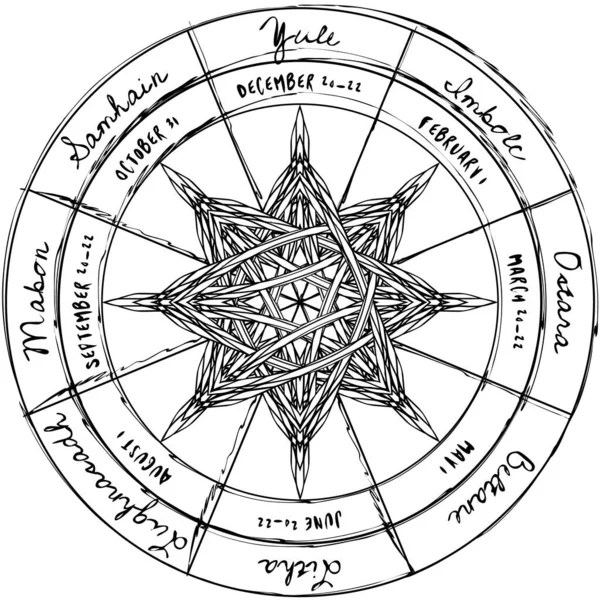
There are eight main (once) sacred days in Ireland. Imbolc/St. Brigid’s day, Ostara, Beltane, Litha, Lammas, Mabon, Samhain, and Yule. Since it’s almost May, I’m going to highlight Beltane.

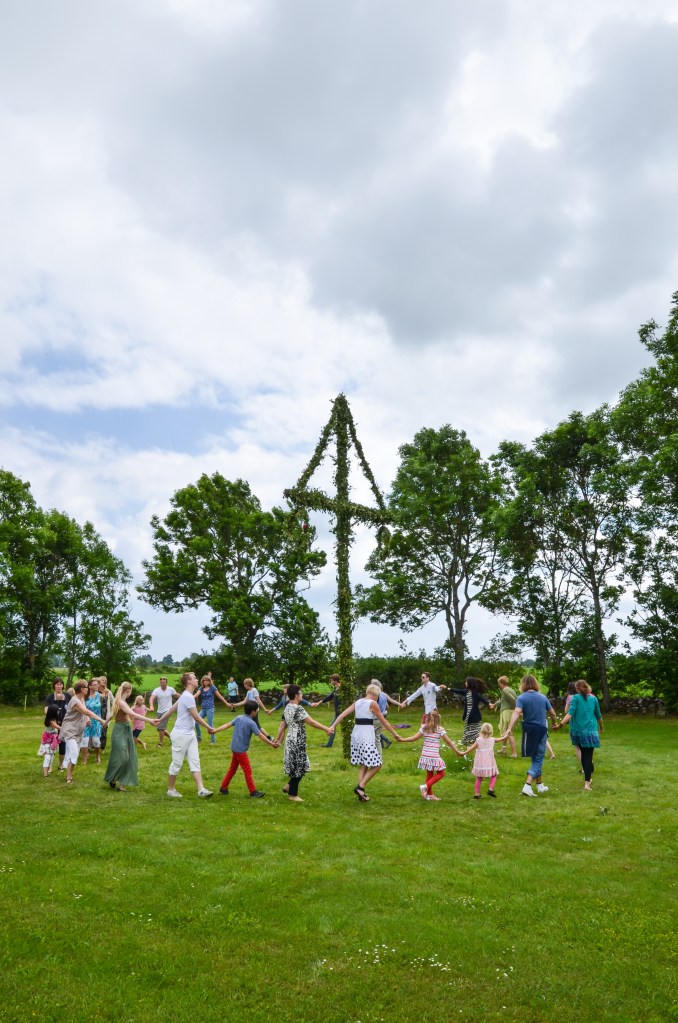
Beltane is celebrated on the 1st of May. In the United States, you may have celebrated or heard of May Day. I do remember having special spring things at school for May Day and one park near my apartment went all out. There was a flag pole in the center of the park and on May Day, they tied colorful ribbons to the top and children would take the bottom end and skip around the pole, twisting the ribbon around it. Then we’d make flower crowns and have cupcakes. I was surprised that no one I know in the west remembers any May Day celebrations. Maybe it’s all the Irish in the east? At any rate, May Day comes from Beltane.

Beltane is about halfway between the spring equinox and the summer solstice. It is a Celtic word for “the fires of Bel”. Bel is most likely Belenus, the sun god. There are other spellings, which then would interpret as ‘a bright fire’, or ‘a lucky fire’. Pagans (then and now) light two bonfires, believing that the smoke purifies and increases fertility. One could dance around the flames or jump over them. In the old days, they’d run cattle between the two fires. It is celebrated in Ireland, Scotland, the Isle of Man, Wales, Devon, and Cornwall. (This is the Gaelic regions of the British Isles.)

This is a time that pays tribute to Mother Earth and Father Sun. Modern day Pagans/Wiccans/Etc. have revived many of the celebrations. Some fun activities you can do is weave flower crowns, create your own May Pole, and my favorite suggestion is to create a May basket with flowers/seeds/spring type things, and bring it to someone who may need cheering up.

If you think about how hard survival was in the past, especially making it through winter, it’s easy to see how celebrating spring makes sense. Warmth, food, baby animals, and life returning to the world after living through a bitter time would be joyous. Maybe we take spring for granted and giving a nod to some of the old ways can show gratitude for all we have. After all, there is something magical in budding leaves and those flowers peeking out of the ground, brown grass turning green, and a breeze blowing warm instead of cold.

Hmmm, what should I put in my May basket?

If you happen to be in a place that does celebrate Beltane, you might want to join the festival. See what your local area has—you might be surprised. Just so you know, if you search for information on Pinterest or search engines, you’ll start to get a lot of pagan-ish stuff popping up!

All cultures have some sort of spring celebration, so you might want to see what your ancestors did to celebrate spring.

Do you have any May Day memories? Is there a Beltane festival in your area? I’d love to know!

Leprechauns

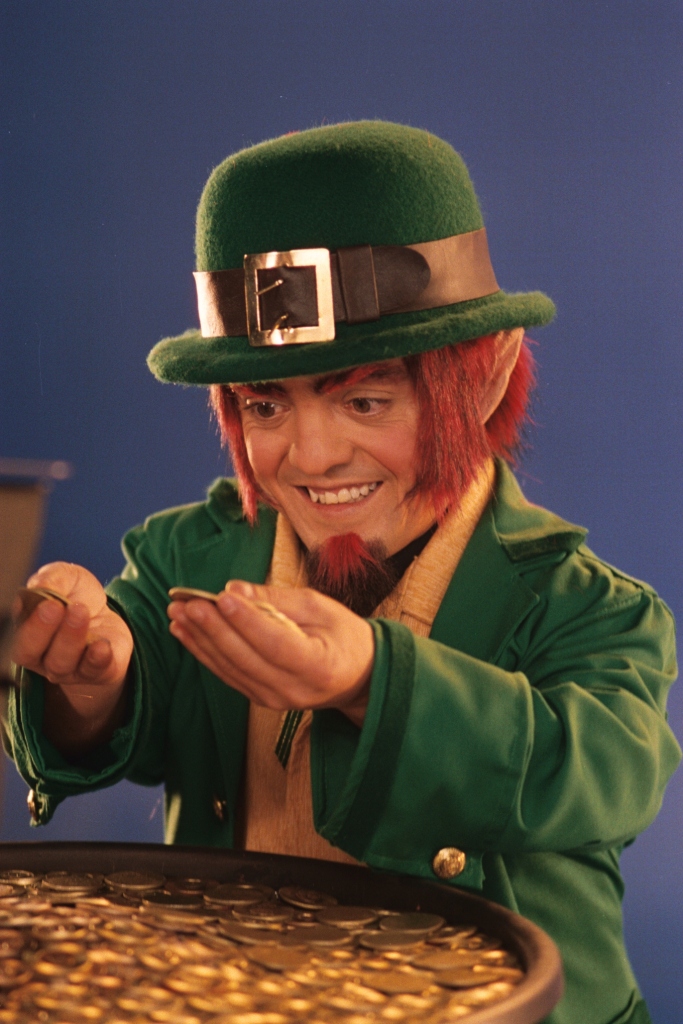
Quick – what’s the first thing that comes to mind when I say, ‘Ireland’? If you thought of a leprechaun, you’re certainly not alone. A wee man, the leprechaun is iconic and several happen to appear across the United States every March. Maybe you’ve seen one.

When it comes to Irish creatures, the leprechaun falls into the not particularly harmful category. We know they are bearded fairies dressed in green (red in older stories), are mischievous, love gold (which they keep hidden at the end of a rainbow), and are rather irreverent, yet loveable. Living alone in remote areas, Leprechauns were typically shoemakers in the tales of yore.

Where did they come from? According to etymonline.com/word/leprechaun, it was thought the word came from the Old Irish luchorpan, meaning “a very small body.” However, Simon Rodway, Michael Clarke, and Jocopo Bisagni (Cambrian Medieval Celtic Studies) believe the root of the word comes from the Roman Luperci. Which is funny since they were young men who ran around naked at the festival of Lupercalia. Due to a couple hundred years and translation errors, these Luperci ended up at the leprechaun we know today. (Sounds like an Irish tale to me…)

The first time leprechauns appear is in a story about Fergus, a king of Ulster, in about the 7th century. Here, leprechauns can live under water and grant wishes.

After the English discouraged all things Irish, the wee folk were kept alive only in folklore. Yeats, the great Irish writer, and part of a revivalist movement to bring back Irish-ness to the world, reintroduced the leprechaun. (Late 19th century) It was a hit!

One of my favorite (new) traditions: Head to the Cooley mountains in County Louth to a placed called Slieve Foye, home to the last leprechauns, in April. Dress up as a leprechaun (or not) and see if you can find any hiding in the nooks of the mountains. If you do see a leprechaun, do not take your eyes from them for even a second as they will disappear. They have storytelling and activities along with the search for the wee folk. 236 leprechauns are known to live there. (I’m not making this up!) https://www.independent.ie/regionals/argus/localnotes/leprechaun-hunt-returns-to-slieve-foy-34541789.html and https://www.thelastleprechaunsofireland.com/

However, you are asked to not capture leprechauns.  Slieve Foye has been granted, by the EU, protected sanctuary rights—meaning leprechauns are protected under European law. (Also protected are animals and flora.)

The Clurichaun is sometimes considered the bad-tempered cousin to the leprechaun. They’re also trickers, but rather than being a man, they take the shape of an old man. They also vanish if you take your eyes from them. Clurichauns are know to like alcohol even more than leprechauns.

If you’re looking for a movie to celebrate St. Patrick’s Day try the classic, Darby O’Gill and the Little People. Finian’s Rainbow is another one. I also enjoyed The Luck of the Irish. There is a horror movie titled Leprechaun, if you’re into that sort of thing. I think that’s just wrong. (Besides, what kind of Irish name is Lubdan Buttowski?)

Meanwhile, wishing you and yours “Leprechauns, castles, good luck and laughter…”

The Ferocious O Flahertys…

From the Ferocious O Flahertys O Lord deliver us”.

How cool is that?

We stayed in a charming little town near Galway, Oughterard, on one of our visits to Ireland. DNA showed all my Irish lines were from the Connaught area, so I asked a friendly store owner where different clans were located. He had a map on the wall showing ancient clan territories. I knew I had Flaherty ancestors—and there they were—right in Oughterard. He told us there was a Flaherty castle just down the road. So, off we went.

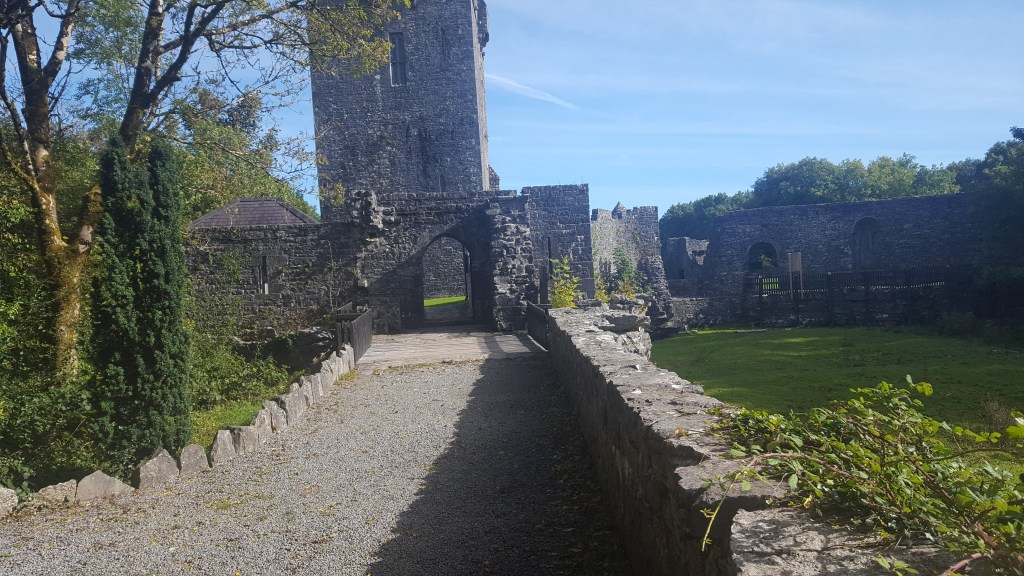
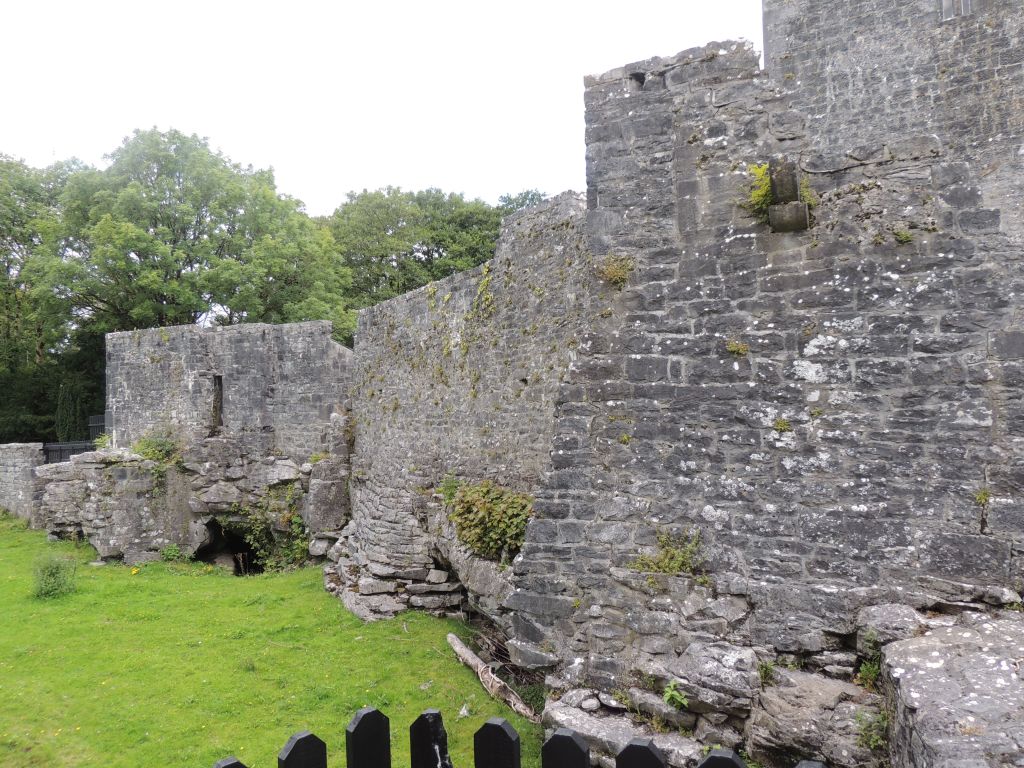
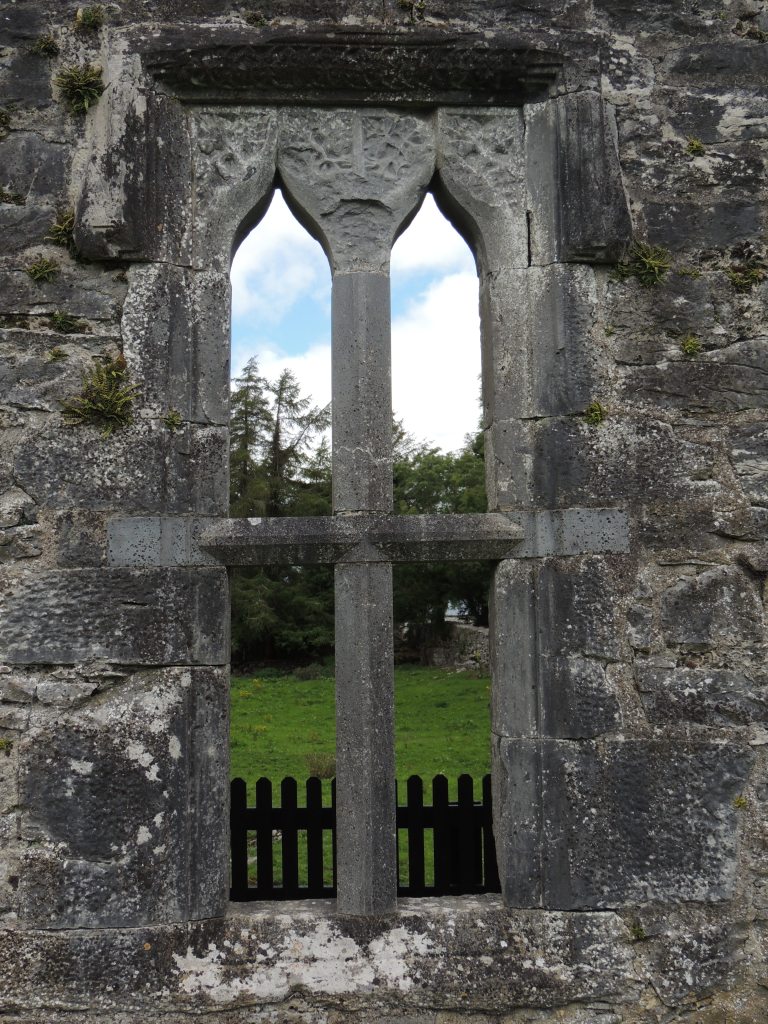
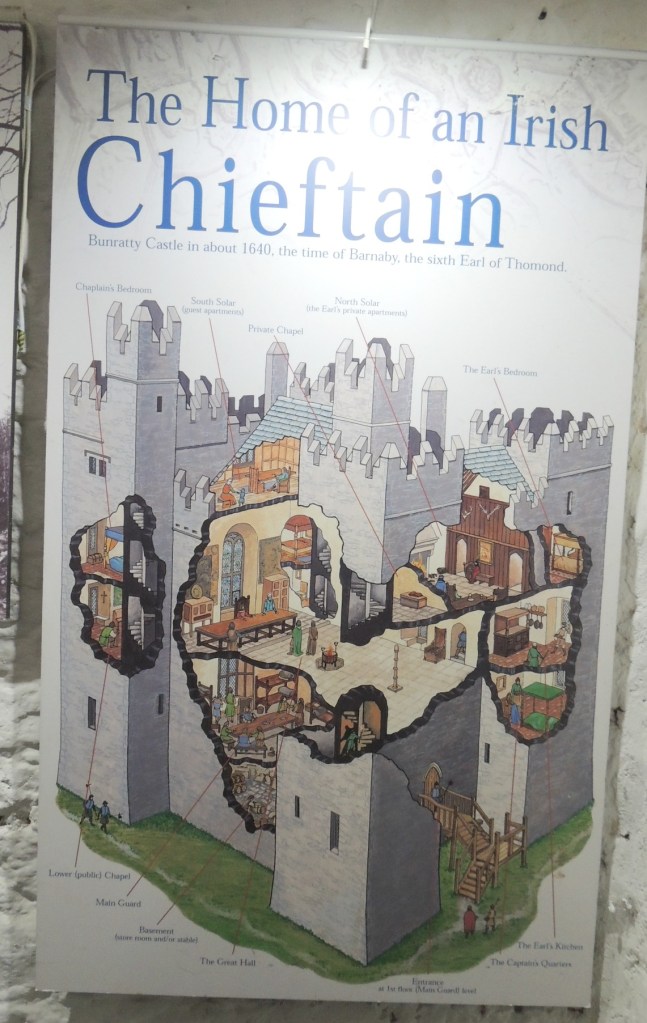
The correct name is Aughnanure (Pronounced something like: On a nur) Castle. It’s a fun few hours to stroll the grounds and remains of the castle (or Irish Towers). There are no tour guides, but information is posted in the rooms. It has quite the interesting history, which is nice to know before you go.

Here’s a quick version: It all started in the 12th century. Normans (read: conquerors) moved into the area. They wanted the seaport of Galway and eventually convince/forced the Flahertys (ancient name: Ó Flaithbheartaigh) out of their land. The Flahertys, not being cowed at all, built a well-fortified castle in 1490 against the invaders who’d pushed them to the high hills. They continued to harass the Norman families in Galway. Indeed, records state they were a “mountainous and wild people”.

The Flahertys, whose motto is “fortune favors the strong”, ruled from this castle and high country for about 300 years. (That is longer than the United States has been a country!) They were such a problem for those in Galway that the Normans built a wall and made a plaque that said: “From the Ferocious O Flaherty’s O Lord deliver us”.

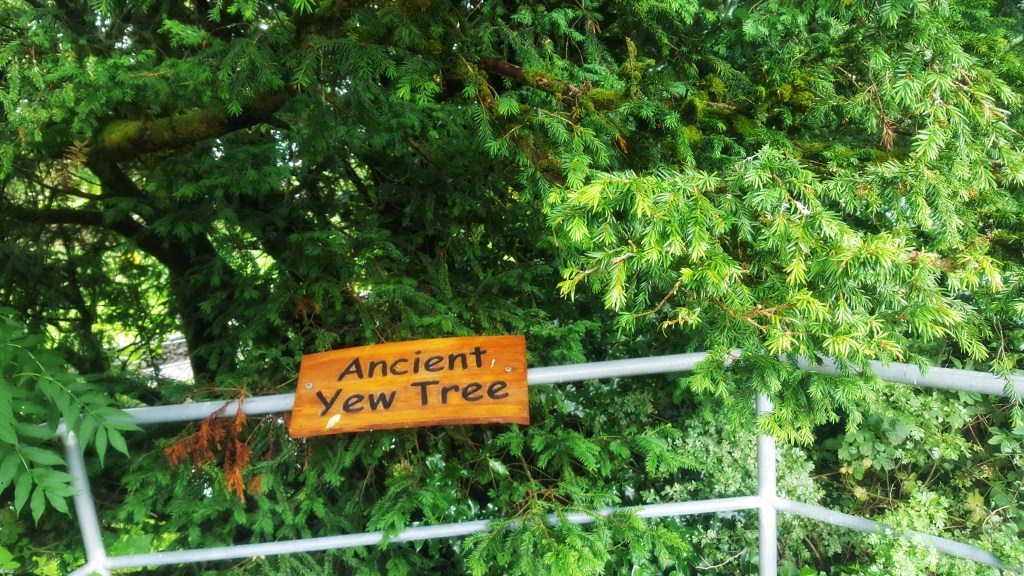
At the time, Aughnanure Castle was well situated with a river on one side that afforded a harbor to the castle. It’s no longer there, but if you hike down the small incline, you can see where it once flowed. There was also a forest of yew trees; only one is left. The remains still have the ‘murder hole’, where arrows/stones or boiling water/oil could be poured on attackers. There is a trap door in the banquet hall that when activated dumped an unwanted person into the river that flowed under the hall. (Devious!) There’s also the classic Medieval staircase which is narrow and would be extremely difficult for invaders to ascend, but it’s not a difficult climb when you don’t have to fight your way up the stairs.

An interesting, though morbid (or exciting, depending on your view) story: After a siege by the Normans on the Flaherty, the clan agreed to pay a tribute to the Normans. But they never did. After a few years the Normans (De Burgh family) sent a son to force the issue. The young man was invited to join a banquet. (Should have known better.) He was seated over the trap door. At some point, the Flahertys tripped the trap and the unfortunate lad plummeted into the river. And was drowned. His body was retrieved and he was beheaded. A son of Flaherty rode to Galway and threw the sack with the head at the DeBurghs. The Normans gave chase, but it was also a trap. The Flahertys were waiting over a hill. Not many De Burghs returned to Galway.

Flaherty Clan remained at Aughnanure until Cromwell. Which is another story.

I enjoyed learning about my Irish ancestors—though I don’t know that mine actually lived at Aughnanure. But I have Flahertys from the area, so there’s a good chance they’re a long ago great someone or other.

If you’re interested in reading a bit more, try these sites: https://www.enjoy-irish-culture.com/castles-of-ireland-aughnanure.html

Irish, Gaelic, or Celtic?

(Raise your hand if you get confused.)

In the United States over 50 million people have Irish ancestry, while about 25 million have Scottish. (Image is from https://commons.wikimedia.org/wiki/File:Irish_ancestry_in_the_USA_2018.png) Sometimes the terms Irish, Celtic, Scots-Irish, and Gaelic are lumped together. Let’s get a few things straightened out, shall we?

BASIC GUIDE~

Scots-Irish: This is not when you have ancestors who came from Scotland and ancestors who came from Ireland. This becomes complicated, but we’re talking Irish history, so I suppose that’s to be expected. Here’s a BRIEF version—in the 1500s England, and much of Scotland, became Protestant, thanks to King Henry V111 and the Protestant Reformation’s influence. His daughter, Queen Elizabeth, wanted better control over her lands, Ireland being one of them. Northern Ireland was pretty much in England’s power, but full of Irish Catholics. Her brilliant idea was to displace the Catholic Irish and bring in the Protestant Scottish. After her death, King James carried out the plan. And King Charles after him. Due to political problems in Scotland, many found this to be a viable solution. Their children were born and raised in Ireland. And their children. They became Irish. The Scots-Irish. (Which is why there was a religious/political problem—but that’s a story for another post.) If you have ancestors who are Scots-Irish, this is your heritage. It will help you do research if you’re looking for family in Ireland. When these Scots-Irish went to America, many chose to use this term to identify themselves as Protestant Scotts from Ireland. It’s become a common term in the United States. This migration and settlement pattern contributed to the unique heritage of the Scots-Irish in the United States.

Irish: The Irish speak Irish, not Gaelic. The confusion comes from the Irish word for Irish—Gaeilge (pronounced Gwal-gah). If you refer to their language it is simply, Irish.

Gaelic is the term for the Scottish language.

It is also a term used to describe the people and culture of Ireland and Scotland. So, the Gaelic people of Ireland speak Irish, and the Gaelic people of Scotland speak Gaelic. (You can get around this by saying Irish Gaelic or Scottish Gaelic, if not in those countries. It is polite to know the difference if in Ireland or Scotland.) Summary: The Irish language is called Gaeilge. Many people refer to it as Irish, but the term Gaelic usually refers to the Scottish language or Celtic culture.

Are you still with me?

Celtic is a broad definition used to describe the people and culture of Ireland, Scotland, Wales, the Isle of Man, Cornwall, and parts of Brittany. The Celts were an ancient group of tribes from central Europe. They migrated to Britain about 1,000BC (Iron Age). Both the Greeks and Romans wrote about them. If you’re interested in more in-depth information, take a look at this site:  https://museum.wales/articles/1341/Who-were-the-Celts/


 (Image:https://commons.wikimedia.org/wiki/Category:Linguistic_maps_of_Ireland)

The map shows where Irish is spoken in Ireland. Notice it is much less in Northern Ireland.

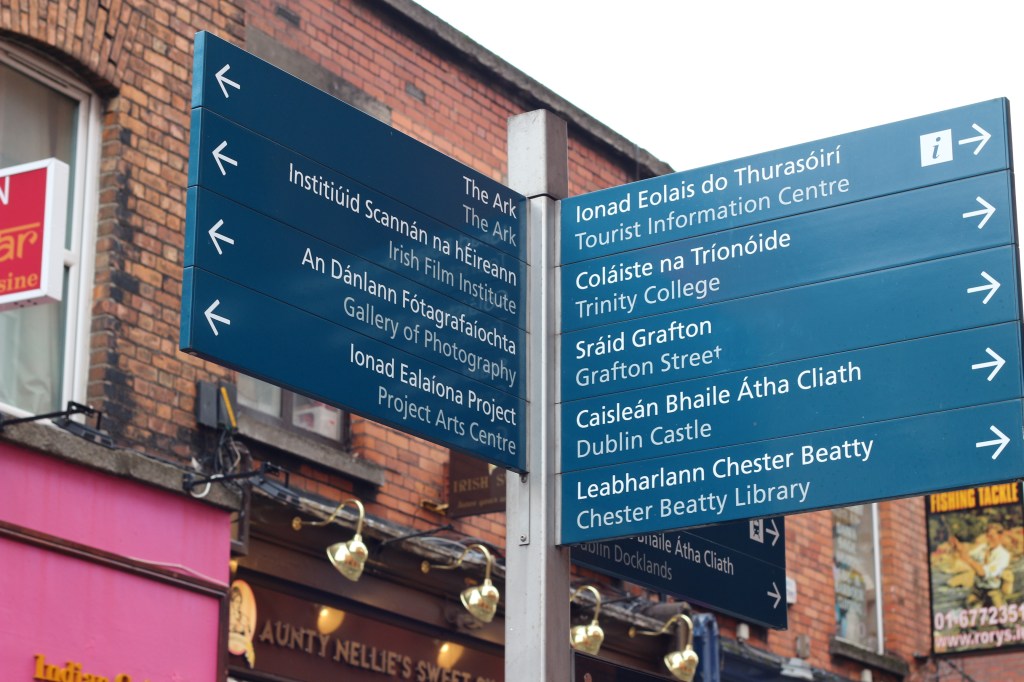
One more thing; the Irish language was almost wiped out. The English passed laws making it illegal for English living in Ireland to speak Irish, and for the native speaker to speak Irish if talking to an Englishman. Anyone who wanted to get ahead in life had to speak English. The Great Famine had roughly 1/3 of the population leaving Ireland, which added to the problem. Irish was banned in the courts of Northern Ireland and repressed throughout Ireland. Today, Ireland is reviving its language. It is a protected nation language. Signs are in Irish first, then English. It is taught in schools. You could give it a try using apps such as Duolingo, Mango, and lessons online, like this: https://www.bitesize.irish/gachla/irish-for-beginners/

When we were in Ireland (north west/Connacht area), many people spoke Irish. I tried my hand saying a few words. They laughed—then tried to help me. You try it: Go raibh maith agat (thank you)—pronounce it sorta like this: grr a ma a got. (But then, that’s where they started laughing…) I like Le do thoil (please). Low-da-hell (sorta like go to hell, so it’s easy to remember. Only don’t say that. Please.)

Warning: Irish is a really, really, difficult language. I think it was created by drunken angels dancing on the cliffs of Moher. (LOL)

I still love it.