

The Shillelagh
(“Shuh-lay-luh” or “Shuh-lay-lee”)
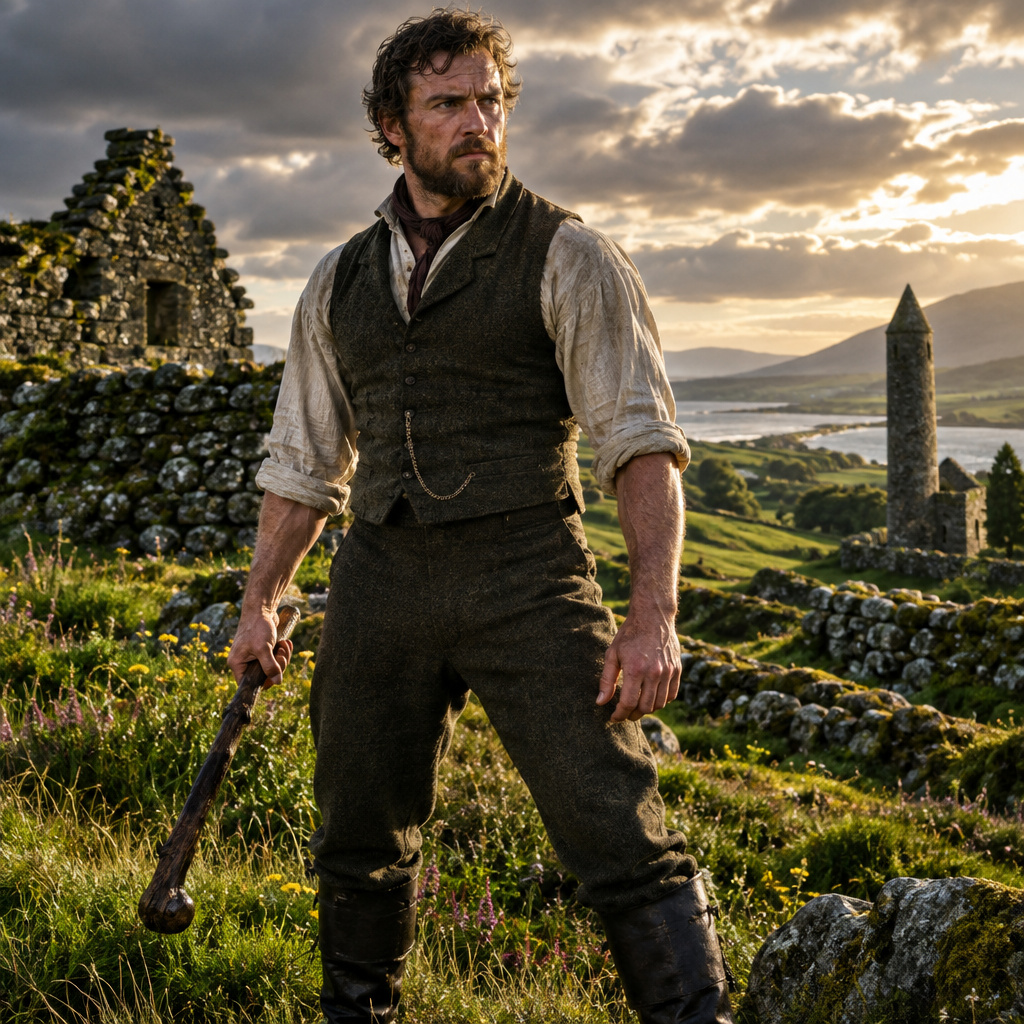
The shillelagh has become a symbol of Irishness across the world. What exactly is a shillelagh and why is it so connected to Ireland?
What’s in a name? The history of the name has a few disputed beliefs. It could be from the village of Shillelagh in County Wicklow, an area that once had huge oak forests. Another option comes from the Gaelic phrase sail eille meaning “a thonged willow stick”. Another folklore links a shillelagh to the clan chieftain, Ealach Mac Faelchon from the 7th century. His followers were known as ‘Siol Ealaigh’ (roughly, She’ll a luh). He was from County Wicklow. (Perhaps all three combined to create the term shillelagh.) It’s all speculation.
What is a shillelagh? It is a stout walking stick which can be used as a fighting stick. They are traditionally made from blackthorn wood, which was plentiful across Ireland. Oak, hazel, crab tree, or ash could also be used, but blackthorn is extremely hardy, yet lighter than some other woods. It has a knotty texture, and by using the roots, or knobs that join branches, it creates a natural knob at the head. This knob, in later years (1800s) was sometimes loaded with lead to make it harder and a better weapon. Traditionally, these sticks may have been left with the thorns on. One story has them smeared with whiskey butter (a blend of softened butter, whiskey, and herbs) or some type of oil, and left to hang in the chimney to smoke. That gave them a hard, glossy sheen. A leather wrist strap was joined at the handle. Sometimes sticks were cured in manure. However, the true knowledge on the topic is limited to folklore and stories. The Scots called their sticks/staff a Kebbie or Kebbie stick.
These fighting sticks weren’t recorded until the 17th century, but it is believed by many that the shillelagh was used anciently as a weapon. The shillelagh is thought to be the main weapon used in bataireacht (buh-tuh-rahkt) an ancient form of Irish martial arts stick fighting. Learning stick fighting was common as well as important. If no weapon was available, a shillelagh was. Lads learned to fight with one from a young age.
It has been claimed that the shillelagh became even more important under British rule with the penal laws, where the Scots and Irish weren’t allowed weapons, among other things. After all, what could a man do with a walking cane? (The Penal Laws are a complicated matter and involved much more than weapons, but that’s a story for another blog.)
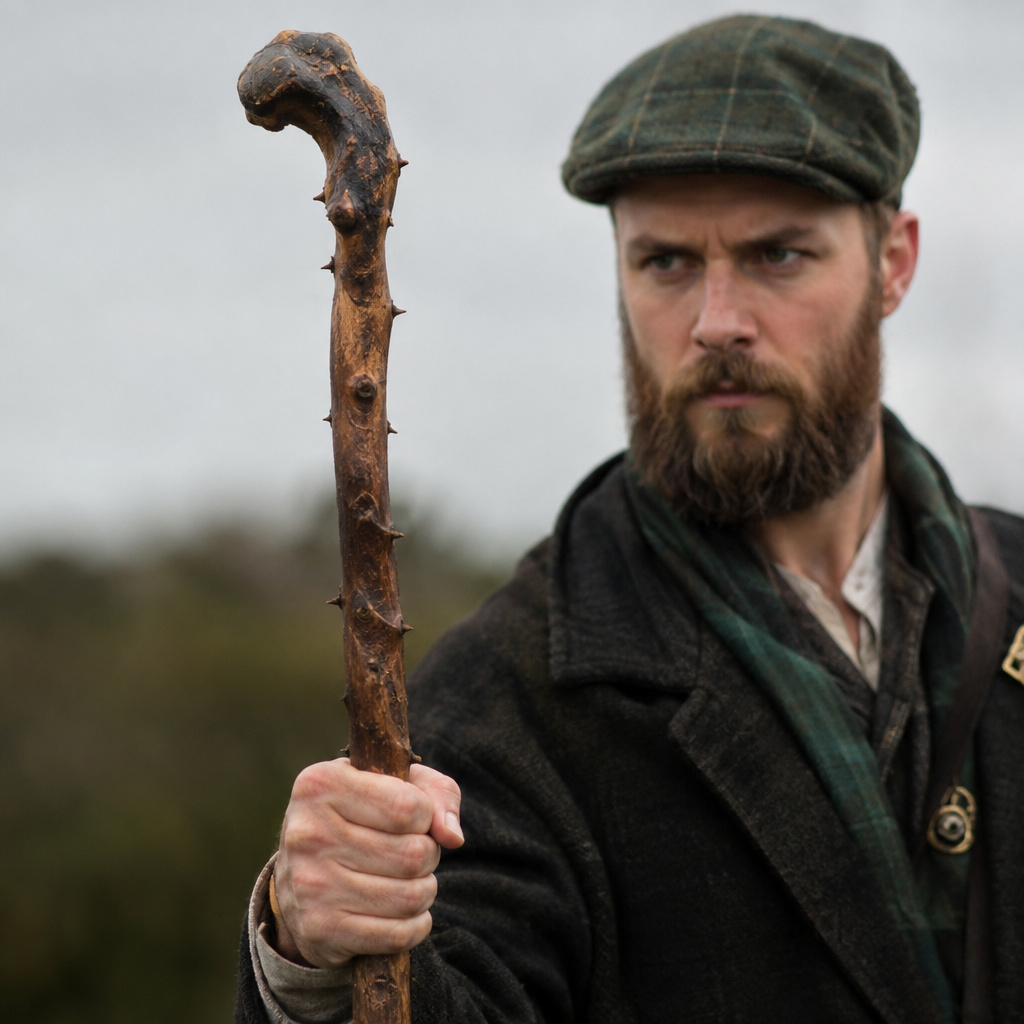
Faction Fights: This is where the shillelagh became famous as an Irish fighting weapon. During the 18th through 19th centuries organized community brawls were held at local fairs, funerals, markets, and gatherings. The first recorded fight was in Clonmel, Co. Tipperary in 1805. It spread across Ireland and into England, and then the United States by 1825. Anciently, the sticks were longer, but later shortened, perhaps due to the more close-range fighting in urban areas.
There were ‘laws’ to ensure fairness and to lay base rules. Two or more groups would assemble at the fairgrounds or gathering, either to settle a feud, claim a dispute, or just for fun. The winners of the fight would win the dispute. Even though these faction fights often resulted in deaths, women and children attended, music was played, and cheers of encouragement or derision were shouted to combatants. One major confrontation took place at Ballyeagh Strand, near Ballybunion in County Kerry, in 1834. Contemporary accounts describe hundreds of people participating in a violent clash between rival factions. As with many such events, however, exact numbers and details vary between sources.
A fight could happen in three parts; shillelaghs, wrestling, and stomping. The teams all begin with their sticks. Shillelaghs were held in the right hand, with about 6” extending at the base, and the rest extending upright. Left arm was used for blocks. The objective, supposedly, was first to knock the hat off an opponent with a follow-up hit by the bottom end of the stick. As the fight went on, combatants often lost their sticks so wrestling would ensue. Once an opponent was on the ground the stomping began. Now, this is stomping a fighter while wearing hobnailed boots. These common boots had nails or spikes protruding from the bottom of them. Though this all sounds like a free-for-all brawl, it called for trained fighters following the shillelagh ‘law’. From historian John Hurley in his book, Shillelagh: The Irish Fighting Stick (2007)
The law (not formal or enforced consistently):
1 – If a faction is greatly outnumbered, members of the more numerous factions must join them in order to even out the sides.
2 – If a third faction is involved, they should join with the less numerous factions.
3 – No attacking of one man by more than one man.
4 – If one man unfairly attacks another man, his own faction will attack them.
5 – The weapons used should be evenly matched—sticks versus sticks, etc.
6 – Depending on the situation, virtually any weapon can be used, including swords, stones, and farm implements, although guns were originally avoided.
7 – Punching, wrestling, and kicking are allowed in some cases.
8- No striking of women, even if they strike you.
Modern times: If you’ve seen the 2002 film, The Gangs of New York, you’re familiar with the dramatic, fictionalized portrayal of 19th century urban violence and how the faction fighting with a shillelagh supposedly moved to the United States. That is one way the shillelagh became synonymous with Irish gangsters.
Its prominence in cartoons, stage performances, newspapers, and later films was partly a product of anti-Irish stereotyping. British and American caricatures frequently portrayed Irish people as drunken, violent, and uncivilized. The shillelagh became part of that offensive stereotype, appearing in cartoons alongside exaggerated accents, simian features, and other anti-Irish imagery.
Some other movies where characters use a shillelagh as a walking cane are: The Longest Day, The Quiet Man, The Hanging Gale, Darby O’Gill and the Little People, and Finian’s Rainbow. Now that you know, you can look for the shillelagh in these movies.
Within Ireland and the Irish diaspora, however, the stick could carry very different meanings. It might represent self-defense, independence, craftsmanship, resilience, or cultural heritage. It could also be ceremonial or decorative rather than violent.
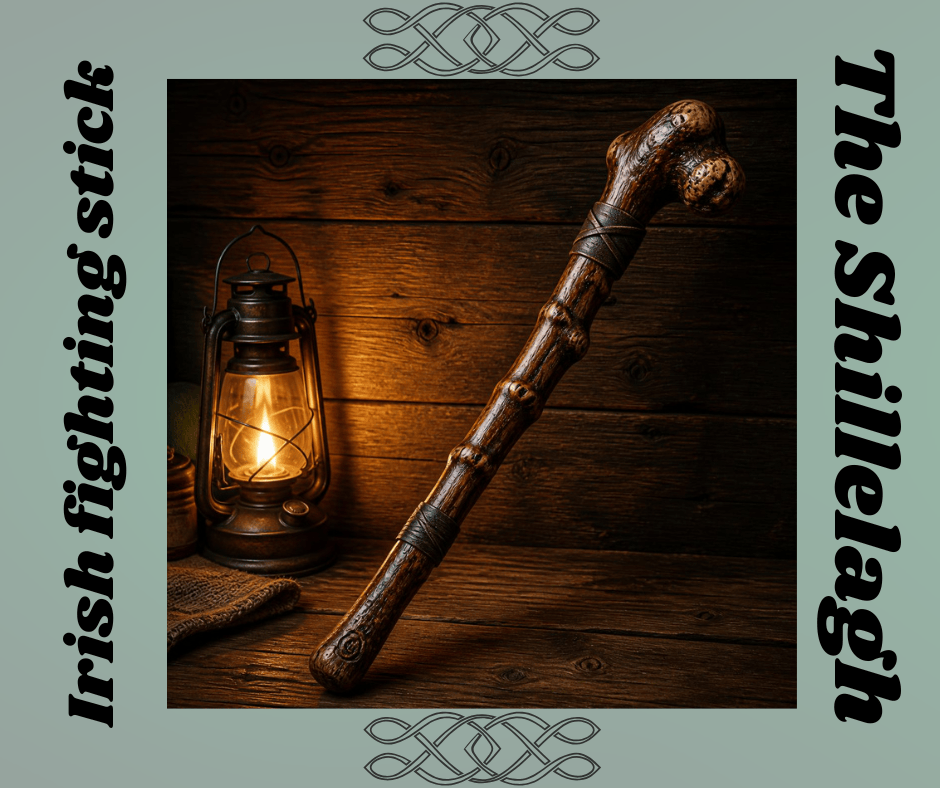
“Cut a stout, blackthorn to banish ghosts and goblins” from “The Rocky Road to Dublin.”
The shillelagh became famous from songs like this and “Finnegan’s Wake”, “The Ballad of Shillelagh O’Toole”, and “It’s the Same Old Shillelagh”. You can listen to “The Ballad of Shillelagh O’Toole” and “It’s the Same Old Shillelagh” here:
https://robertpalomo.com/shillelagh-o-toole
Today, shillelaghs are sold as walking sticks, collectibles, ceremonial objects, and works of Irish craftsmanship. There has also been renewed interest in bataireacht, with instructors and clubs attempting to preserve or reconstruct historical Irish stick-fighting traditions. As with many revived martial arts, modern practice may combine documented techniques, surviving family traditions, oral history, and reconstruction. Different schools may therefore teach different methods.
So, what does the shillelagh represent: brutal fighting, masterful martial art, traditional weapon, or Irish cultural symbol? Perhaps it is a mixture of all four. Its history includes real violence, but it also reflects craftsmanship, folklore, identity, adaptation, and the complicated ways in which national symbols are created.
Watch some Shillelagh shenanigans here:
: https://www.youtube.com/shorts/32lziW7ST7w
If you want to delve deeper, try these sites: https://www.combatshillelagh.com/history-of-the-shillelagh/ :
https://timelessirishtreasures.com/pages/history-of-the-shillelagh


