

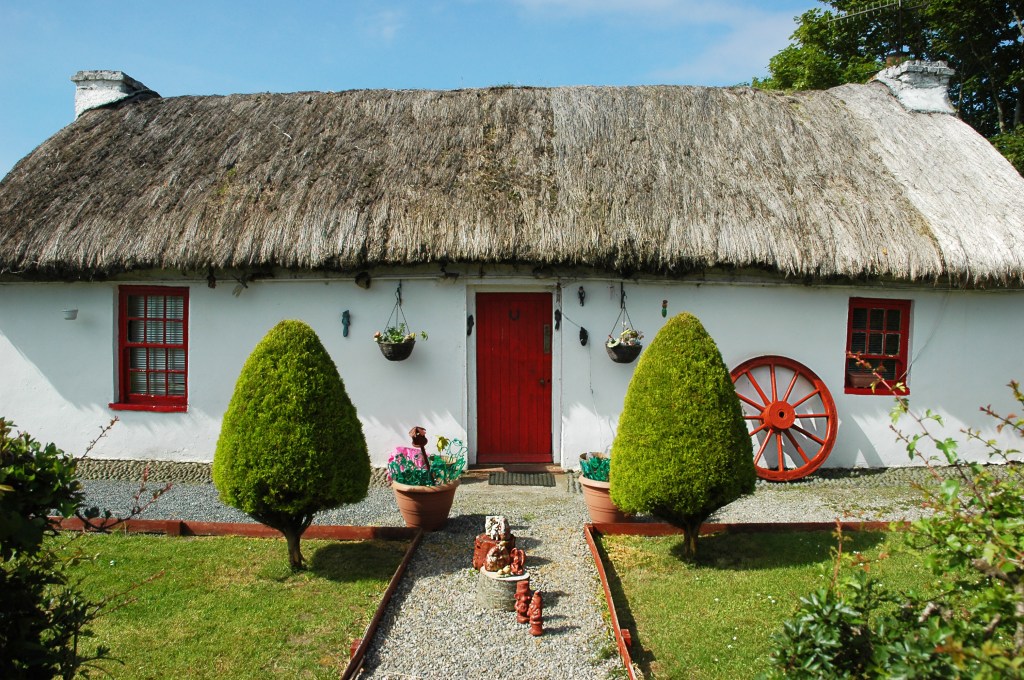
When one thinks of Ireland, even today, picturesque images of thatched cottages usually come to mind.
As iconic as that is, thatching is a technique that has been around for thousands of years, all over the world, not just Ireland or the United Kingdom.
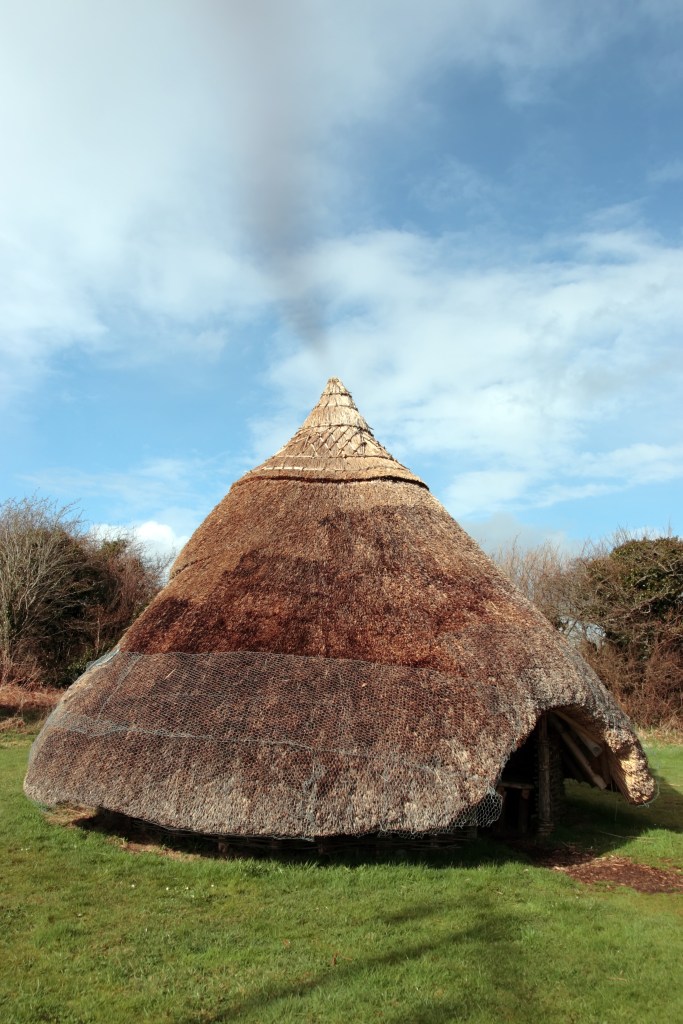
In England, The Howick House (“Britain’s oldest house”), located in Northumberland, England, dates back to 7600 BC and is known to have been thatched. (That’s not a picture of the Howick house though.) Iron age (approximately 1,200 to 550 BC) towers and fortresses around the world used thatch for roofing. Thatch was even used on castles, both during and after construction. Many of the main buildings had tile roofs, but the less important areas used thatched roofs.
The first version of thatching was a simple sod roof; materials readily handy and useable worldwide. It was very common in colder countries, such as Iceland, Denmark, and Sweden because it was a good insulator from the cold.

A thatched roof has been a popular choice in Germany, Denmark, the Netherlands, France, Italy, and Belgium, as well as Ireland and the UK. If you search online, you’ll find examples of early thatching in Japan, Africa, and South America. Maya, Incas, and Aztecs used them. People used what was available and reeds, grasses, and straw were handy choices.
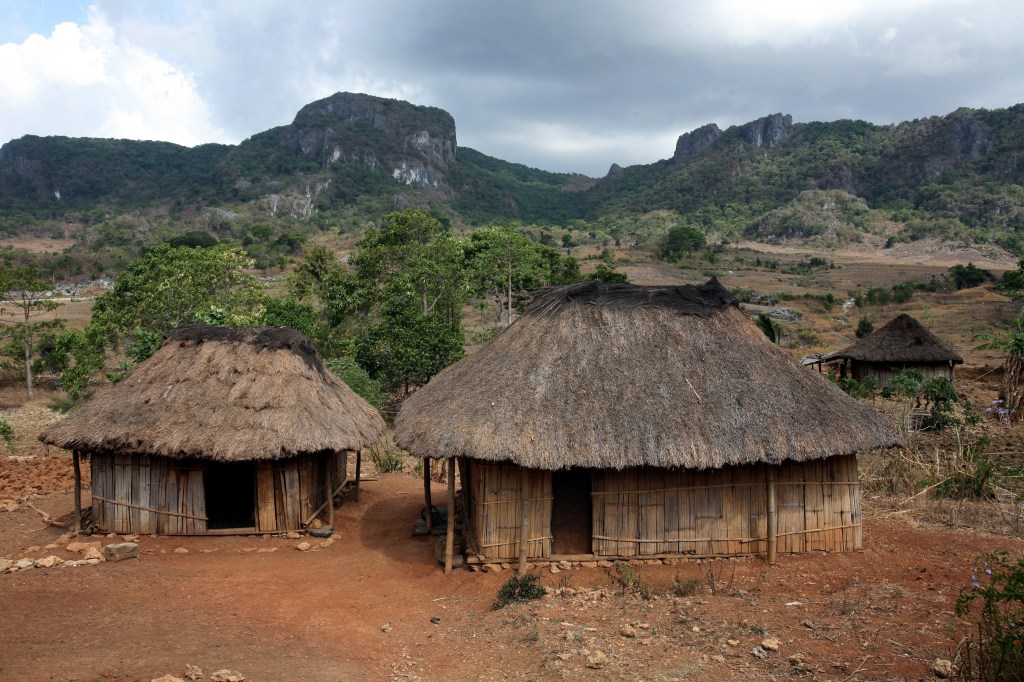
The United States used to have some thatched roofs; early immigrants using what they knew. There wasn’t a native source of reeds or long grasses that can be readily harvested for thatching, so it was soon replaced by wood shingles.
Why was thatching so popular for so long in Ireland? It was easy, inexpensive, waterproof, long lasting, and insulating.
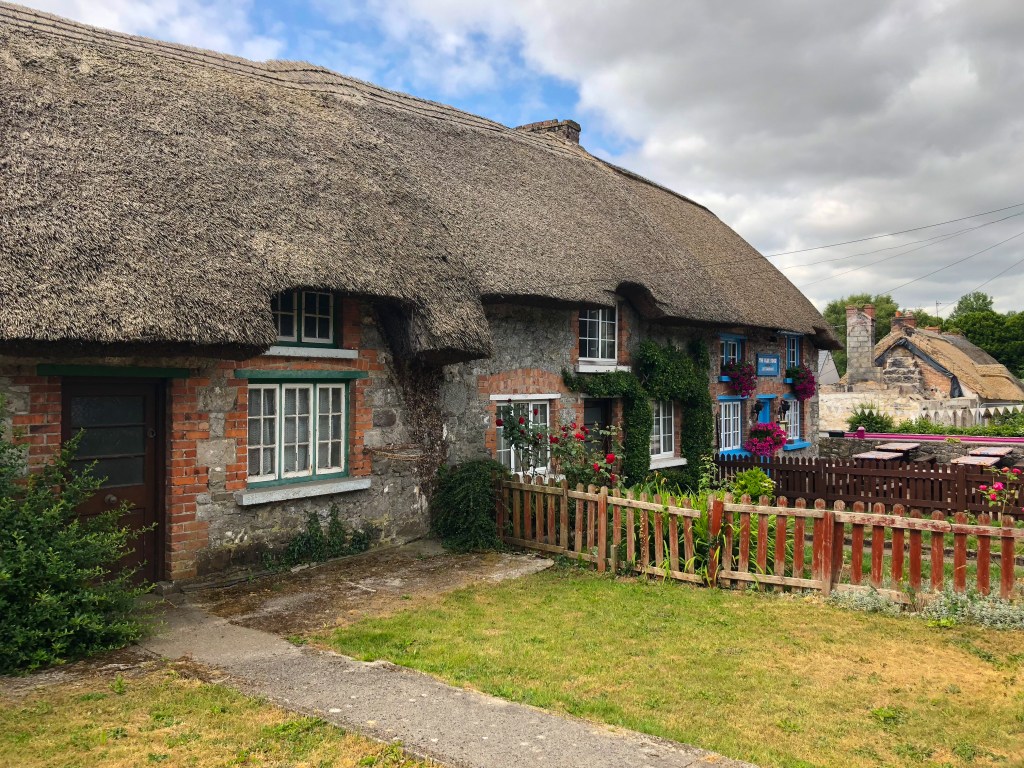
Materials used, such as water reed were easy to obtain and are waterproof. When enough of these are bundled together, water can’t penetrate and will run off. Thatch also has a greater insulating quality than any other traditional roof covering. It will keep a home warm in winter and cool in summer. Another bonus is that it was highly sound-proof. Depending on the quality, and repairs, a thatched roof could last up to forty years.
There were drawbacks to a thatched roof. Ever hear of a canopy bed? People had to come up with some ways to keep animals and insects from falling on them while they slept! Thatch roofs attracted all sorts of animals. Common pests included birds, rats, mice, insects, squirrels, and even household cats.
Another downfall of a thatched roof is it does smell because it’s made from organic material, so it has a distinct scent, both when it’s fresh and as it ages. In visiting places with thatched cottages, I did not notice this at all. Maybe because there was often a peat fire burning, or a stack of peat nearby, so that was the pervading smell, which is very pleasant.
During the Tudor period, thatched roofs started to die off. Wealthy people chose tiles. That also helped to lessen the dangers of a fire spreading so rapidly. London’s first building regulations, the ordinance of 1212, banned the use of thatch to try to avoid the rapid spread of fire.
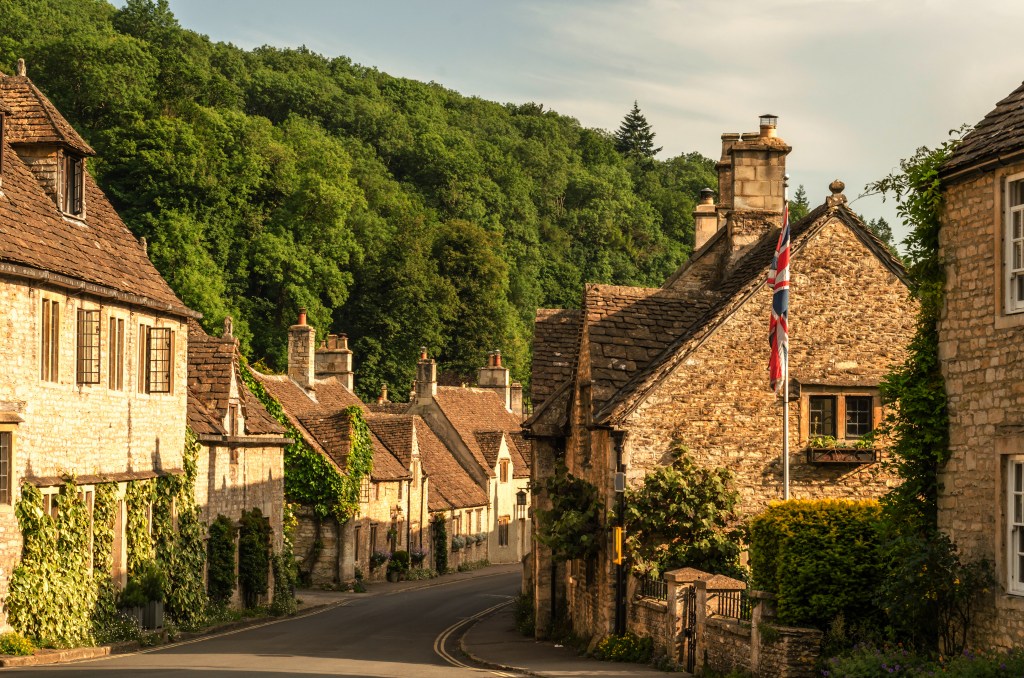
Poorer people continued to use thatching, and the Irish were poor. Even so, in Ireland people living in thatched cottages started to decline in the 1920s and 1930s as slate roofing, which became a more durable and cheaper alternative, became popular.
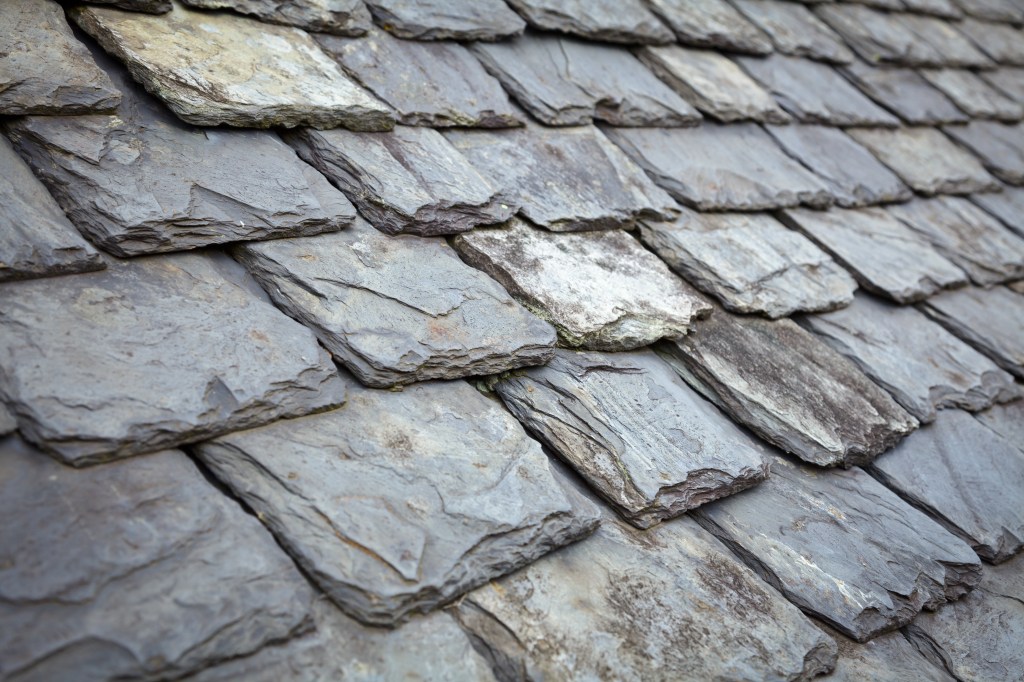
Slate became popular because they last longer. Also, slate doesn’t catch fire as easily. It became cheaper to use than thatch. At one time, hundreds of slate quarries operated in Ireland, but today there is only one working slate quarry in Ireland, the Valentia quarry on Valentia Island off the southwest coast. They opened in 1816 and give tours today. https://valentiaisland.ie/history_culture/grotto-slate-quarry/#:~:text=Valentia%20Slate%20quarry%20is%20the,more%20about%20this%20fantastic%20place!
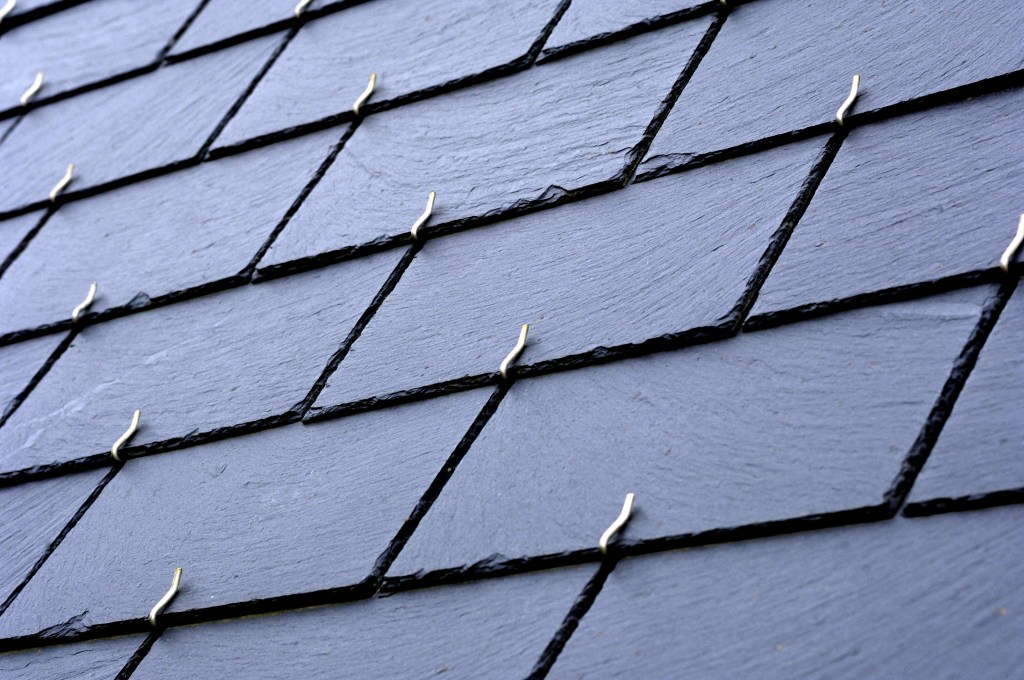
One place we stayed had several cottages on site to chose from. They had some thatched, some with slate, and some with modern roofing material. The owners told us it represented Ireland through time. We mentioned how much we loved seeing thatched cottages dotting the countryside. The woman told of a house down the road that the new owners had removed the perfectly good thatch and replaced it with modern roofing tiles. Why would they do that? My husband asked. The woman took a long draw on her cigarette and with narrowed eyes said, ‘They’re British, and they’re Protestant. Need I say more?” No ma’am.
Today, there is some concern over the future of thatched roofs in Ireland. Here’s a snippet from the Irish Examiner: “With fewer than 3,000 still in existence, communities must be supported in their efforts to repair, preserve, and restore the built heritage,” Minister of State Malcolm Noonan said. “Now, more than ever, communities must be supported in their efforts to repair, preserve, and restore the built heritage. It is an integral part of our culture, our sense of pride and is of huge importance to our local economies.” Irish examiner.com https://www.irishexaminer.com/farming/arid-40091318.html
For generations, the trade of thatching was passed from father to son. Today thatching is a specialized skill. Last time I visited Ireland I was pleased to see several new homes being built with thatched roofs. We also saw many being repaired. Thatching a cottage in Ireland today will cost around €10,000-€20,000 and will take about a month or two to complete. A quick search shows several places that will thatch a roof: (They’re interesting to look at.)
http://www.paulcookmasterthatcher.co.uk/
Roof Thatcher
https://www.thatchco.com/index.htm
I think the thatched cottages of Ireland will remain as iconic as harps, shamrock, and leprechauns for the unseeable future. And that’s a good thing.
What do you think about the future of thatched cottages in Ireland?

 All Things *Ancient* Irish